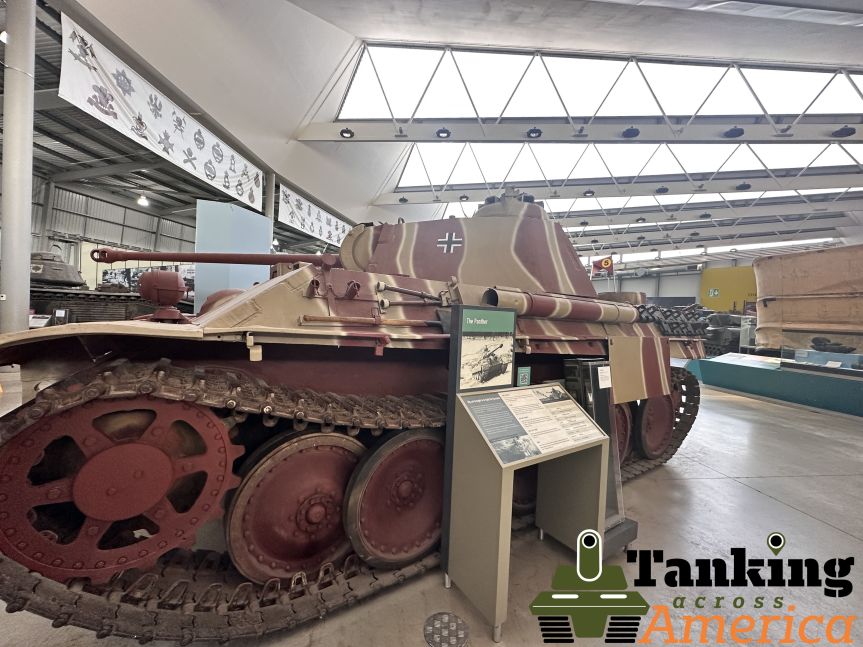
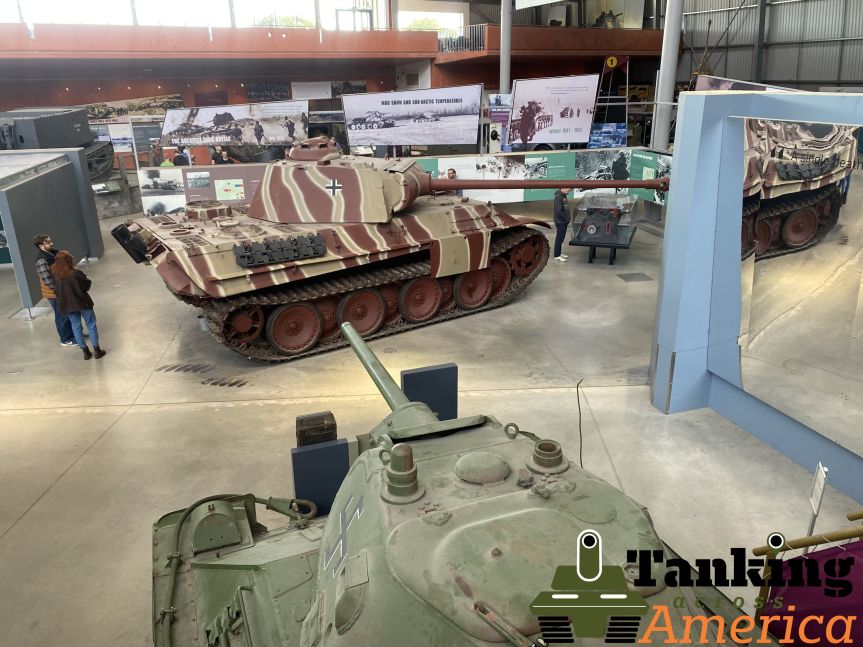
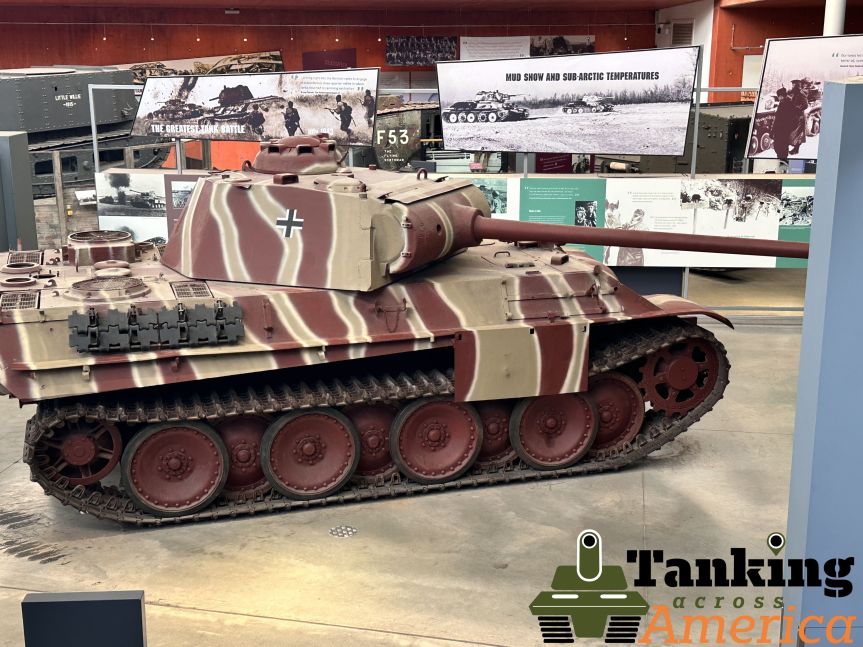
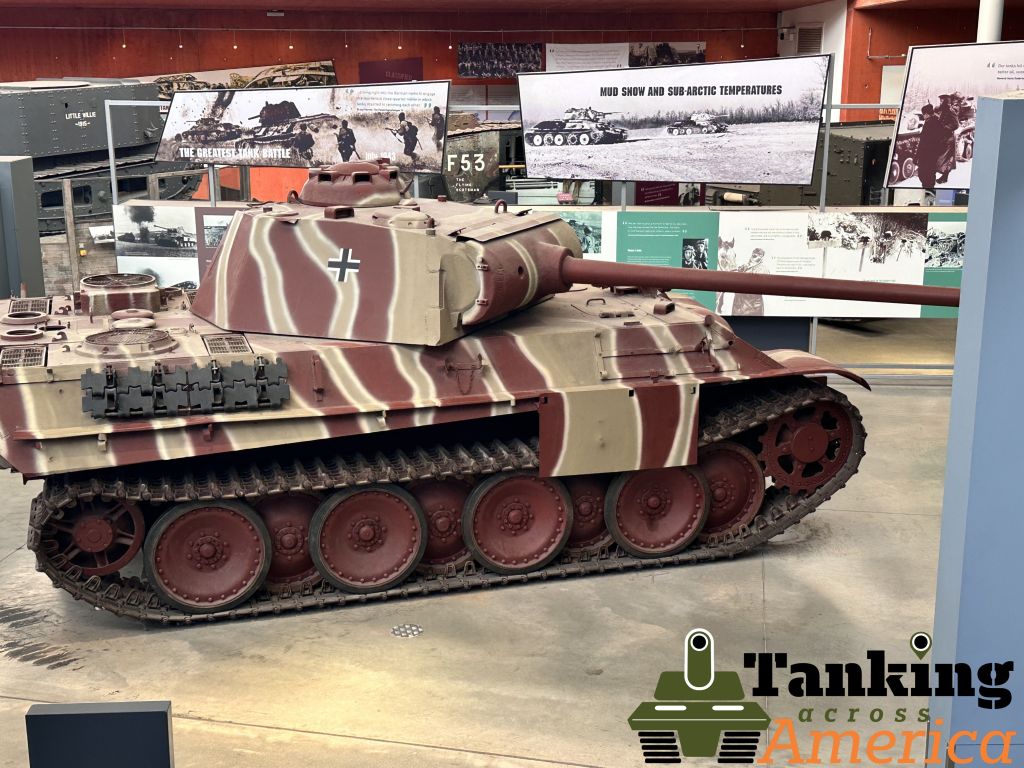
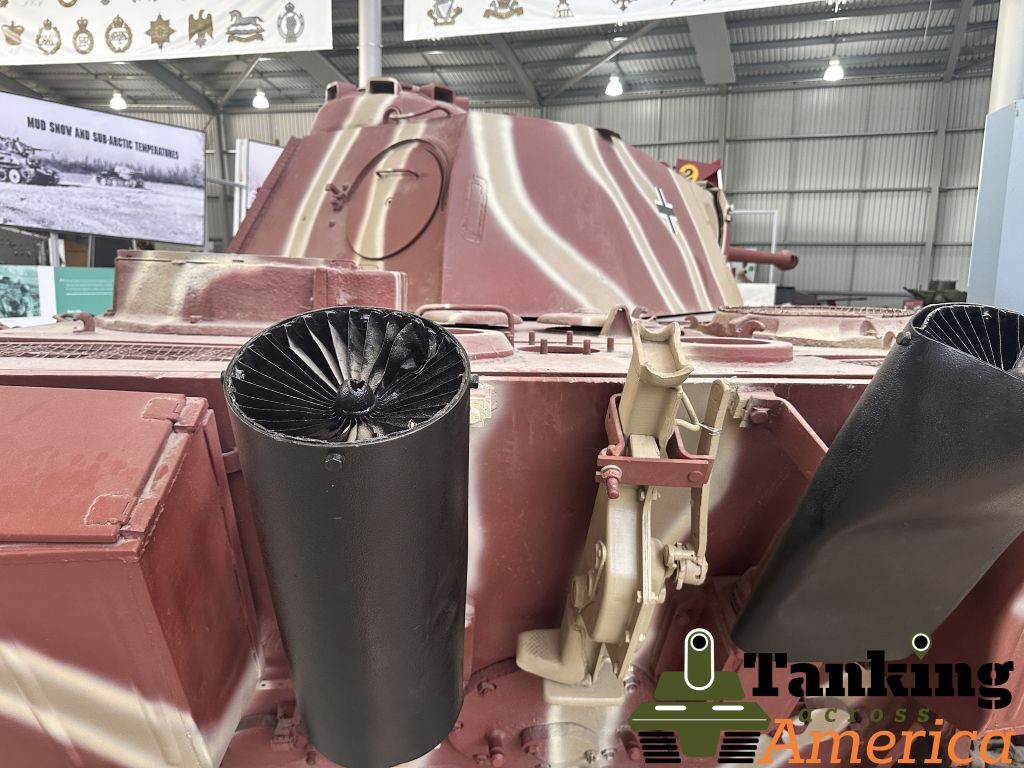
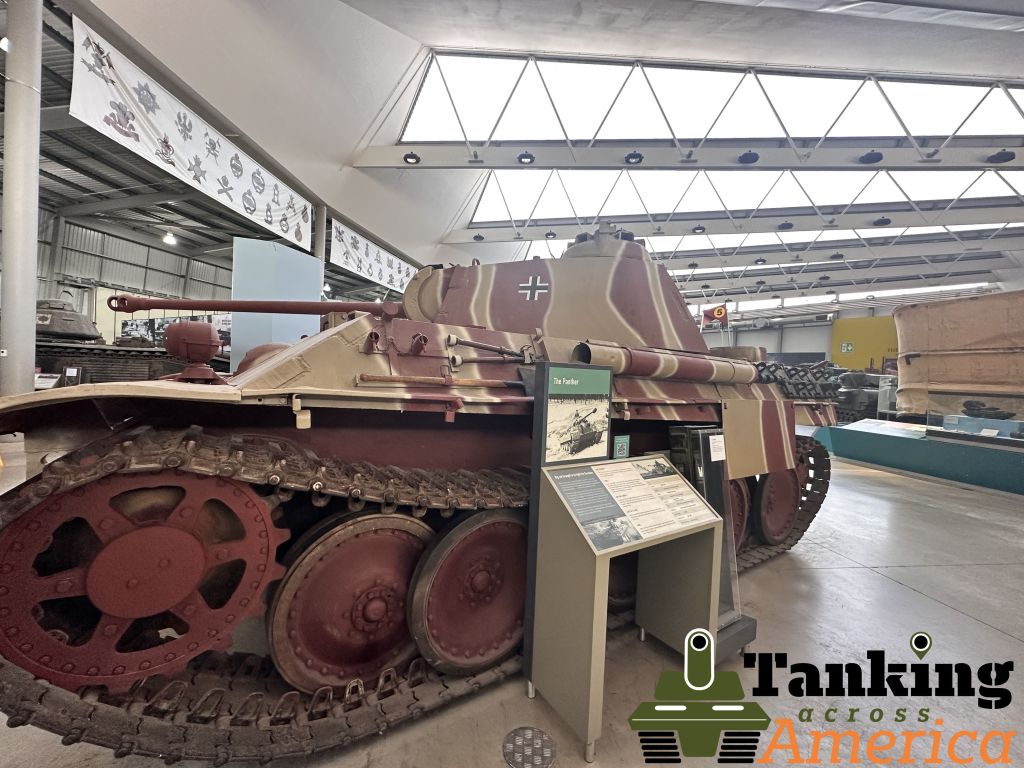
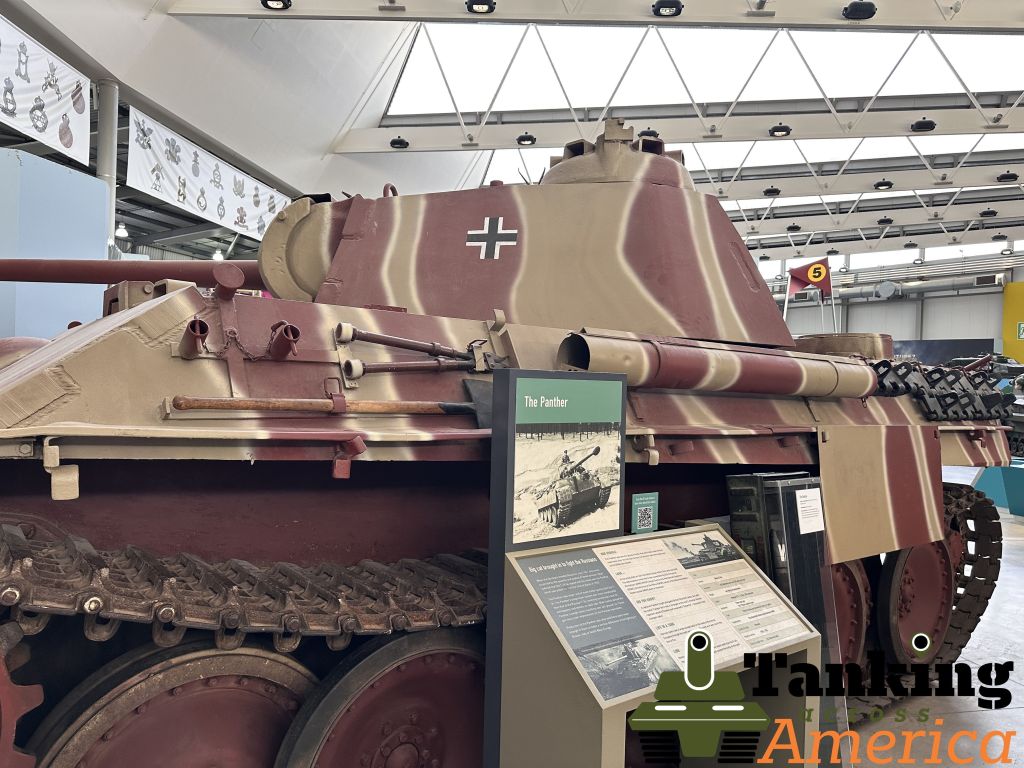
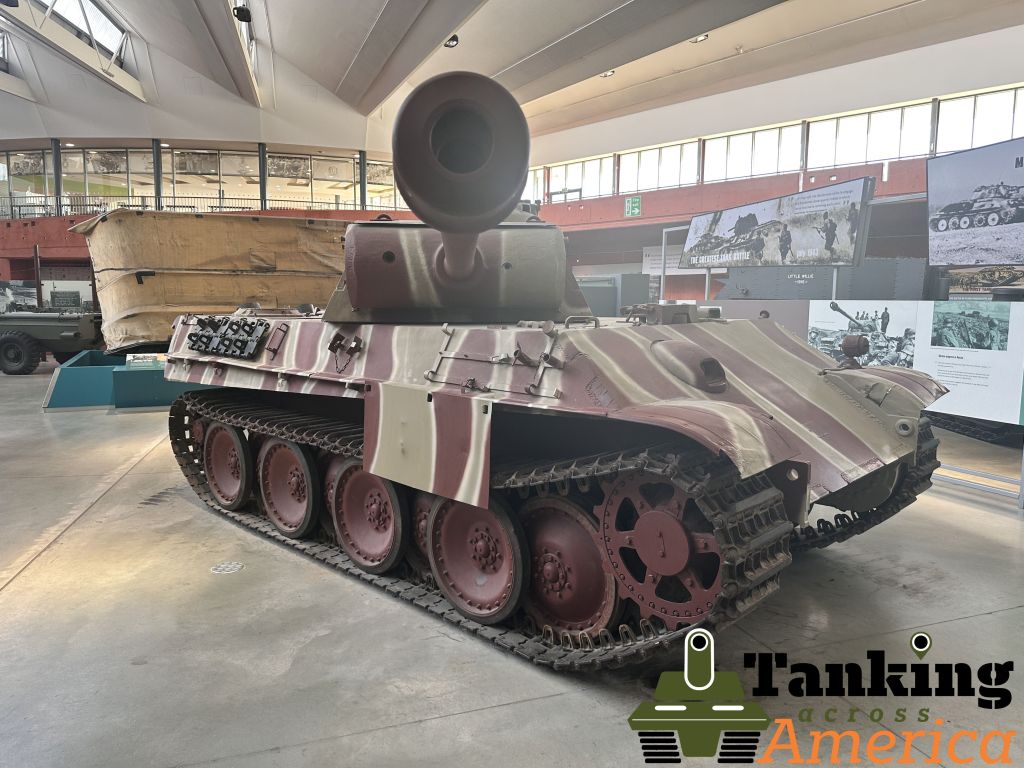
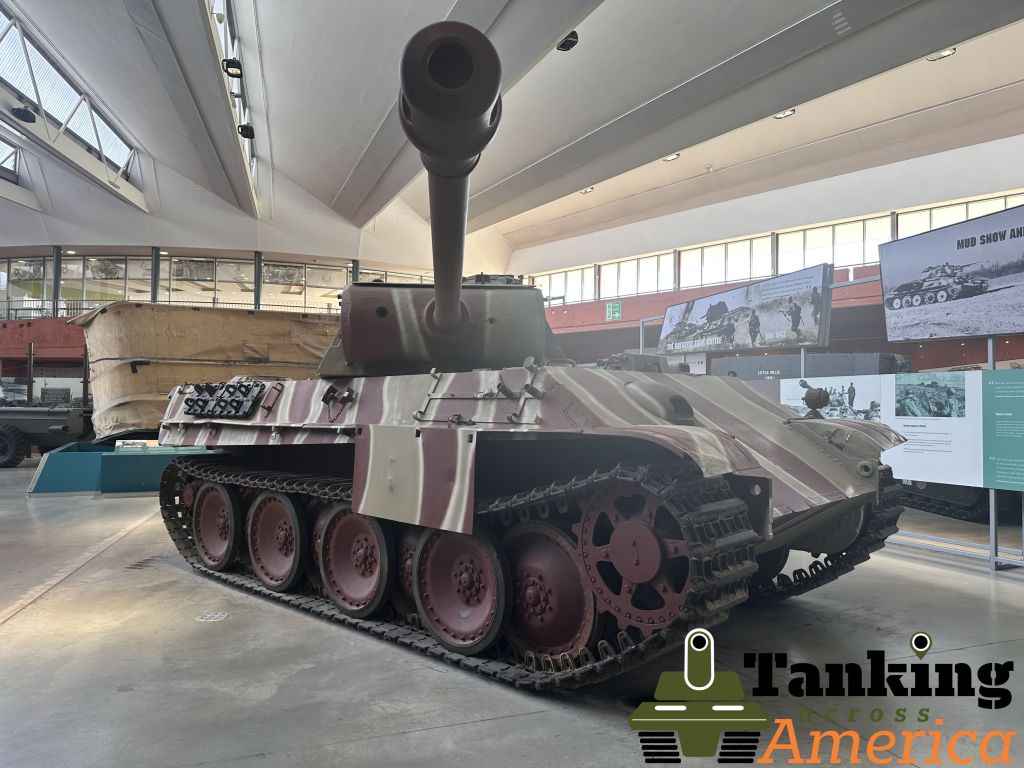
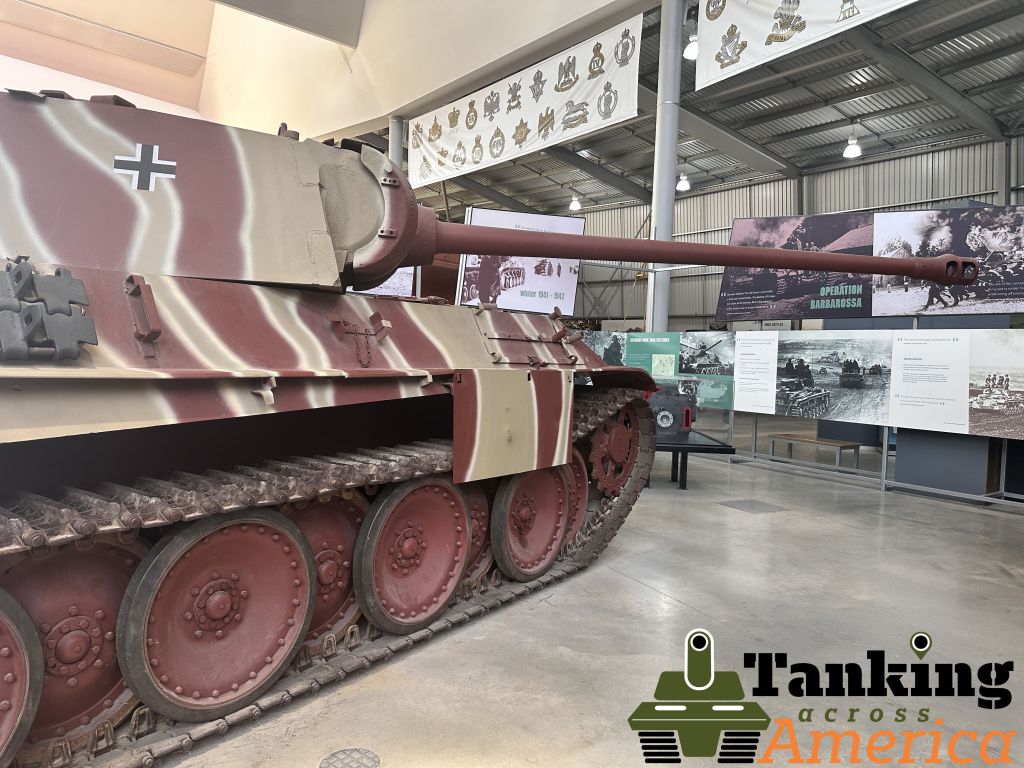
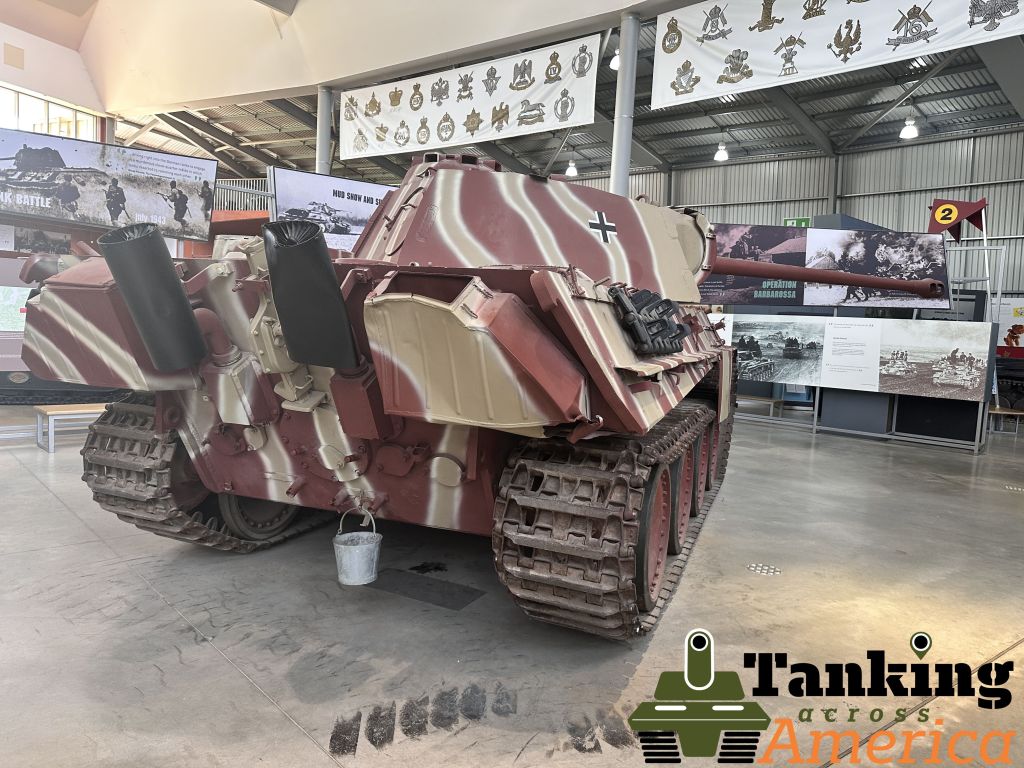
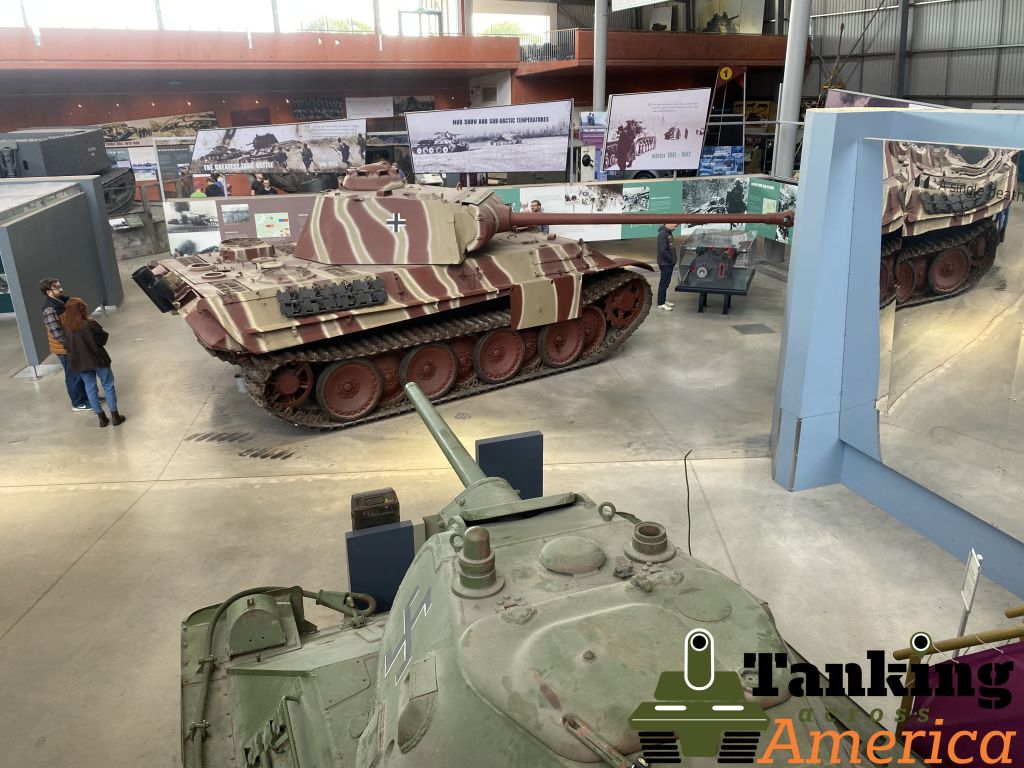
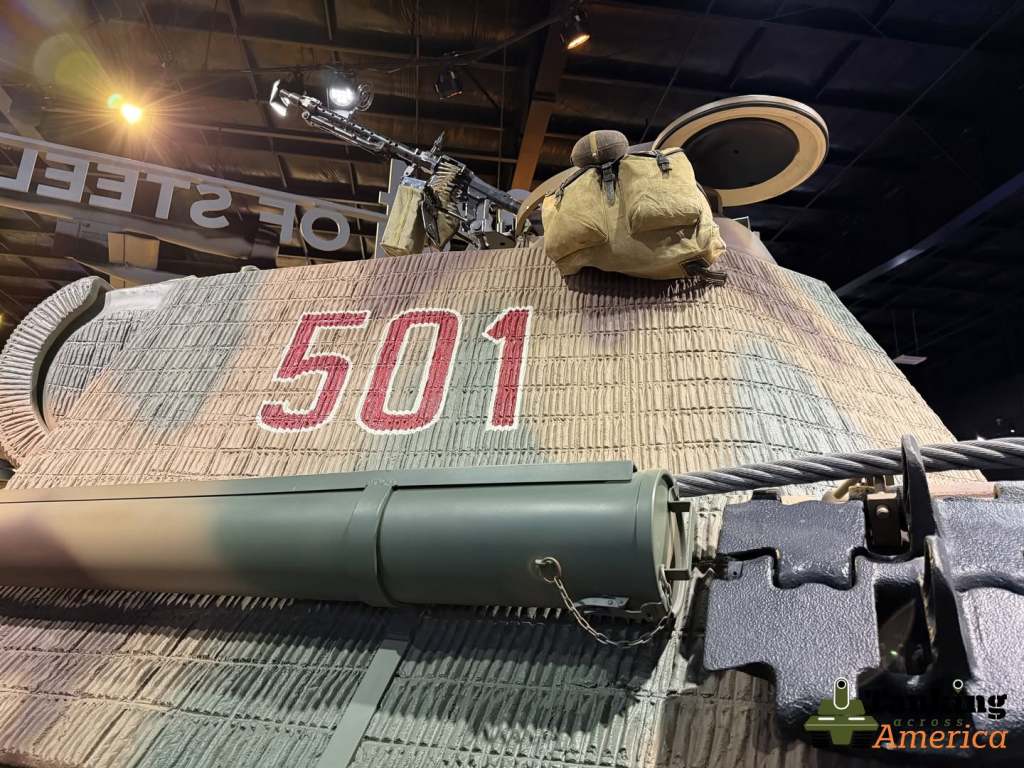
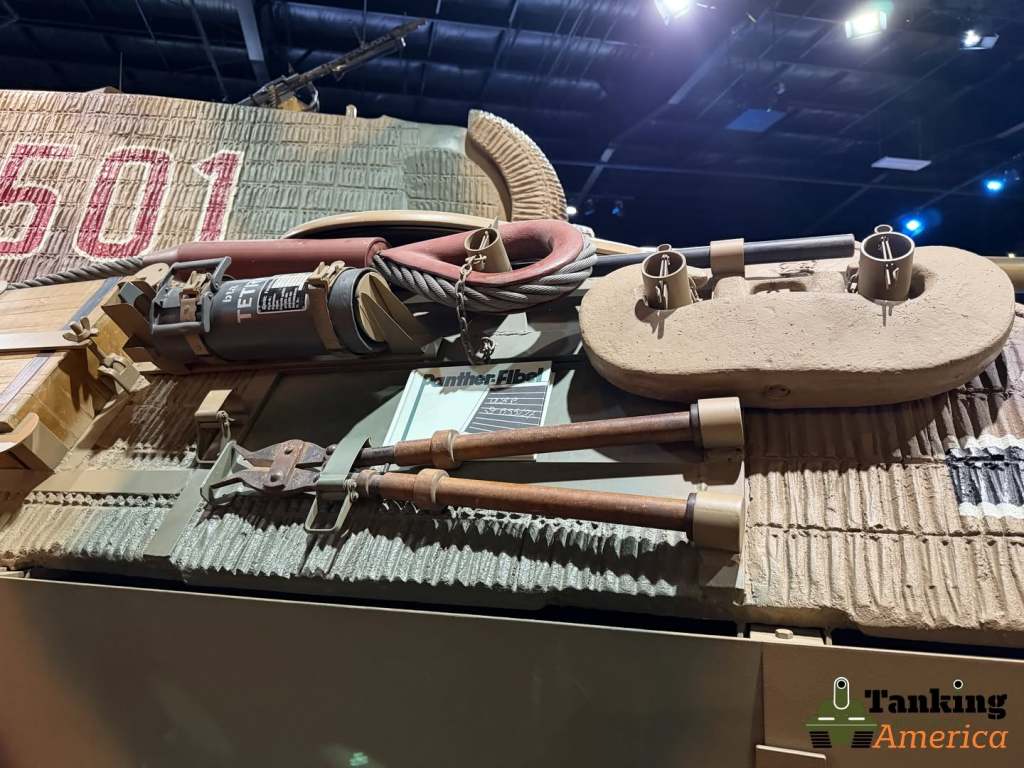
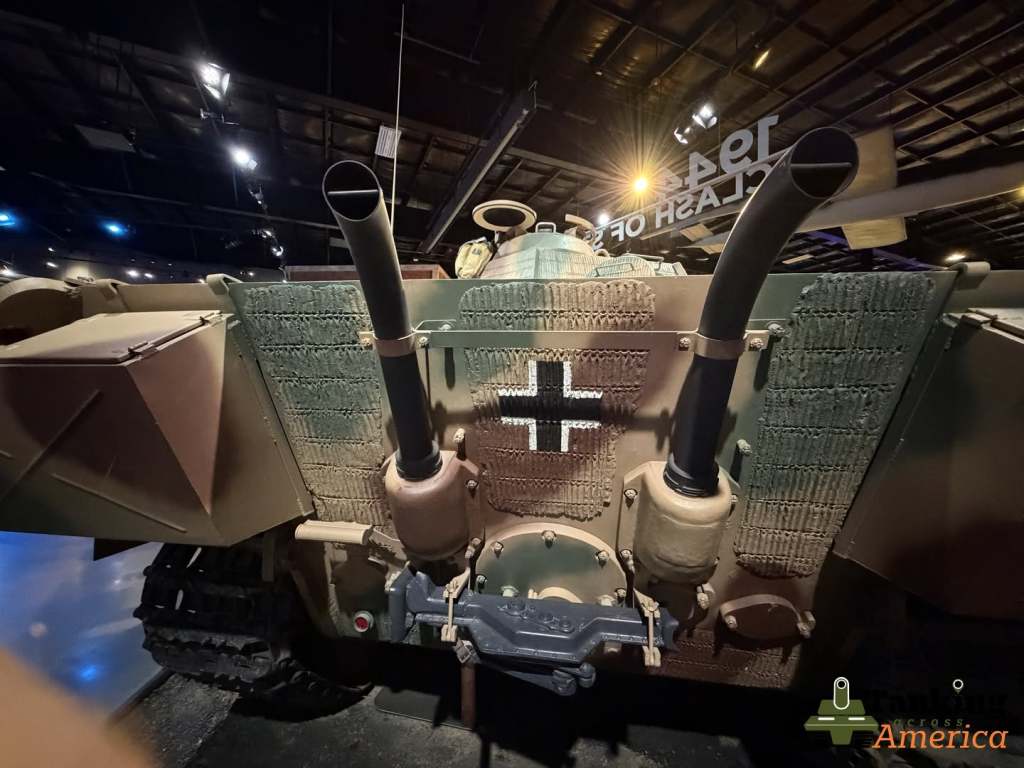
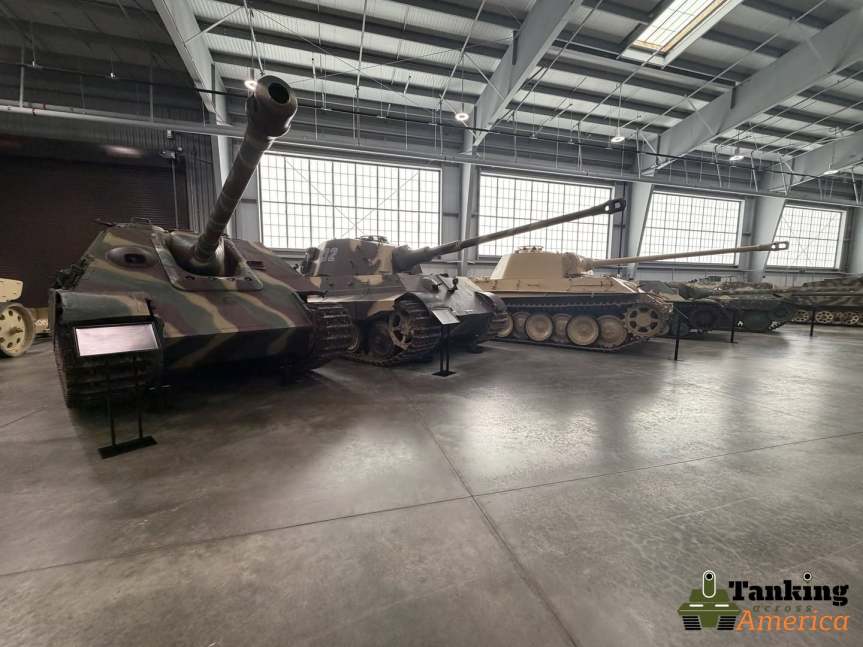
At The Tank Museum in Bovington, Dorset, the Panther draws attention with its long gun, sloped front armour and overlapping road wheels. It looks every bit like a German tank built for the Second World War. Yet this particular Panther has an unusual history: it was assembled after the fighting had ended, under British supervision. The Tank Museum’s collection record makes it a fascinating vehicle to examine up close.
Why the Panther was built
Germany developed the Panther after encountering Soviet tanks, especially the T-34, during its 1941 invasion of the Soviet Union. The new design combined sloped armour with a powerful 7.5 cm KwK 42 L/70 gun and wide tracks. The Panther first saw action at Kursk in 1943. Its firepower and protection made it a formidable opponent, although its complex construction slowed production and placed heavy demands on maintenance. The Tank Museum lists a five-person crew and a weight of 44 tonnes for the type.
Bovington’s unusual example
The story of Bovington’s Panther begins at the Maschinenfabrik Niedersachsen, or MNH, factory in Hannover. After Allied forces took control of the plant, British Army personnel supervised the assembly of a small group of tanks there. Bovington’s Panther was one of them.
A small plate on the front identifies the British unit involved: 823 Armoured Workshops, part of the Royal Electrical and Mechanical Engineers (REME) in the British Army of the Rhine. It is a detail a visitor could easily overlook, but it changes how we read the vehicle. This Panther is a surviving example of German tank design and of the British effort to examine that design after the war. The Tank Museum documents its assembly at MNH.
What to look for at the museum
Start with the front hull. Its sloped plate shows how the Panther sought to improve protection without relying on vertical armour alone. Then follow the length of the 75 mm gun barrel and look down at the tightly packed, overlapping wheels. Those features help explain both the Panther’s reputation on the battlefield and the difficulty of building and maintaining it.
Finally, look for that small plate on the front. Many preserved tanks invite questions about where they fought. Bovington’s Panther invites a different one: what happened to Germany’s weapons and factories once the war was over? That postwar chapter is what makes this particular tank so memorable.
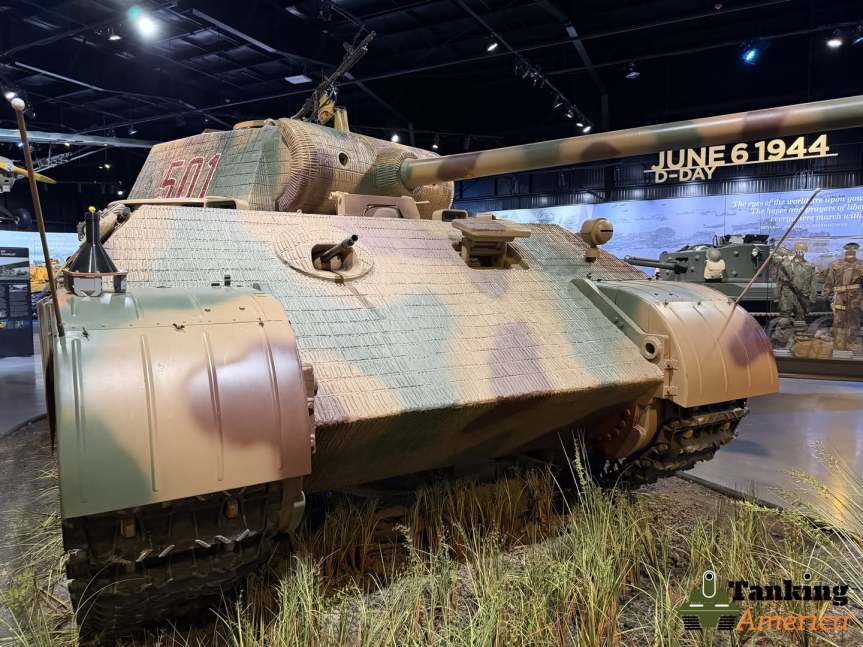
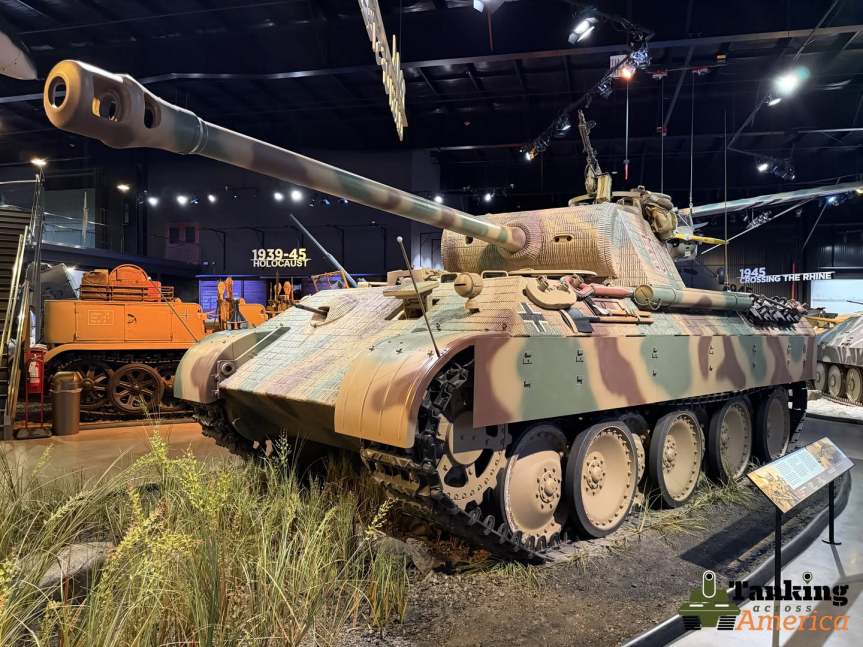
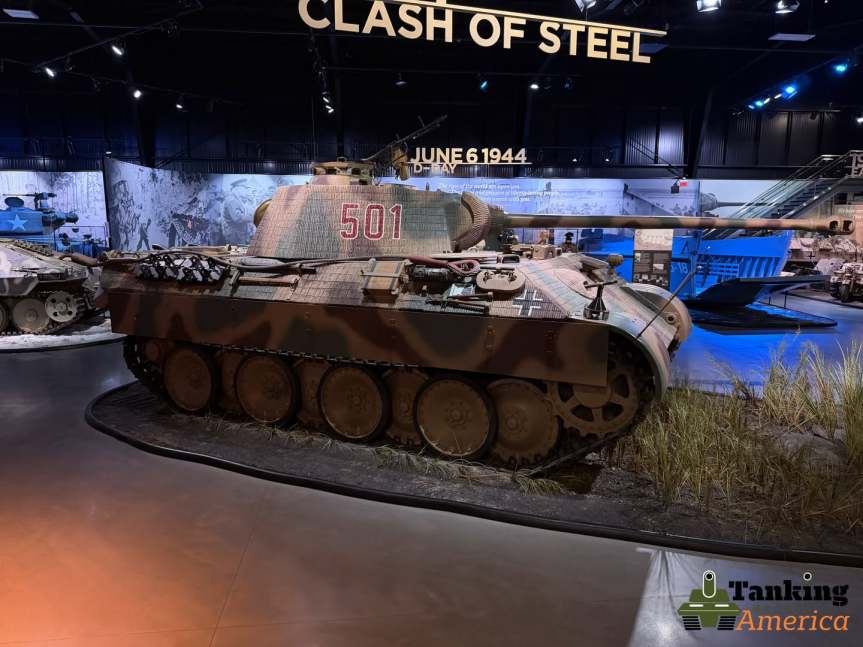
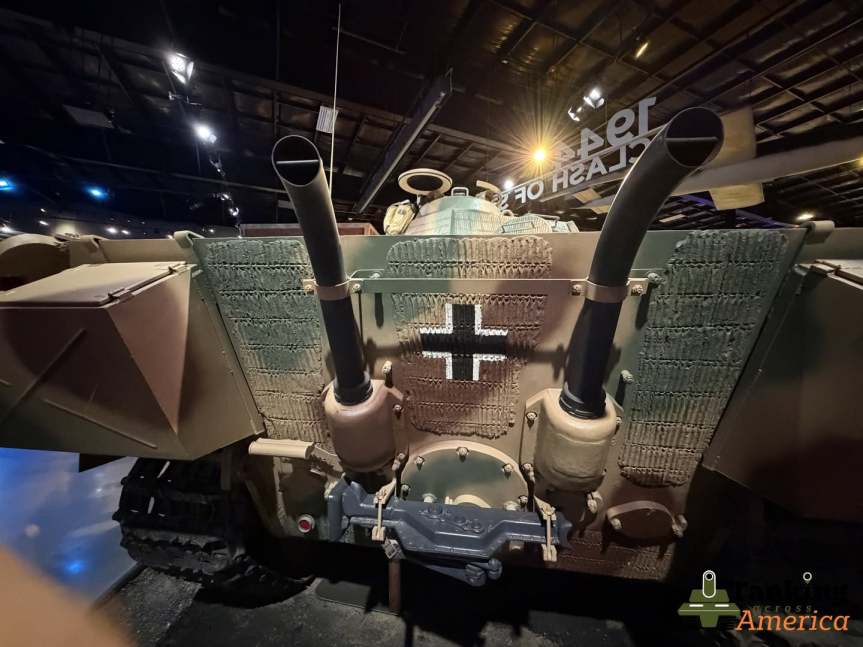
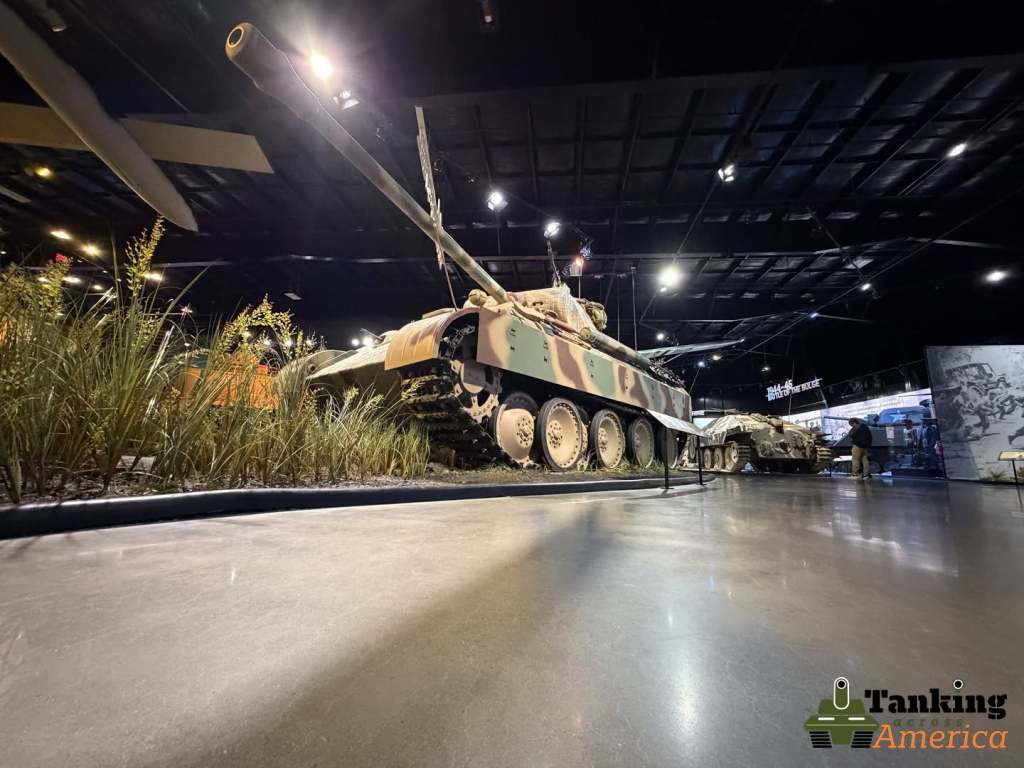
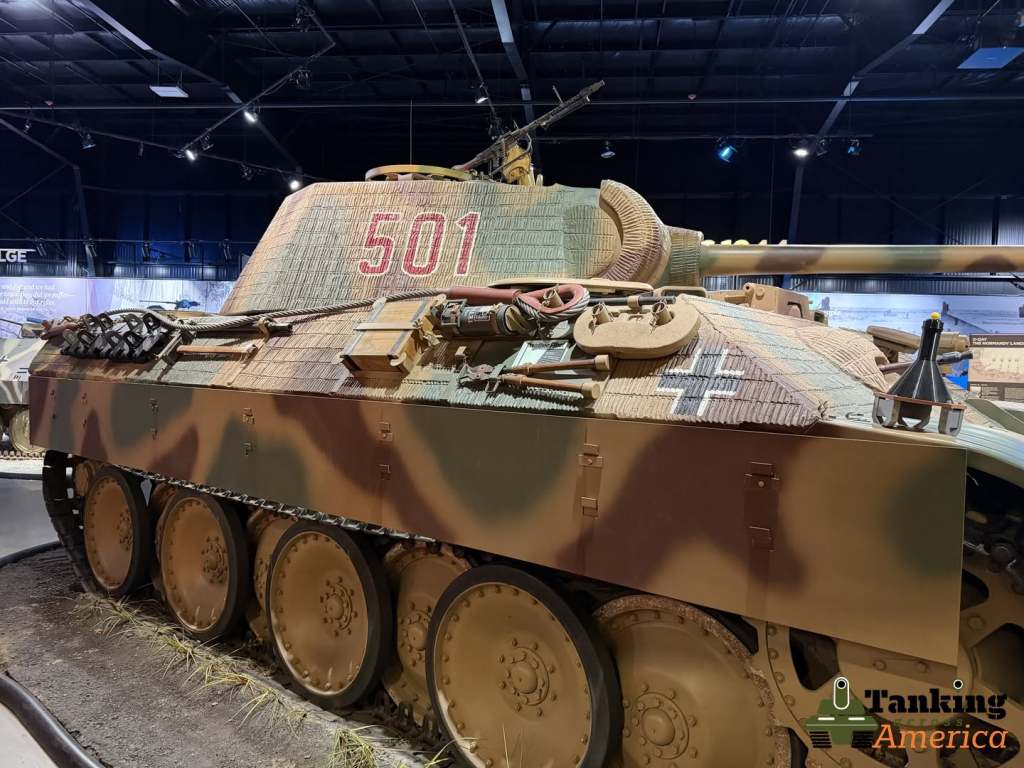
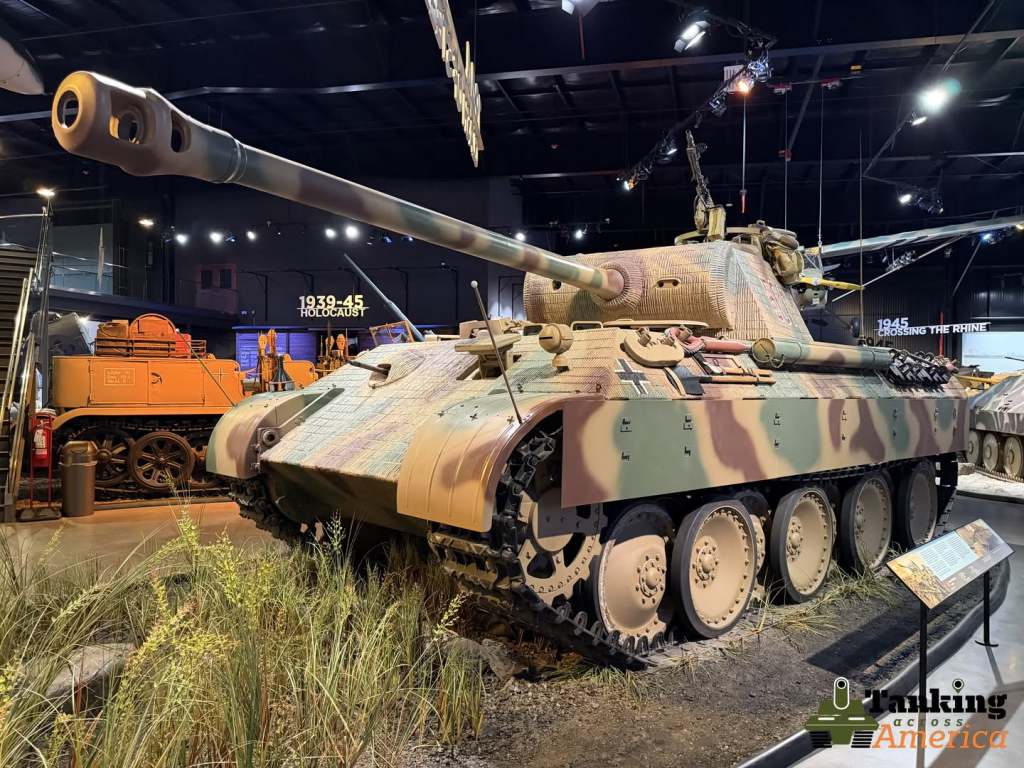
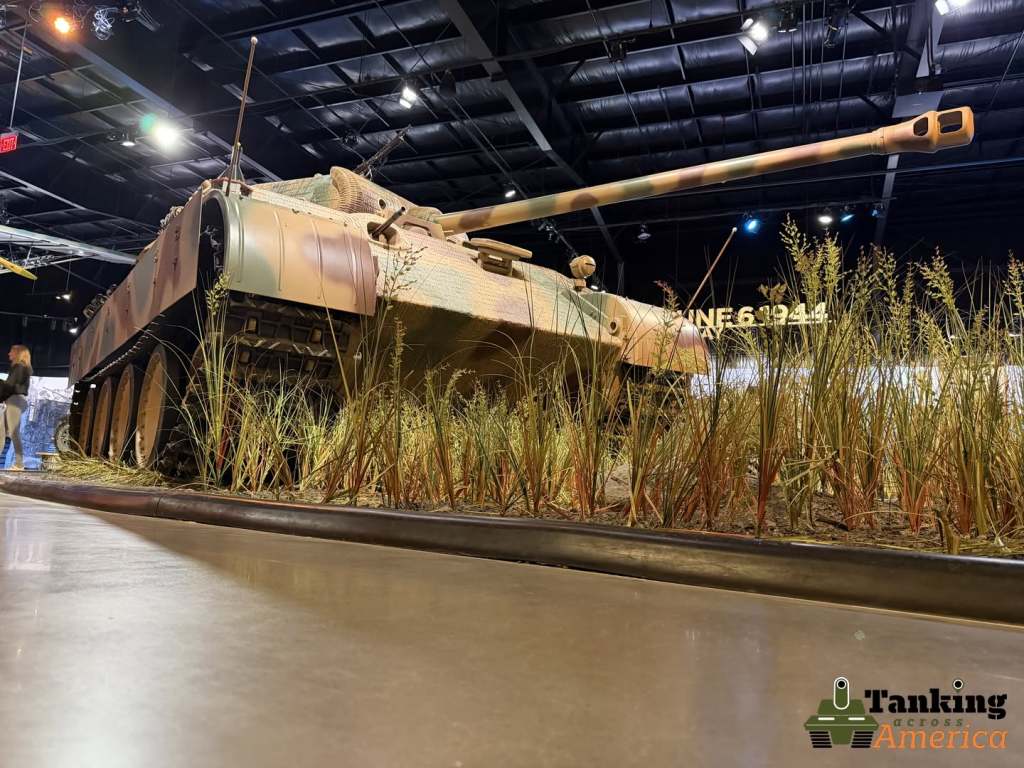
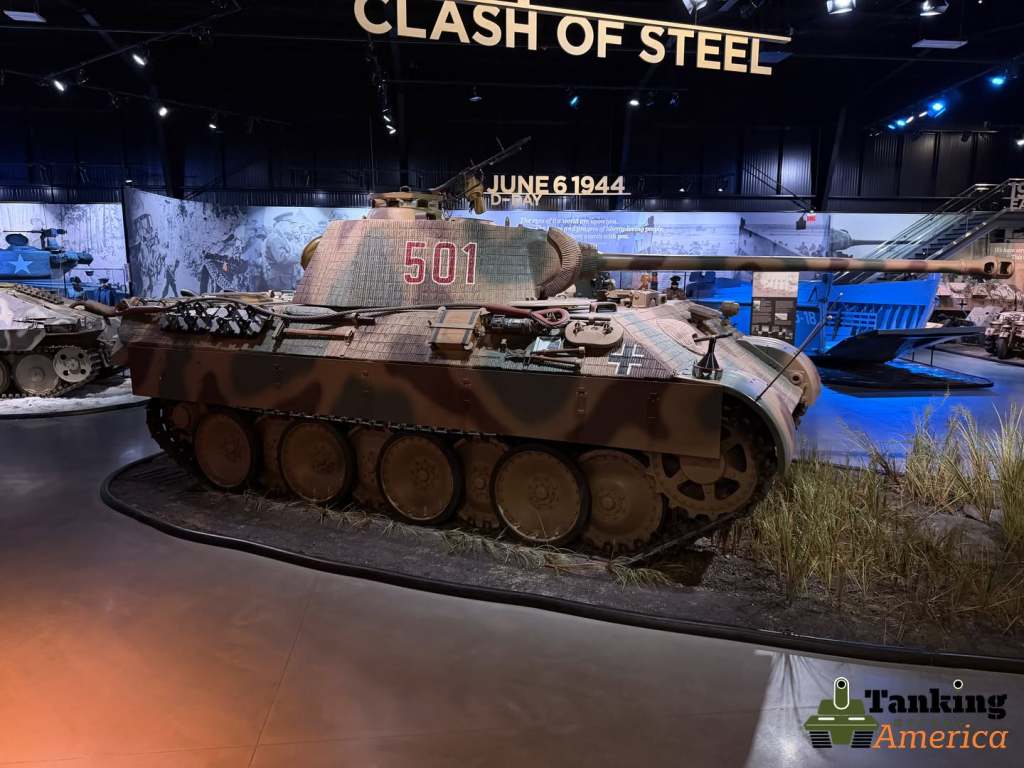
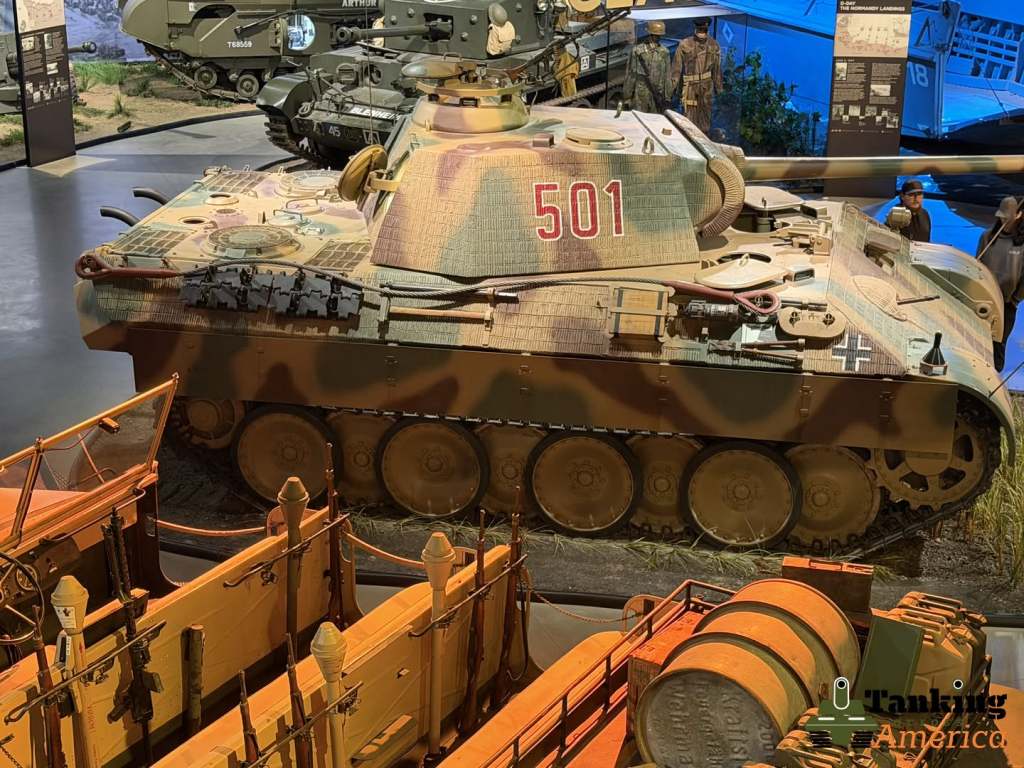
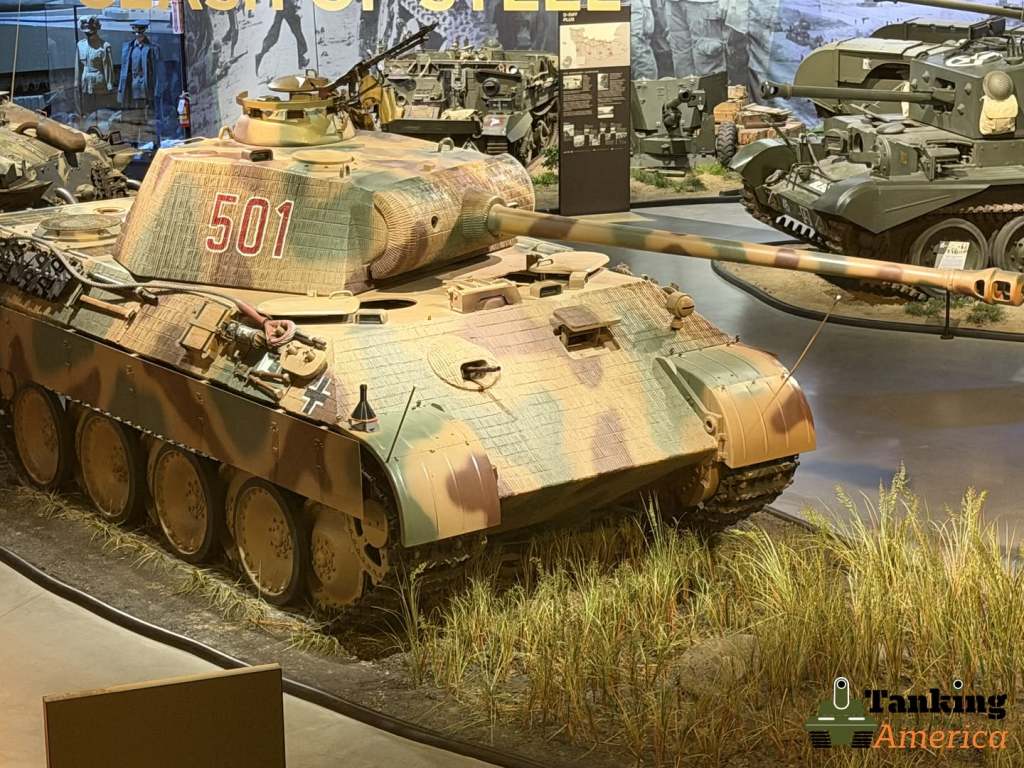
Among the many historic armored vehicles displayed at the American Heritage Museum in Hudson, Massachusetts, few have a story as remarkable as its German Panther tank. This imposing Panzerkampfwagen V Panther Ausf. A is more than a rare survivor of World War II—it is also the product of an extraordinary restoration that brought a heavily damaged battlefield relic back to life.
Today, the Panther occupies a prominent place in the museum’s “Clash of Steel” exhibit, where it faces one of its most important wartime opponents: the Soviet T-34/85.
Germany’s Answer to the T-34
When Germany invaded the Soviet Union in June 1941, German troops encountered the Soviet T-34. Its sloped armor, wide tracks and powerful gun came as an unpleasant surprise. Although Soviet crews did not always use the T-34 effectively during the early fighting, the tank’s basic design forced German engineers to reconsider the future of their armored forces.
The result was the Panther.
Officially designated the Panzerkampfwagen V Panther, or Sd.Kfz. 171, the new tank combined sloped armor with a high-velocity 7.5 cm KwK 42 L/70 cannon. Although its gun had a smaller bore than the Tiger I’s famous 88 mm weapon, its high muzzle velocity gave it excellent armor-piercing performance. A well-positioned Panther could destroy most Allied tanks at considerable range.
The Panther carried a crew of five: commander, gunner, loader, driver and radio operator. It weighed approximately 44 metric tons and was powered by a Maybach gasoline engine. Its wide tracks provided relatively low ground pressure, while its interleaved road wheels gave the vehicle a smoother ride across rough terrain.
On paper, it was one of the most formidable tanks of World War II.
A Difficult Beginning at Kursk
The Panther entered combat during Operation Citadel, the German offensive against the Kursk salient in July 1943. Its battlefield debut was far from successful.
The earliest Panthers suffered from numerous mechanical problems, including engine fires, transmission failures and unreliable final drives. Many vehicles broke down before reaching the battlefield. Mines, Soviet antitank guns and difficult recovery conditions added to the losses.
Despite these problems, the Panther’s potential was clear. Its long-barreled gun was extremely effective, while its heavily sloped frontal armor offered excellent protection. Later production improvements made the tank more dependable, although it never became easy or inexpensive to maintain.
The Panther Ausf. A followed the original Ausf. D into production during 1943. It introduced several improvements, including a redesigned commander’s cupola and other changes intended to make the tank more practical in combat. Panthers eventually served on the Eastern Front, in Italy and throughout Western Europe.
The Panther never appeared in sufficient numbers to reverse Germany’s fortunes, however. It was complicated to manufacture, demanding to maintain and vulnerable from the sides and rear. Germany produced only a fraction of the tanks manufactured by the Soviet Union and the Western Allies.
Recovered from a Polish River
The Panther now preserved at the American Heritage Museum had a very different journey from most surviving German tanks.
Its remains were recovered from the Czarna Nida River in Poland in 1991. By that time, the vehicle had spent decades submerged and was far from complete. The surviving hull was corroded, damaged and missing numerous components.
The Panther eventually became part of the collection assembled by American engineer and military-vehicle enthusiast Jacques M. Littlefield. Littlefield created one of the world’s most important private collections of tanks and armored vehicles at his Military Vehicle Technology Foundation in California.
Restoring the Panther became one of the collection’s most ambitious projects.
An Extraordinary Restoration
Returning a Panther to operating condition is a tremendous challenge. Original components are extremely scarce, and many of the tank’s mechanical systems are both complicated and difficult to reproduce.
Littlefield’s restoration team carefully rebuilt the surviving hull while locating, repairing or manufacturing the parts needed to make the vehicle complete. The work involved the engine, transmission, suspension, turret, tracks, road wheels and countless smaller fittings. Where usable original parts could not be found, replacements had to be fabricated with close attention to the original German designs.
The process took years.
The completed tank represented far more than a cosmetic reconstruction. It had once again become a running Panther—an exceptionally rare achievement in the world of historic military-vehicle preservation. Littlefield reportedly regarded the Panther restoration as one of the crowning accomplishments of his collection.
Following Littlefield’s death in 2009, much of his collection was transferred to the Collings Foundation. The most historically important vehicles eventually became the core of the American Heritage Museum, which opened to the public in 2019.
The “Clash of Steel”
The museum displays the Panther opposite a Soviet T-34/85 in an exhibit appropriately titled “Clash of Steel.” The arrangement allows visitors to compare two very different approaches to armored warfare.
The Panther emphasized long-range firepower, excellent frontal protection and sophisticated engineering. The T-34 emphasized mobility, mechanical simplicity and mass production. The German tank was arguably more capable in a direct, one-on-one engagement under favorable conditions, but the Soviet vehicle could be built and maintained in vastly greater numbers.
The comparison illustrates an important lesson: the best tank is not necessarily the vehicle with the thickest armor or most powerful gun. Production, reliability, fuel consumption, crew training, maintenance and battlefield recovery are equally important.
Germany produced roughly 6,000 Panthers of all versions. Soviet factories, by comparison, manufactured tens of thousands of T-34s during the war. The Panther was a dangerous opponent, but it could not overcome the Allies’ enormous advantage in manpower, industry and logistical support.
A Rare Survivor
Few original Panthers survive today, and even fewer have been restored to running condition. That makes the American Heritage Museum’s Ausf. A one of the most significant vehicles in its collection.
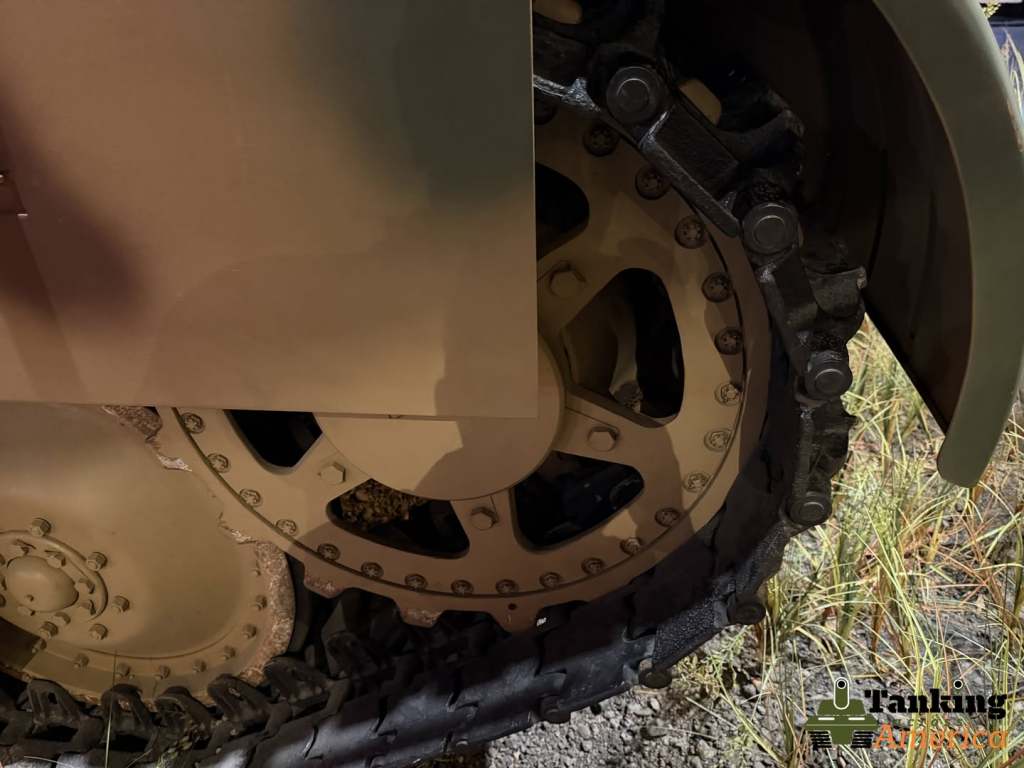
Standing beside the tank, visitors can appreciate its immense size. The long 75 mm gun extends well beyond the hull, while the sharply sloped armor gives the vehicle a surprisingly modern appearance. Its overlapping road wheels and broad tracks reveal both the sophistication and complexity of German wartime engineering.
Yet the tank’s history also extends beyond its original military service. Its recovery from a Polish river, transportation to the United States and painstaking reconstruction demonstrate what can be accomplished through historical research, skilled craftsmanship and long-term dedication.
Preserving the Machinery of History
The Panther at the American Heritage Museum should not be viewed simply as an impressive piece of machinery. Tanks were designed for war, and their technological achievements came at an enormous human cost.
By displaying the Panther beside the T-34/85, the museum places the vehicle within the larger story of the Eastern Front—a campaign marked by enormous armored battles, brutal conditions and staggering casualties. The exhibit helps visitors understand both the development of armored warfare and the experiences of the people who operated these machines.
The Panther’s survival is remarkable. Once abandoned and submerged in a Polish river, it has been transformed into one of America’s most important examples of German World War II armor. For tank enthusiasts and military historians, it is one of the highlights of the American Heritage Museum and a powerful reminder that even the most advanced weapon is only one part of a much larger historical story.
The Panther Ausf. A and T-34/85 can be seen in the museum’s official “Clash of Steel” exhibit. General Panther specifications are documented by The Tank Museum, while the recovery of the Littlefield Panther from Poland is recorded in this surviving-vehicle history.
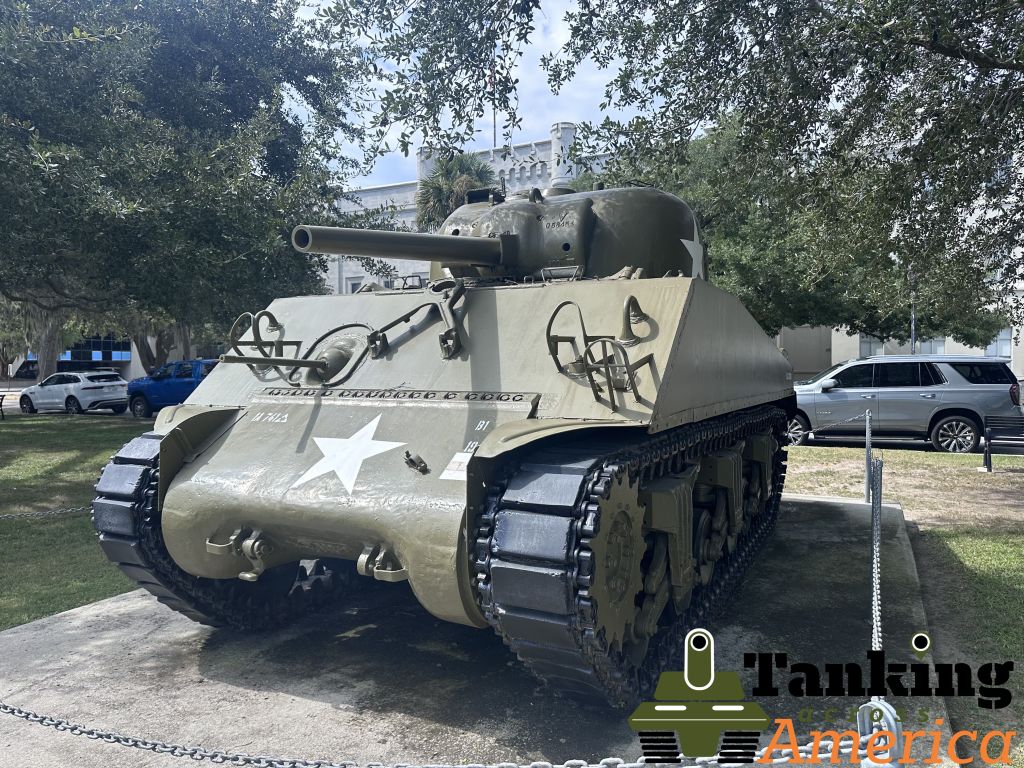
Standing near the northwest corner of Summerall Field in Charleston, South Carolina, is one of The Citadel’s most recognizable military displays: an M4 Sherman tank. For generations of cadets, alumni and visitors, the tank has served as a physical link between the historic military college and the Americans who fought in armored units during the Second World War.
Although it has long been known by the name “Thunderbolt,” the Sherman’s modern markings commemorate a Citadel graduate whose wartime service began amid the chaos of Omaha Beach.
A Sherman Comes to The Citadel
The Sherman was presented to The Citadel in 1956 and placed on its campus as the school’s Army memorial. It eventually became a familiar landmark on Summerall Field, the twelve-acre parade ground at the center of cadet life.
The Citadel’s campus history identifies the vehicle as an M4A4 Sherman, while a 2023 account of its restoration describes it as an M4A1/3. Surviving Shermans displayed outdoors were sometimes rebuilt with parts from different vehicles, so positively identifying a particular example may require careful examination of its hull, engine deck, suspension components and serial markings.
Whatever its precise production designation, the vehicle represents the Sherman family that formed the backbone of American and Allied armored forces during World War II.
The “Thunderbolt” Connection
For many years, The Citadel associated its Sherman with Lieutenant Colonel Creighton W. Abrams and the famous tanks he commanded in Europe. Abrams led the 37th Tank Battalion of the 4th Armored Division during General George S. Patton’s drive across France and into Germany.
Abrams named a succession of his command tanks Thunderbolt, with a Roman numeral added as each vehicle was replaced. His aggressive leadership—and his ability to use the Sherman’s mobility, radios and teamwork to overcome German resistance—made him one of the best-known American armor commanders of the war.
The Citadel’s tank was not one of Abrams’s actual wartime vehicles, but the name connected the campus display with the traditions of American armored warfare.
The tank also acquired a more mischievous chapter in Citadel history. According to the college, cadets once managed to put gasoline in it and drive it off campus before becoming stranded. Its engine was subsequently rendered inoperable, preventing a repeat performance.
Captain John Thornton and Omaha Beach
During the restoration of The Citadel’s outdoor military displays in 2023, the Sherman received markings honoring Captain John Thornton, Citadel Class of 1940.
Thornton served as an armor officer and commanded Company B of the 741st Tank Battalion. For the Normandy invasion, Companies B and C of the battalion were equipped with Duplex Drive Shermans. These unusual amphibious tanks carried collapsible canvas flotation screens and propellers that theoretically allowed them to “swim” from landing craft to shore.
On June 6, 1944, the 741st Tank Battalion was assigned to support the 1st Infantry Division’s assault on Omaha Beach. The sea was far rougher than expected, yet most of the unit’s DD tanks were launched thousands of yards offshore. Of the 32 amphibious Shermans assigned to the assault, 27 were lost before reaching the beach.
Thornton’s tank was among those that sank. He survived the disaster and reached shore, although he was wounded during the invasion. Despite the loss of his vehicle and the terrible conditions on Omaha Beach, he remained in command of his company as the battalion fought its way inland.
From Normandy into France
After D-Day, the 741st Tank Battalion received replacement Shermans and continued supporting American infantry formations across northern France.
Independent tank battalions such as the 741st were frequently attached to infantry divisions. Their Shermans provided direct fire against fortified positions, transported supplies across exposed ground and helped infantry units overcome enemy strongpoints. This cooperation was difficult and dangerous. Tank crews often fought at close range in hedgerows, villages and narrow roads where German antitank guns could remain concealed until the last moment.
Captain Thornton continued leading Company B through this demanding campaign. In September 1944, his Sherman was struck by at least three antitank rounds while he was leading his men. Thornton was killed in the action.
His death came only a few months after surviving the sinking of his amphibious tank off Omaha Beach.
Restored as a Memorial
Charleston’s sun, humidity and salt-laden air had taken their toll on The Citadel’s outdoor exhibits. As part of a restoration program, the Sherman was cleaned, repaired and repainted.
Rather than attempt to present the vehicle as Thornton’s original tank, The Citadel marked it as a memorial representation of his Sherman and his service. The painted registration number incorporates 1940, recognizing Thornton’s graduating class and strengthening the connection between the vehicle and the man it honors.
That distinction is important. The Sherman on Summerall Field is not claimed to be the tank Thornton commanded in combat. It is a surviving example used to tell his story.
More Than a Display Tank
The M4 Sherman is sometimes judged only by its armor thickness or the power of its gun. Its real importance, however, came from the complete system surrounding it. American factories built Shermans in enormous numbers, while an extensive supply and maintenance network kept them moving. Their mechanical reliability and standardized design allowed damaged tanks to be repaired or replaced relatively quickly.
For the crew, none of that made combat safe. Sherman tankers lived and fought inside a cramped steel compartment filled with ammunition, fuel, heat, noise and fumes. They faced mines, artillery, concealed antitank guns and heavily armored German vehicles. Every mission required courage and close cooperation among the commander, gunner, loader, driver and assistant driver.
The Citadel’s Sherman therefore represents more than a famous type of armored vehicle. It recalls the people who operated such machines under the most difficult circumstances imaginable.
A Lasting Presence on Summerall Field
Today, the Sherman stands among several historic military exhibits at The Citadel, including an AH-1 Cobra attack helicopter, an F-4C Phantom II and an LVTH-6 amphibious fire-support vehicle. Together, these displays connect different generations of American military service.
The Sherman has carried several layers of meaning during its decades on campus. As Thunderbolt, it recalled the aggressive armored leadership of Creighton Abrams. Following its restoration, its markings now tell the deeply personal story of Captain John Thornton—a Citadel graduate who survived the disastrous launch of his DD tank on D-Day, continued leading his company across France and ultimately lost his life in combat.
It is an appropriate memorial for a school whose history is closely connected with military service. Quietly overlooking Summerall Field, the old Sherman reminds each passing generation that history is not merely a collection of vehicles, battles and dates. It is the story of people—and of the sacrifices they made.
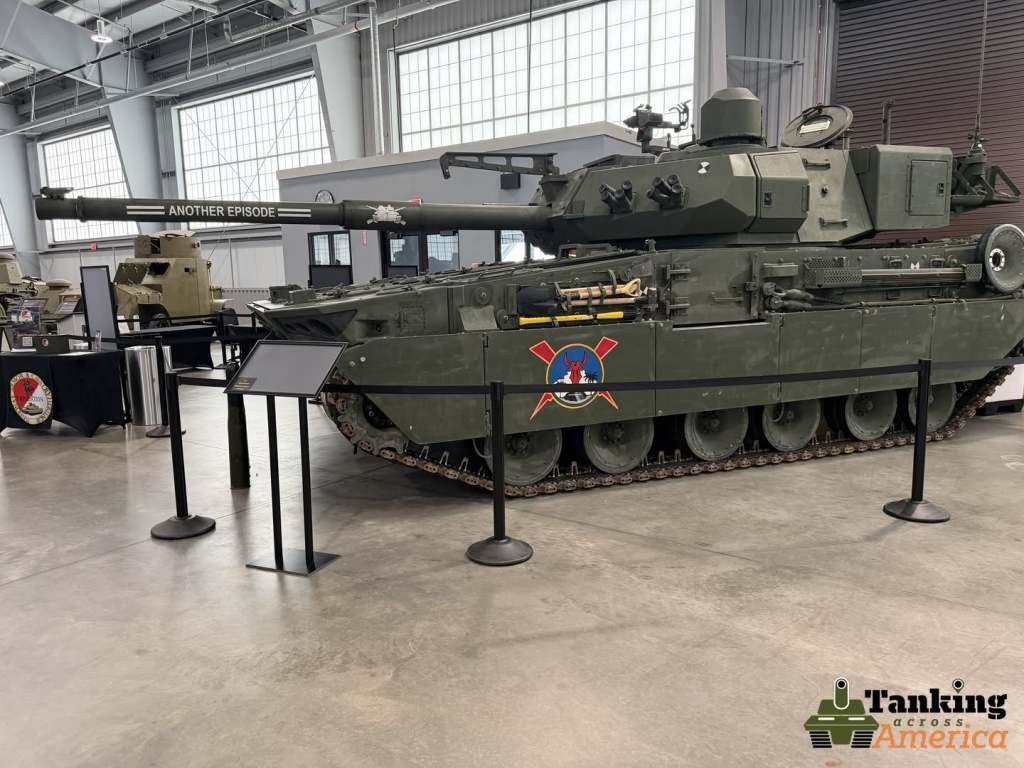
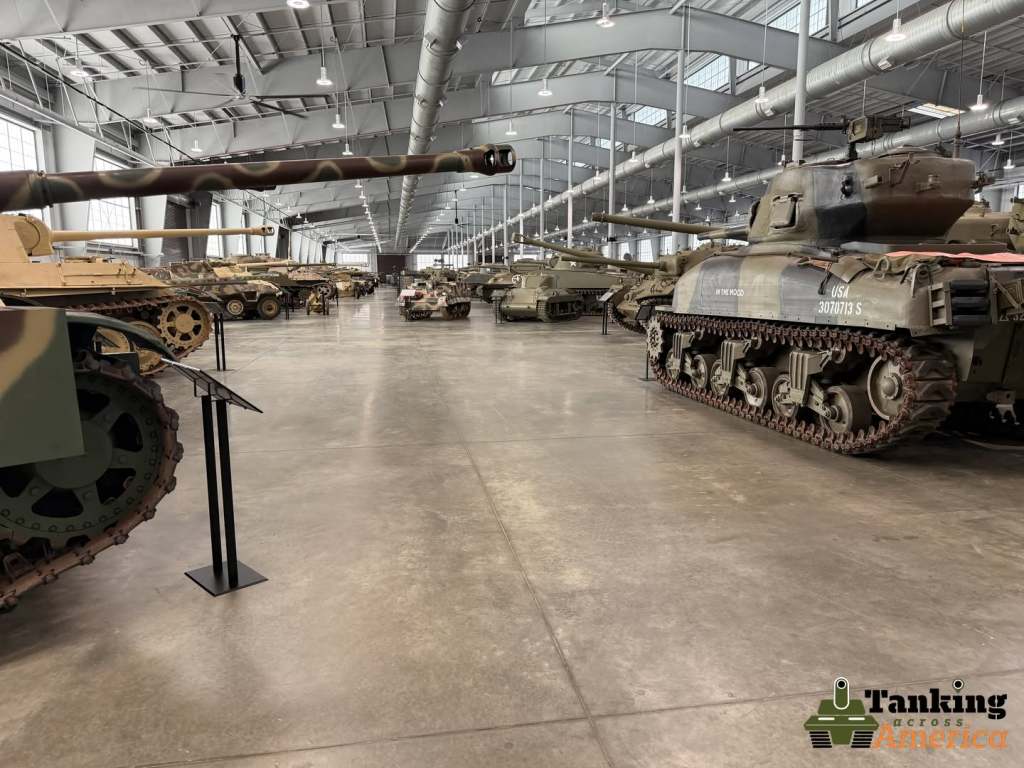
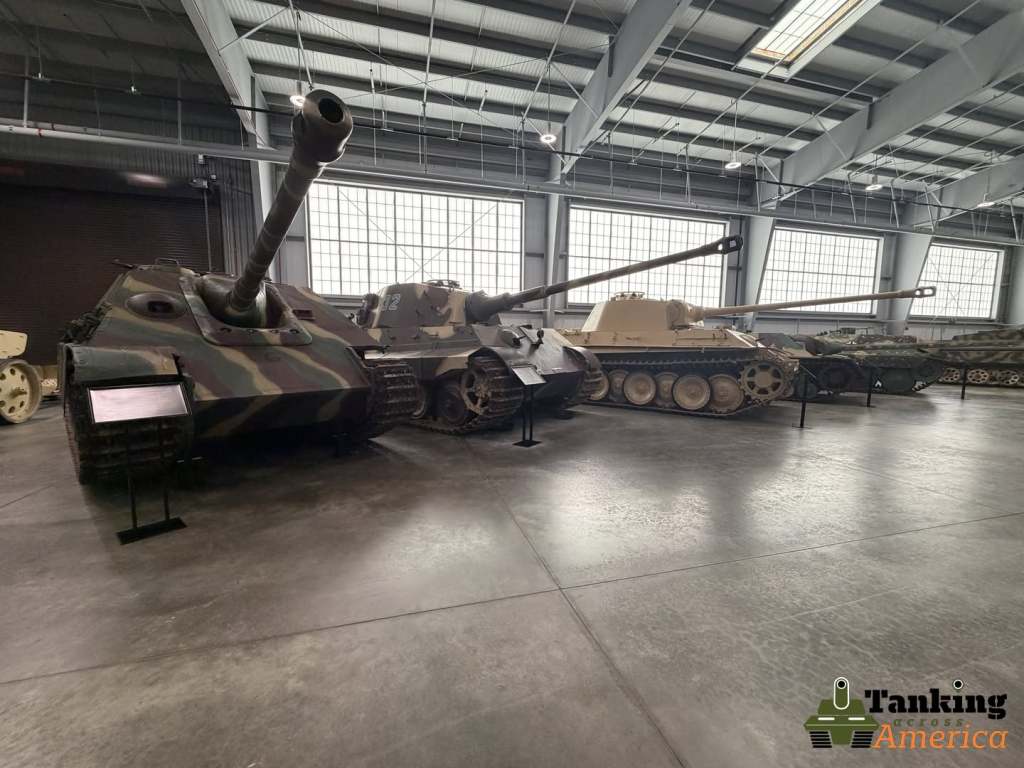
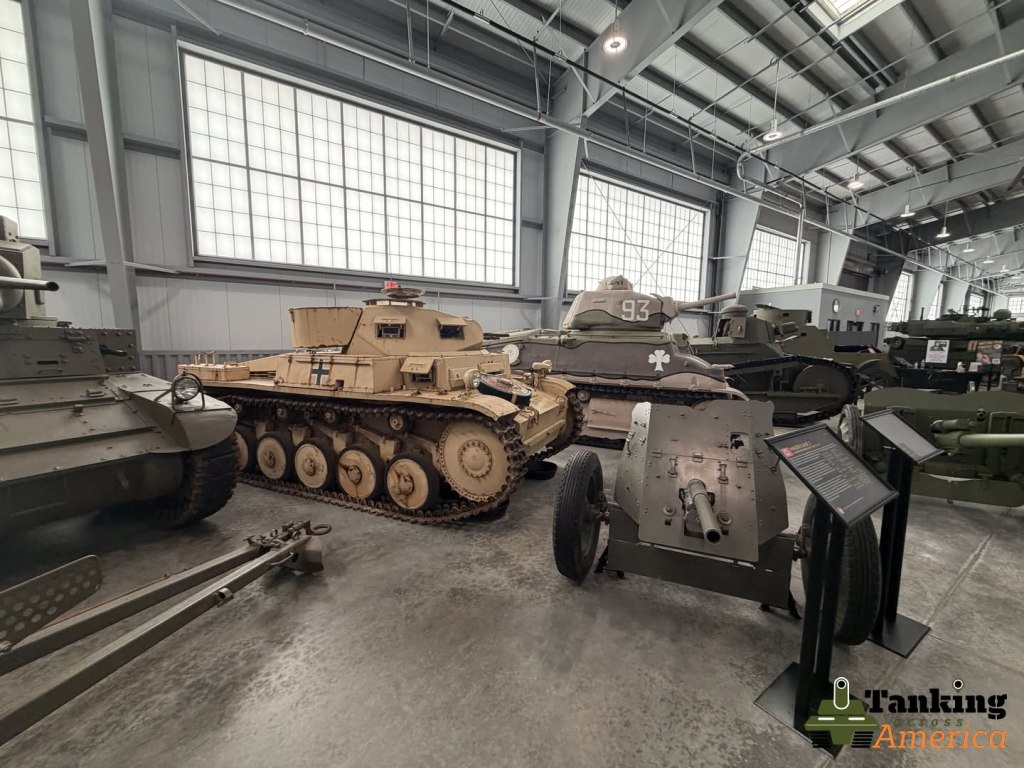
Here are some of the random photos I took this past weekend while at the Armor and Cavalry Collection at Fort Benning. I volunteer at the collection so I take a lot of photos.
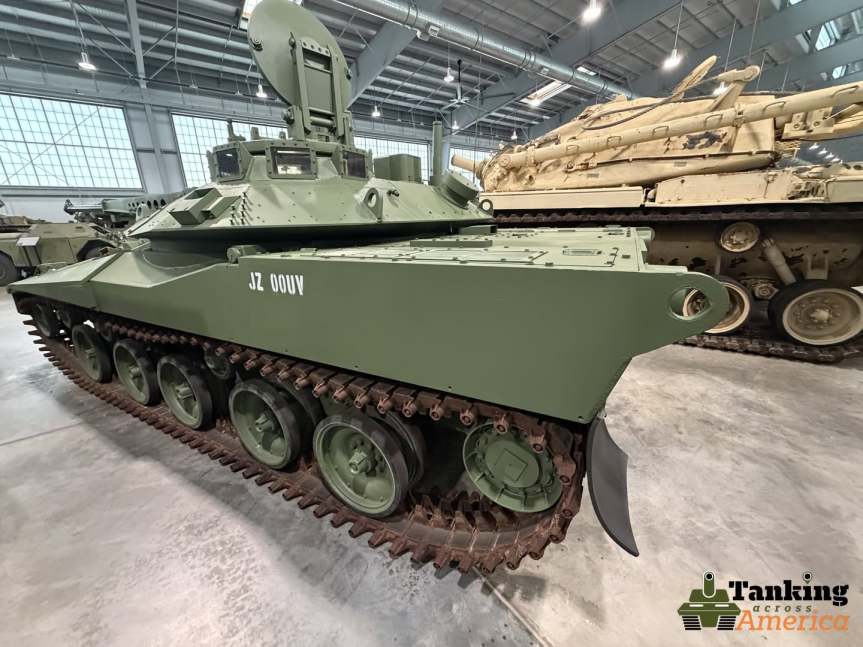
HSTV-L: America’s Experimental High-Speed Tank of the Future
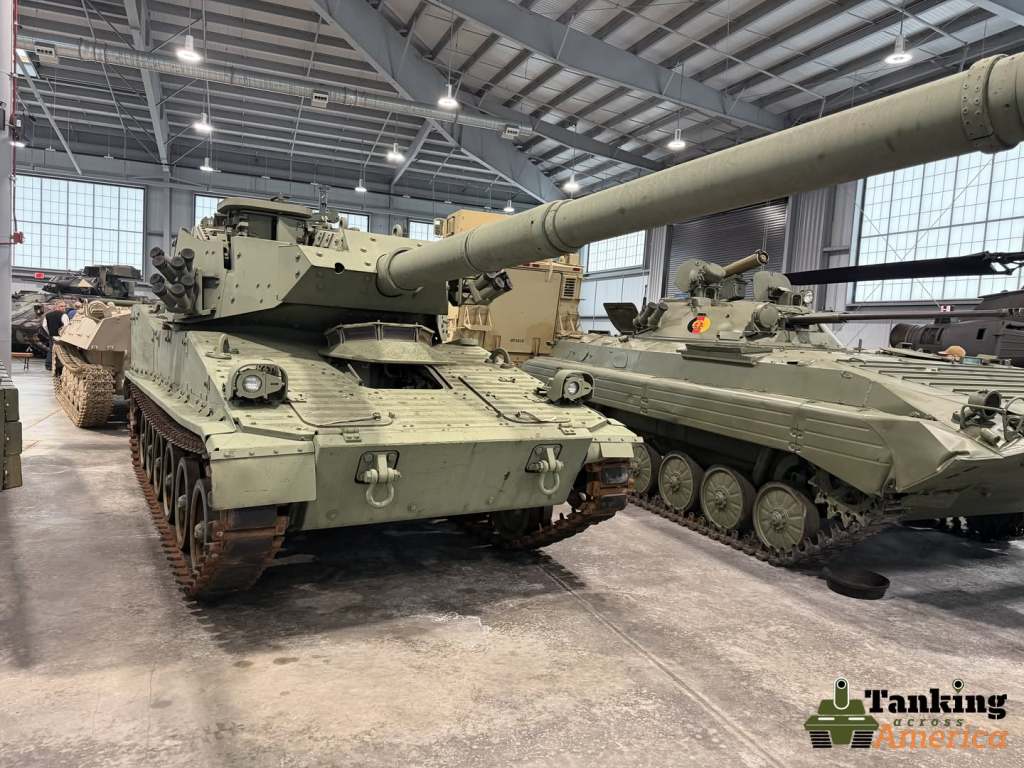
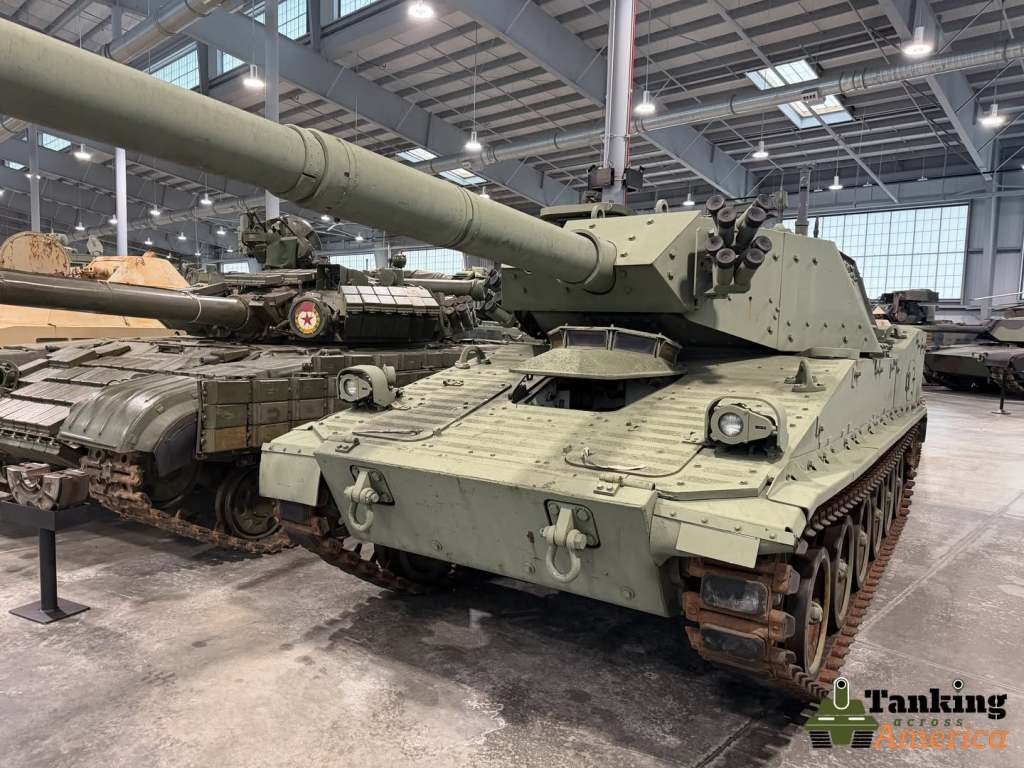
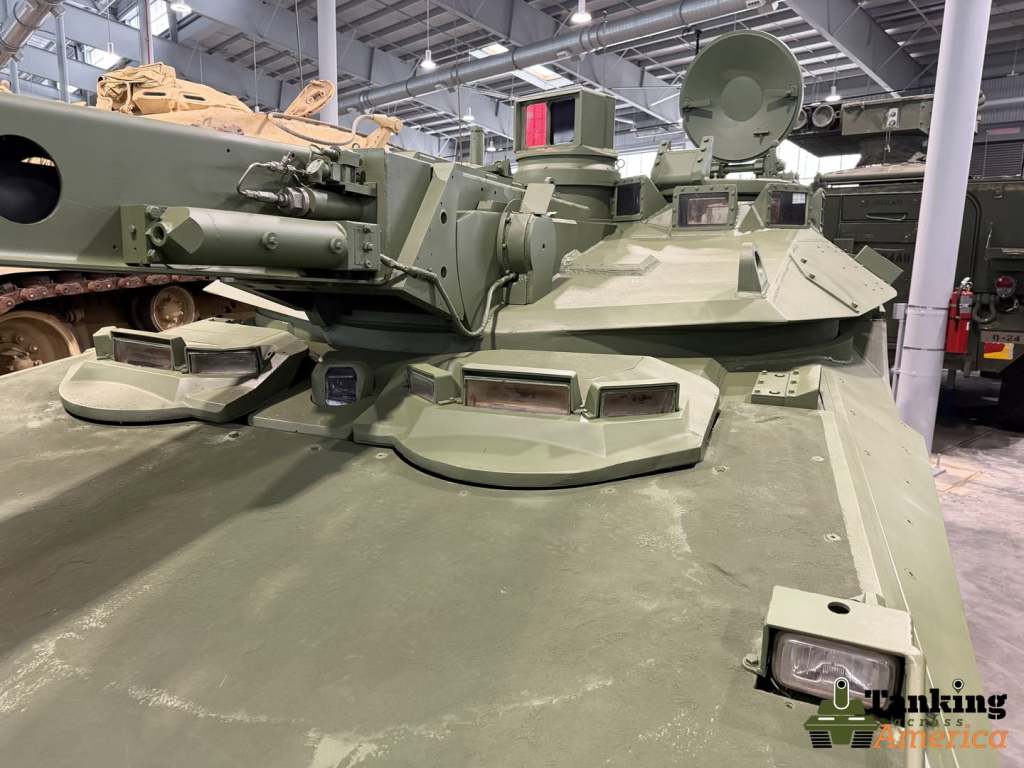
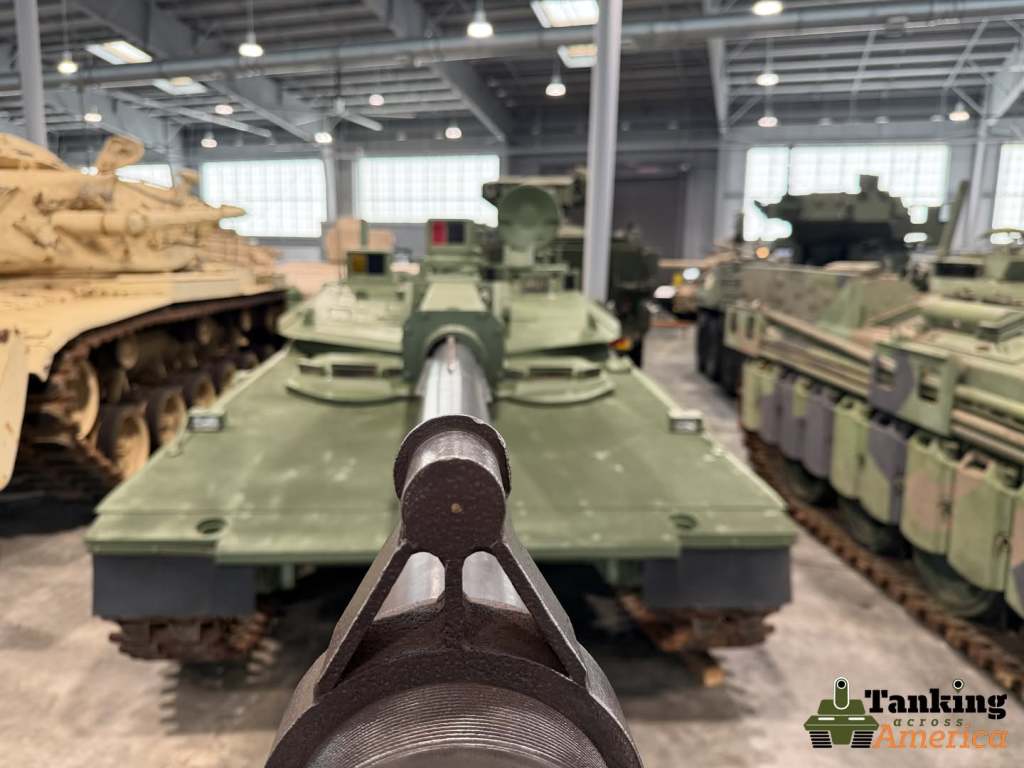
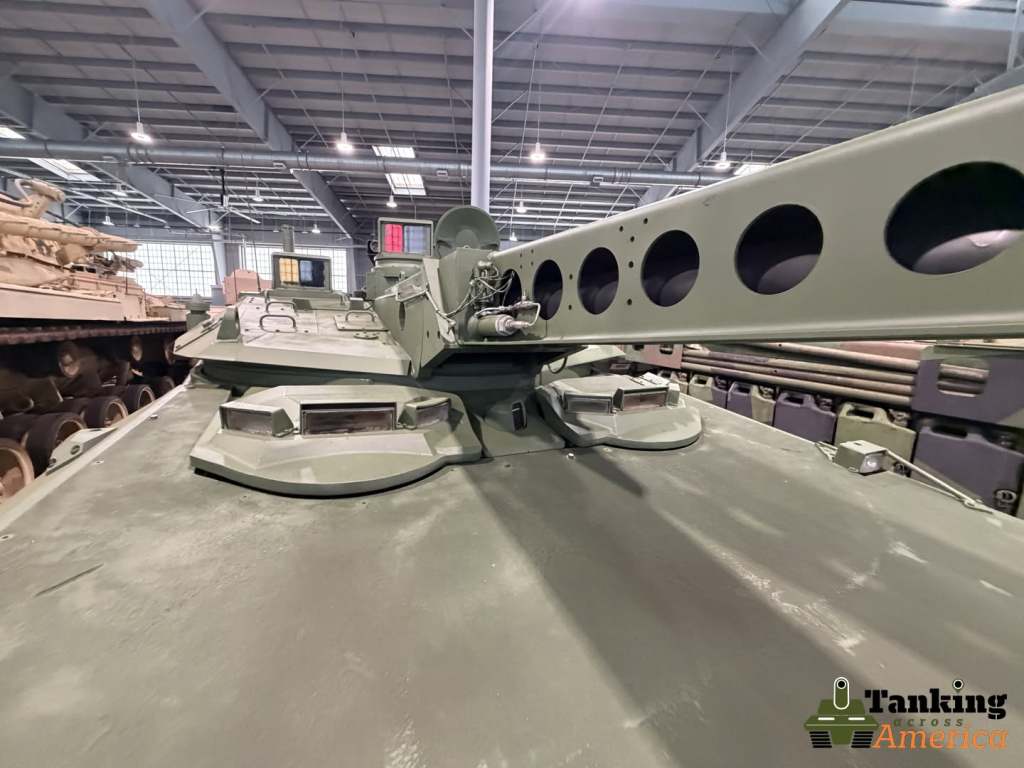
The HSTV-L looks like something that escaped from a Cold War science-fiction movie.
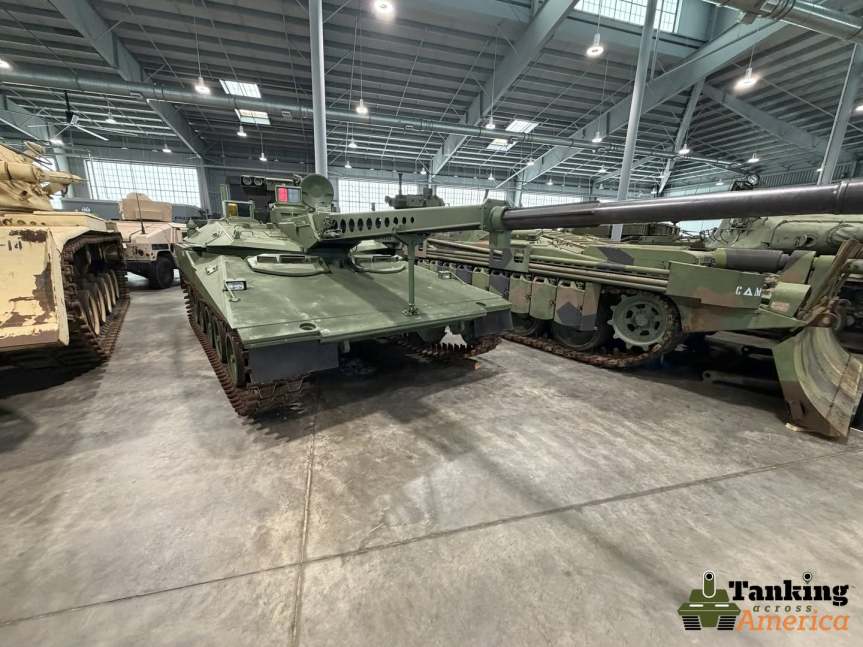
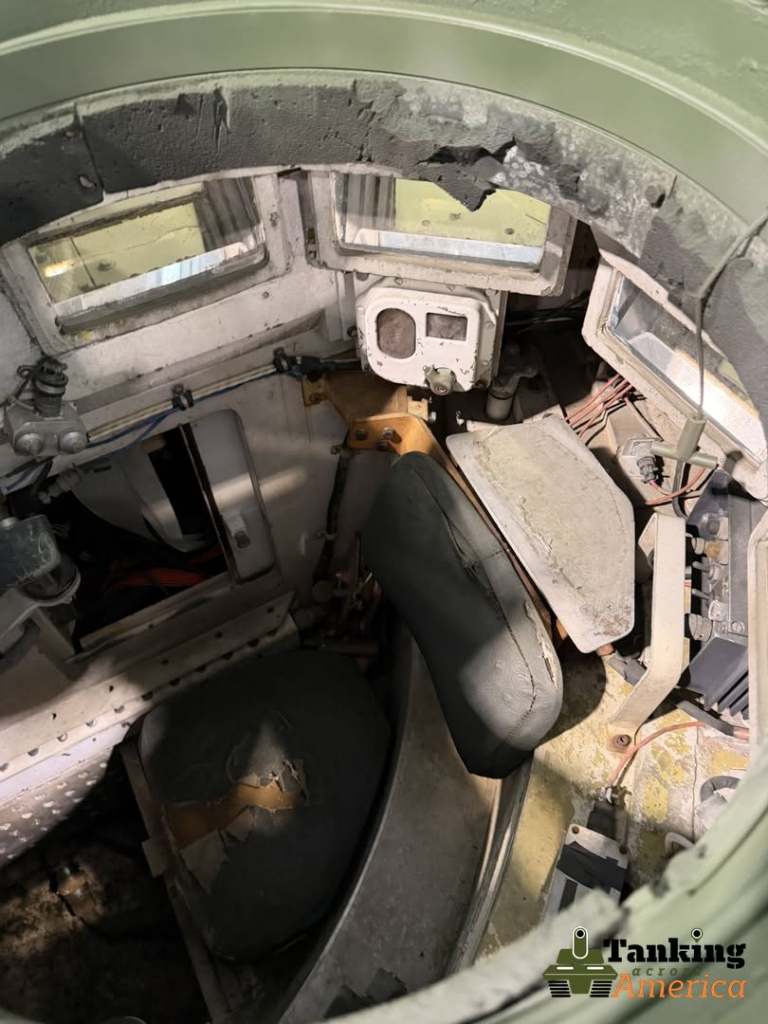
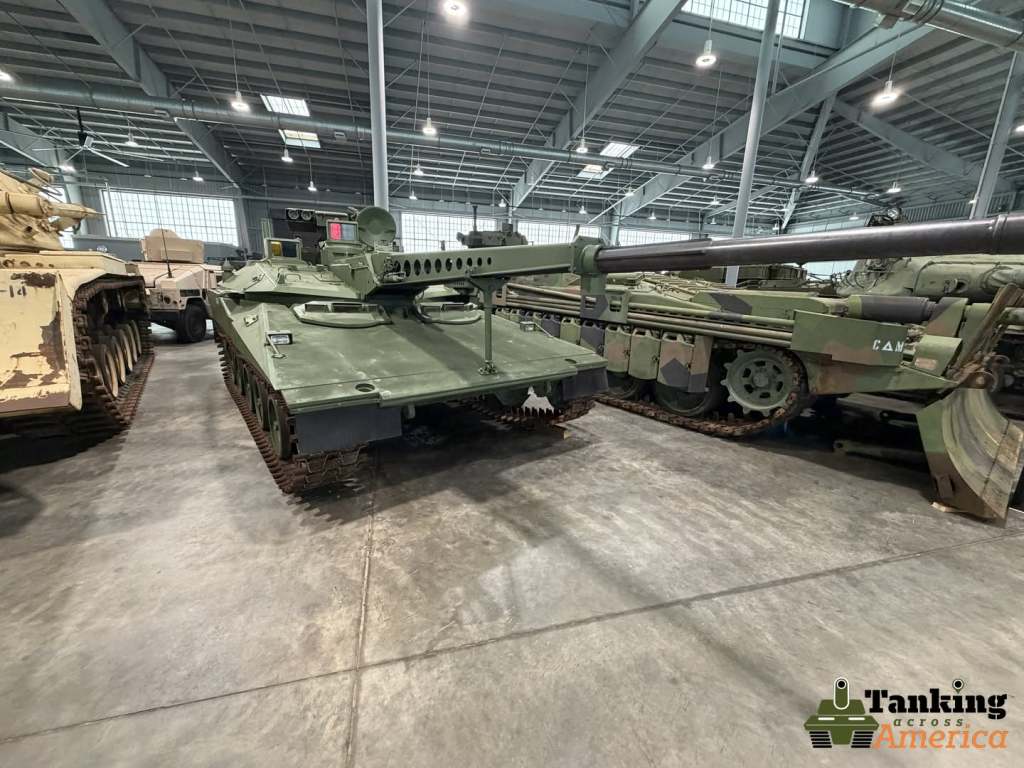
It was low, fast, powered by a gas turbine, packed with advanced electronics, and armed with a rapid-firing 75 mm cannon fed by an automatic loading system.
Yet the HSTV-L was never intended to become an ordinary production tank.
Its full name—High Survivability Test Vehicle–Lightweight—reveals its real purpose. Developed during the late 1970s, the HSTV-L was an experimental U.S. armored vehicle designed to answer a provocative question:
Could speed, firepower, technology, and a tiny silhouette keep a lightly armored vehicle alive on a battlefield dominated by increasingly powerful anti-tank weapons?
The answer produced one of the most fascinating American armored vehicles of the Cold War.
Rethinking the Light Tank
By the 1970s, the U.S. military was investigating what the next generation of armored vehicles might look like.
Traditional tank design generally revolved around balancing three competing qualities: firepower, protection, and mobility. More armor increased survivability but also increased weight. Larger weapons brought greater firepower but required larger turrets, more ammunition space, and stronger suspension systems.
The HSTV-L approached the problem differently.
Rather than trying to absorb enemy fire with enormous quantities of armor, the vehicle would attempt to avoid being hit in the first place.
The concept emphasized a low profile, rapid acceleration, high speed, advanced fire-control equipment, and the ability to fire accurately while moving.
The HSTV-L emerged from the U.S. Army’s Armored Combat Vehicle Technology program, or ACVT. In 1977, designs from AAI Corporation and Pacific Car and Foundry were evaluated, with AAI ultimately receiving the contract to construct the HSTV-L test vehicle.
Only one HSTV-L testbed was ultimately constructed.
But that single machine incorporated an extraordinary amount of experimental technology.
The 75 mm XM274: The Heart of the HSTV-L
The most distinctive feature of the HSTV-L was its main weapon.
Instead of mounting the 105 mm gun commonly found on Western tanks of the era, the vehicle carried the experimental 75 mm XM274 cannon developed by ARES Incorporated.
Calling it simply a “75 mm gun,” however, doesn’t really convey what made it interesting.
The weapon used an automatic loading system and specialized telescoped ammunition. The Army described the system as a high-rate-of-fire rotating-breech cannon capable of both single shots and bursts.
The objective wasn’t necessarily to destroy heavily armored vehicles with one enormous projectile.
Instead, the concept combined extremely high projectile velocity with rapid follow-up shots.
The HSTV-L could fire armor-piercing ammunition as well as high-explosive ammunition, giving the vehicle the potential to engage both armored and softer battlefield targets. The cannon was also stabilized, an important part of the project’s emphasis on firing accurately while moving.
For the late 1970s and early 1980s, it was an extraordinarily ambitious weapon system.
An Unusual Crew Layout
The HSTV-L was just as unconventional inside as it was outside.
It carried only three crew members: commander, gunner, and driver.
But unlike a conventional tank, the gunner wasn’t sitting beside the commander in the turret.
Both the driver and gunner were positioned inside the hull, while the commander occupied the turret.
This helped give the HSTV-L its remarkably low silhouette.
The vehicle stood only about 2 meters to the top of the turret, excluding its higher fittings, and the hull itself was only about 1.4 meters high.
Reducing the exposed profile of a tank had obvious advantages. A smaller target is harder to spot, harder to track, and potentially harder to hit.
That fit perfectly with the HSTV-L philosophy.
Survival wasn’t supposed to come primarily from thick armor.
It came from not presenting the enemy with an easy target.
650 Horsepower in a Lightweight Vehicle
Then there was the engine.
The AAI HSTV-L used an Avco Lycoming gas turbine producing approximately 650 horsepower, connected to an automatic transmission.
That might not sound extraordinary compared with the 1,500-horsepower engines of modern main battle tanks.
But the HSTV-L was far lighter.
Its test weight eventually grew considerably beyond the designers’ original ambitions. During testing, the Army reported a combat-loaded weight of around 19 tons without special armor and roughly 22 tons with it.
Even so, 650 horsepower gave the little vehicle impressive mobility.
During contractor testing at Aberdeen Proving Ground, the HSTV-L reached slightly more than 51 mph, or roughly 82 km/h. It could accelerate from 0 to 30 mph in approximately 11.8 seconds.
For a tracked armored vehicle developed more than four decades ago, those were serious numbers.
The HSTV-L also employed hydropneumatic suspension, reinforcing the project’s focus on mobility and stable firing on the move.
Don’t Get Hit
All of this technology served the idea behind the vehicle’s name: High Survivability.
That sounds strange when discussing a lightly armored tank.
Normally, survivability and armor are closely linked. The HSTV-L instead explored a different equation:
Low profile + mobility + situational awareness + accurate fire = survivability.
The theory was that a vehicle capable of rapidly moving between firing positions, exposing very little of itself, locating targets quickly, firing accurately, and relocating before the enemy responded might survive without the enormous armor package of a main battle tank.
This wasn’t merely an attempt to build a faster tank.
It was an experiment in changing how a tank survived.
Advanced Fire Control
The HSTV-L’s electronics were another major part of the experiment.
The vehicle incorporated sophisticated sighting and fire-control equipment intended to allow accurate engagements while either the HSTV-L or its target was moving.
Its commander had an independently stabilized sight that could be used to locate targets separately from the gunner.
Today, the concept of a commander independently searching for targets while the gunner engages another one is familiar on advanced tanks.
In the HSTV-L’s era, however, these technologies represented the leading edge of armored vehicle development.
The broader ACVT program was specifically interested in evaluating different levels of fire-control sophistication and suspension performance during firing on the move. Army documents also discussed experimenting with the rapid-fire cannon against low- and medium-performance aircraft.
The HSTV-L was therefore more than a light tank prototype.
It was effectively a rolling laboratory.
Why Didn’t the Army Build It?
With all that technology, why didn’t fleets of HSTV-Ls enter service?
Because experimental vehicles don’t necessarily have to become production vehicles to succeed.
The HSTV-L was designed primarily to test ideas.
And some of those ideas came with serious compromises.
Its lightweight construction inevitably limited protection. Its sophisticated automatic cannon and fire-control equipment introduced technological complexity. Its ammunition capacity was limited compared with conventional tanks, and the vehicle’s weight increased during development.
Most importantly, the HSTV-L existed during a period when the U.S. military was still trying to determine exactly what role its future lightweight armored vehicles should perform.
Testing continued into the 1980s, but the HSTV-L never became an operational U.S. Army tank.
That didn’t make the project useless.
Quite the opposite.
The Army described HSTV-L testing as a way to examine high mobility, agility, and automatic cannon technology in a vehicle configured more realistically than some of the program’s other engineering testbeds.
Information from HSTV-L and related testing subsequently contributed to thinking about future lightweight armored systems.
The HSTV-L’s Legacy
The HSTV-L occupies an interesting place in American tank history.
It wasn’t a failed production tank because it was never really a production tank to begin with.
It was an experiment.
Its designers explored concepts that would become increasingly important in armored warfare: automatic loading, stabilized weapons, advanced sights, small crews, high power-to-weight ratios, sophisticated fire control, and the ability to rapidly detect and engage targets while moving.
Some concepts worked better than others.
Some appeared elsewhere in different forms.
And some remained technological curiosities.
But that was precisely the point.
Test vehicles exist to discover which ideas are worth pursuing before thousands of vehicles are built around them.
A Tank Designed Around a Different Kind of Armor
The HSTV-L never fought a battle.
It never equipped an armored battalion.
Only one test vehicle was built.
Yet decades later, it remains one of the most recognizable American experimental tanks of the Cold War.
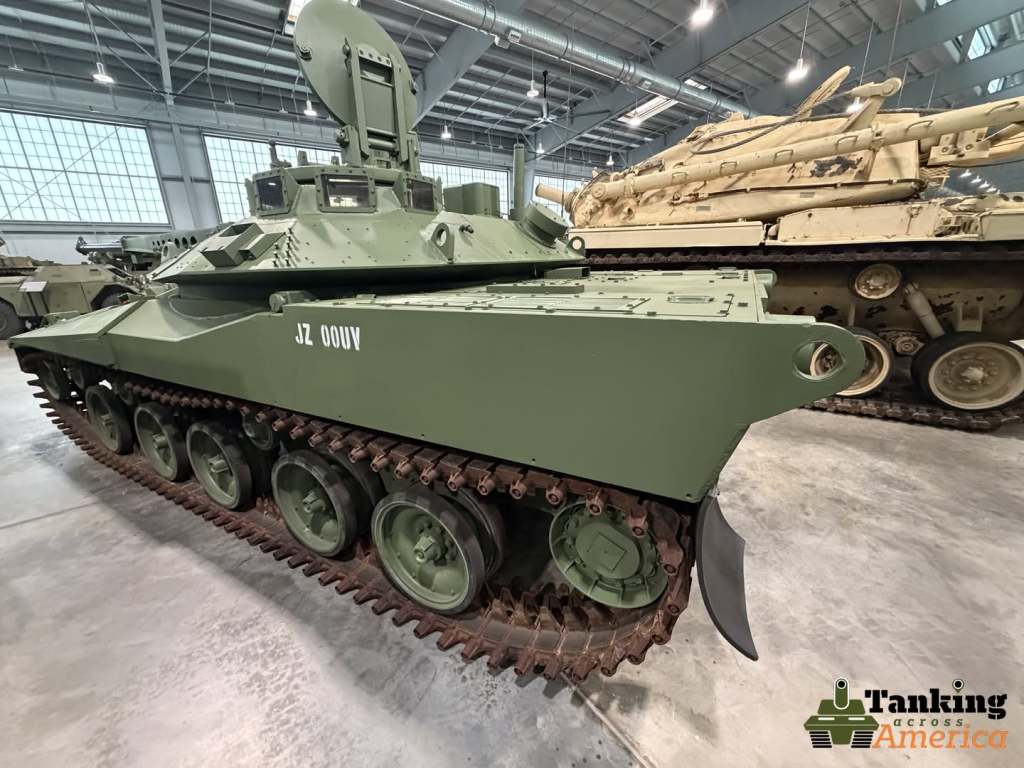
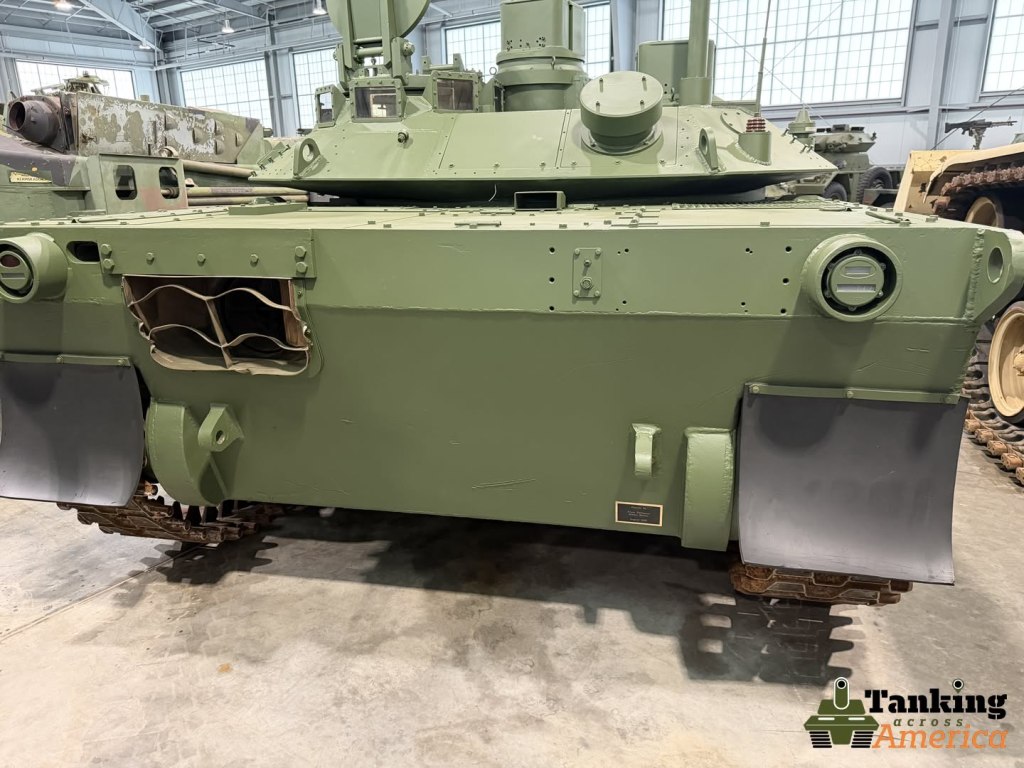
Part of that is undoubtedly its appearance. With its tiny turret, dramatically sloped hull, long 75 mm cannon, and unusually low profile, the HSTV-L still looks futuristic.
But its real significance lies underneath.
The HSTV-L represented an attempt to redefine survivability itself.
Instead of asking:
“How much armor can we put on the vehicle?”
Its designers were effectively asking:
“What if the enemy can’t hit it?”
That question led to a 650-horsepower, gas-turbine-powered experimental tank capable of more than 50 mph, carrying an autoloaded rapid-fire cannon and advanced fire-control technology.
It never became America’s next light tank.
But as a glimpse of what engineers thought the future of armored warfare might look like, the HSTV-L remains one of the most fascinating tanks America never built.
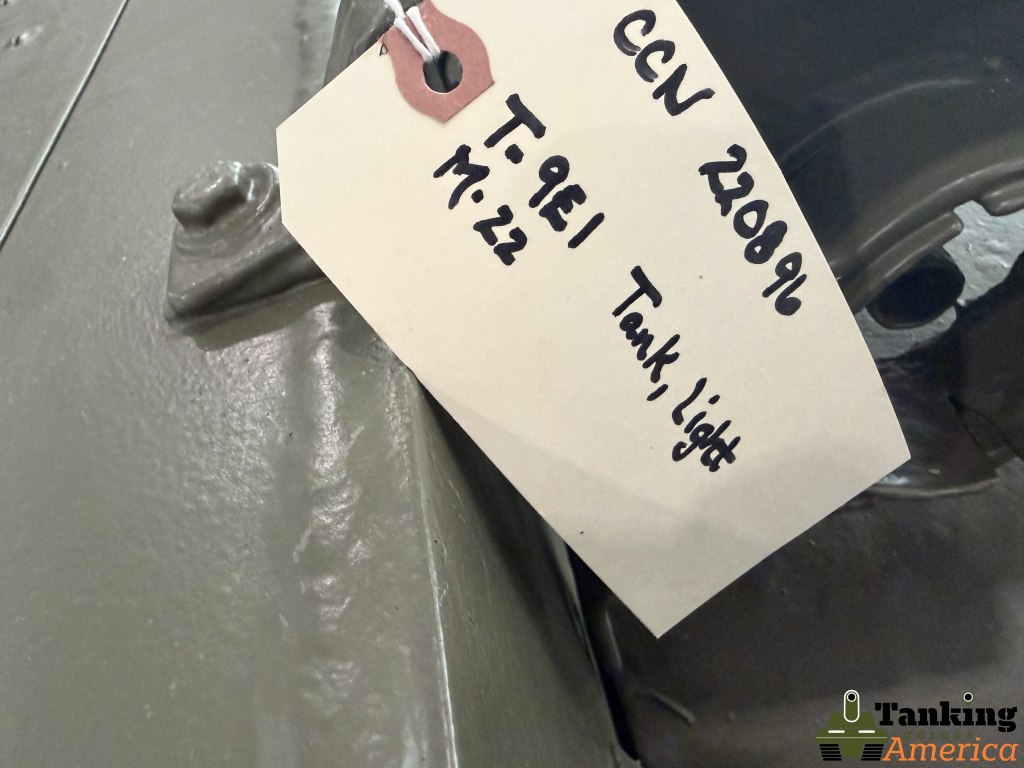
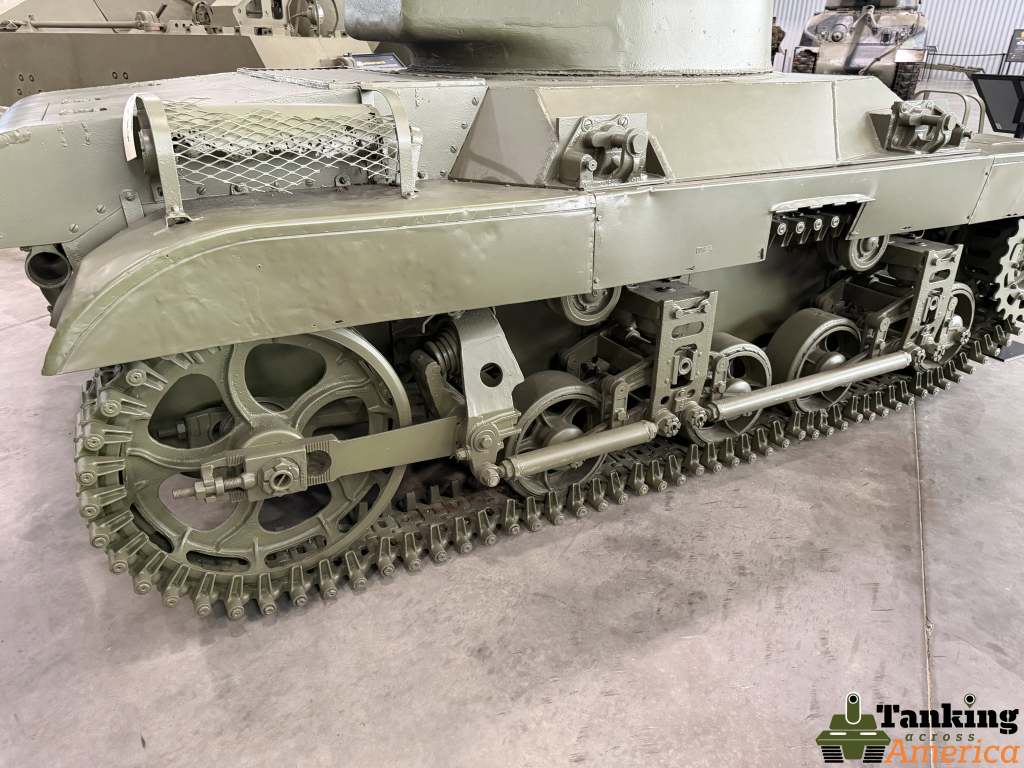
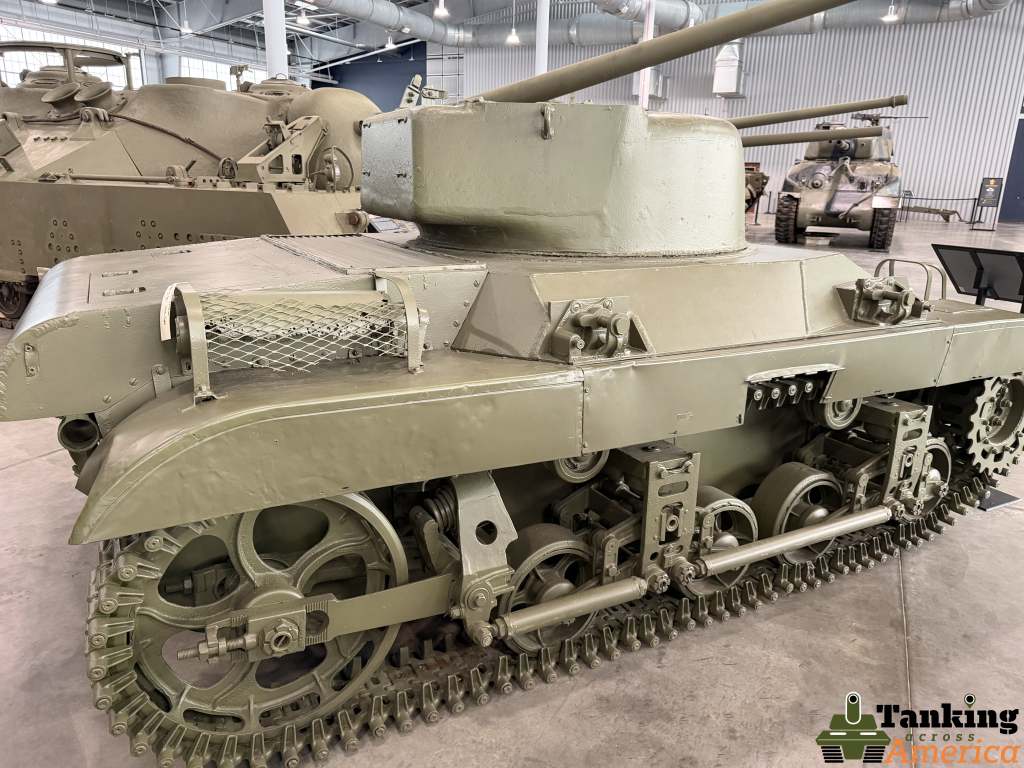
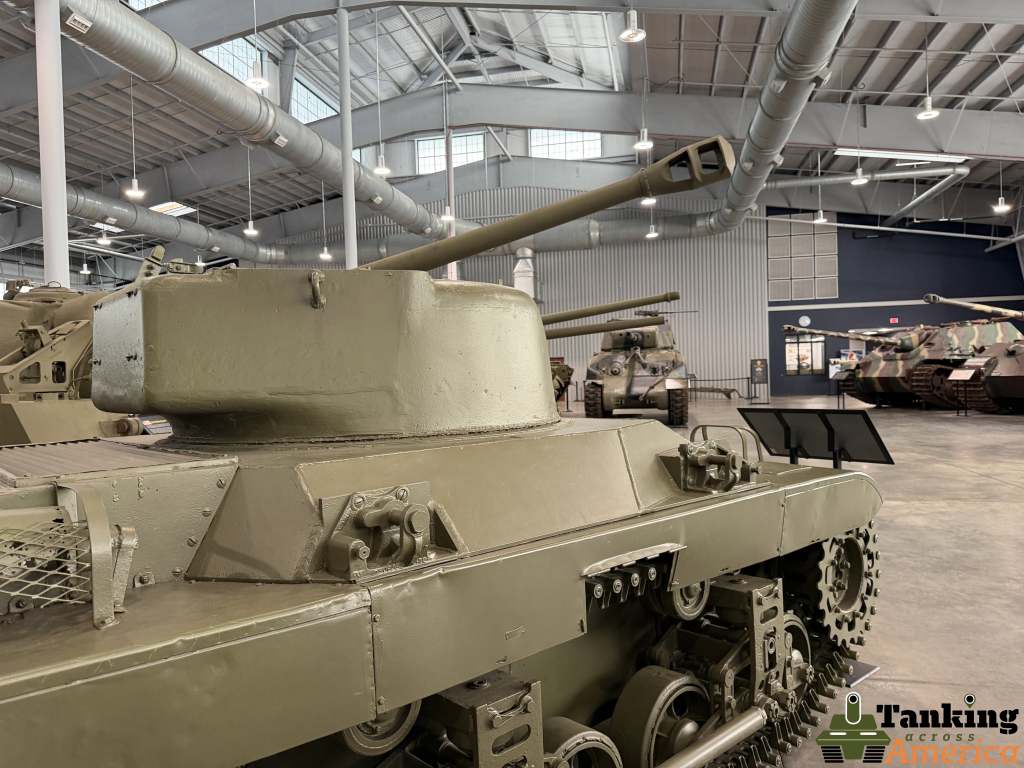
Here’s a ready-to-publish draft:The M22 Locust: America’s Tiny Airborne Tank of World War II
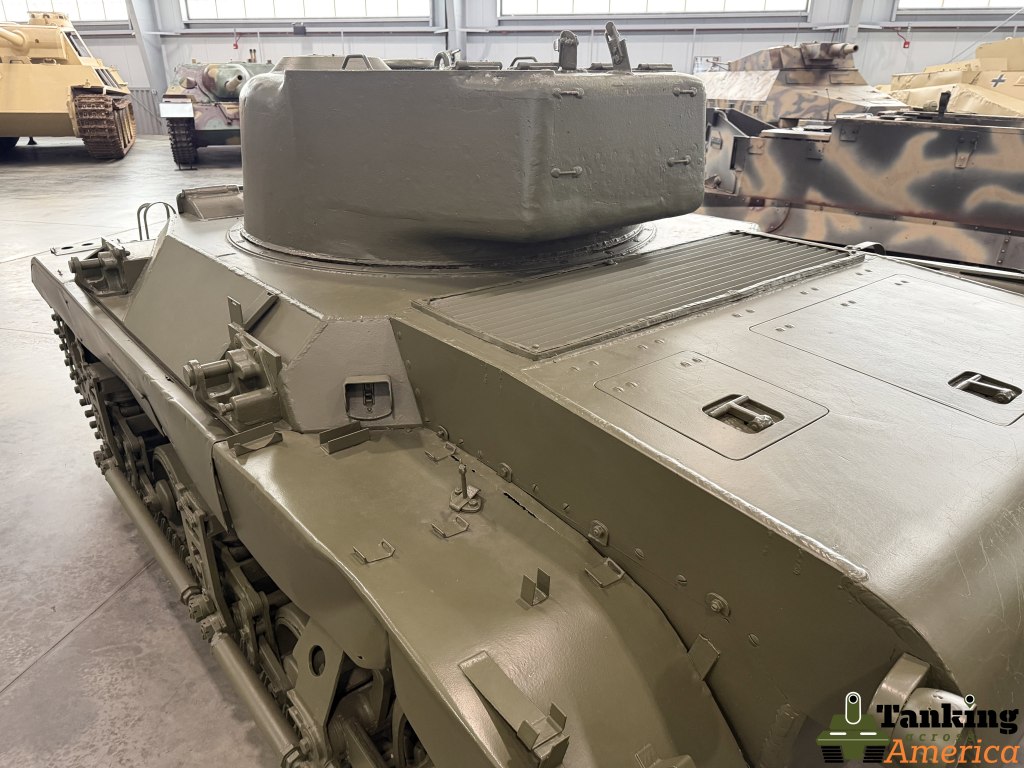
When most people picture an American tank from World War II, they probably imagine the rugged M4 Sherman rumbling across France or perhaps one of the heavier armored vehicles that appeared toward the end of the conflict. The M22 Locust, however, was something very different.
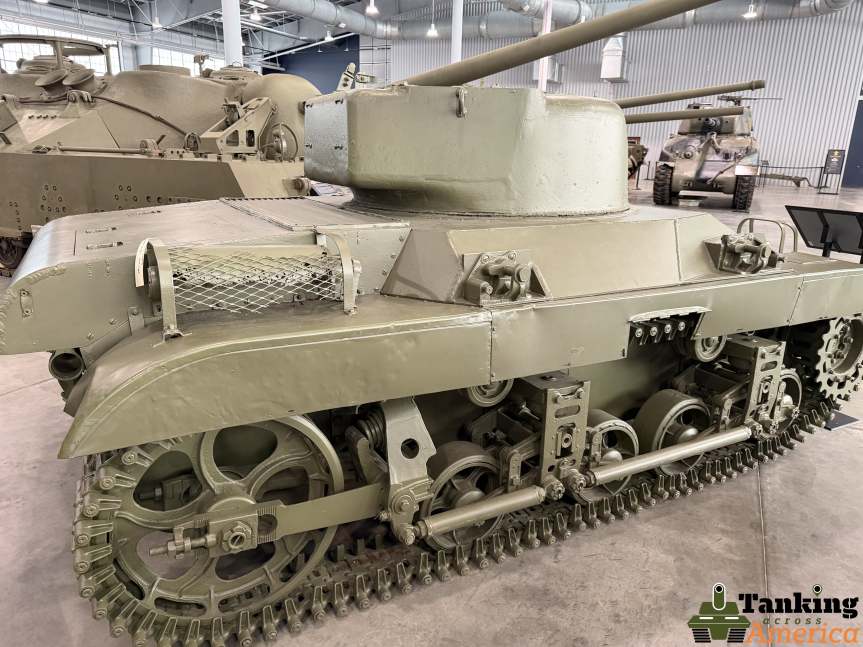
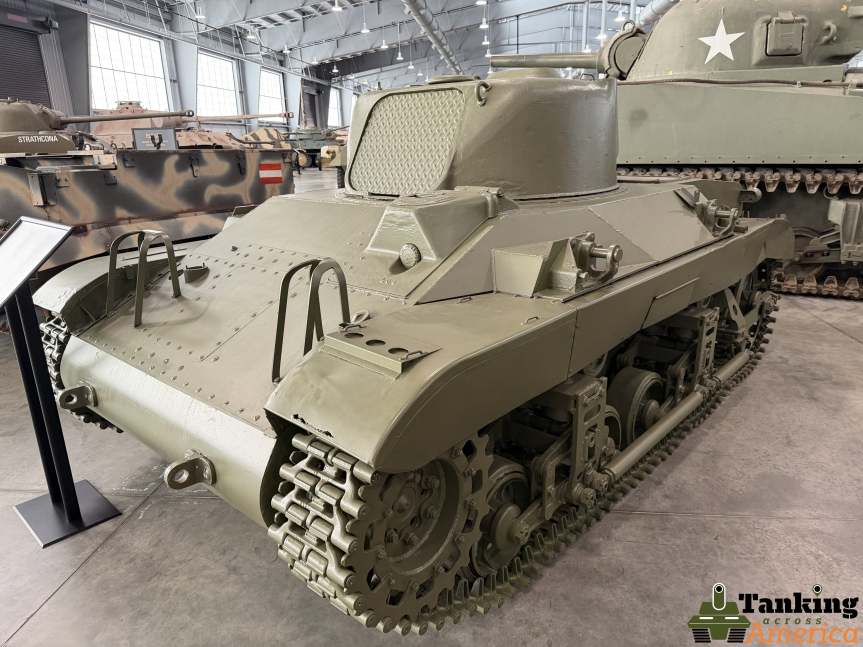
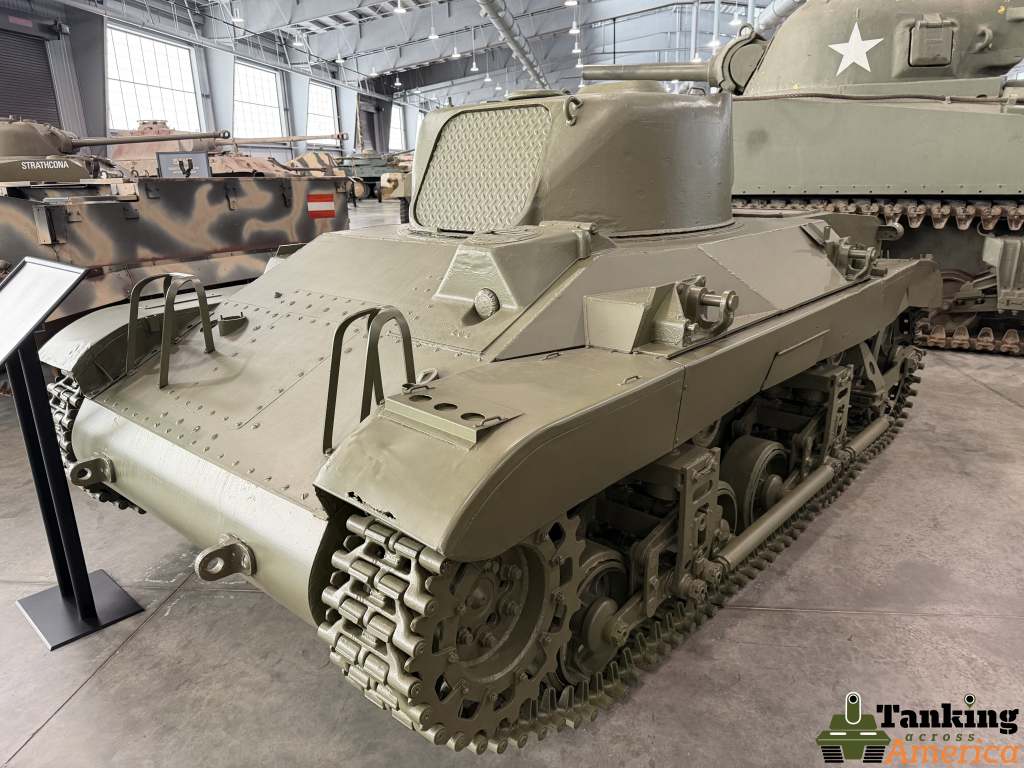
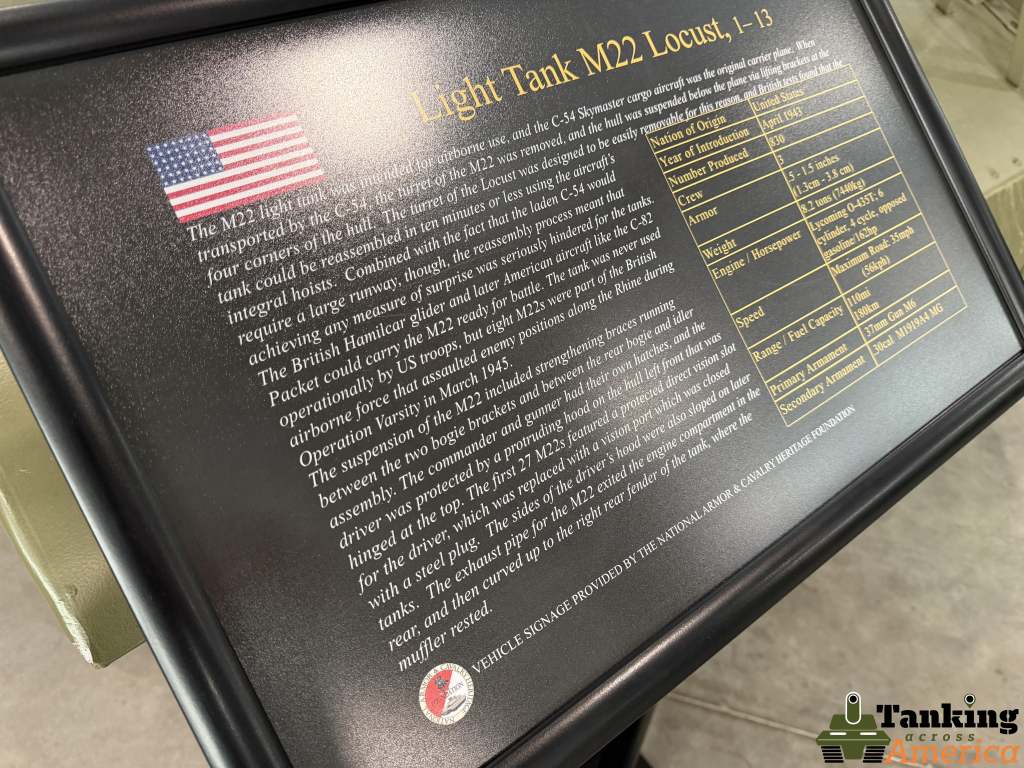
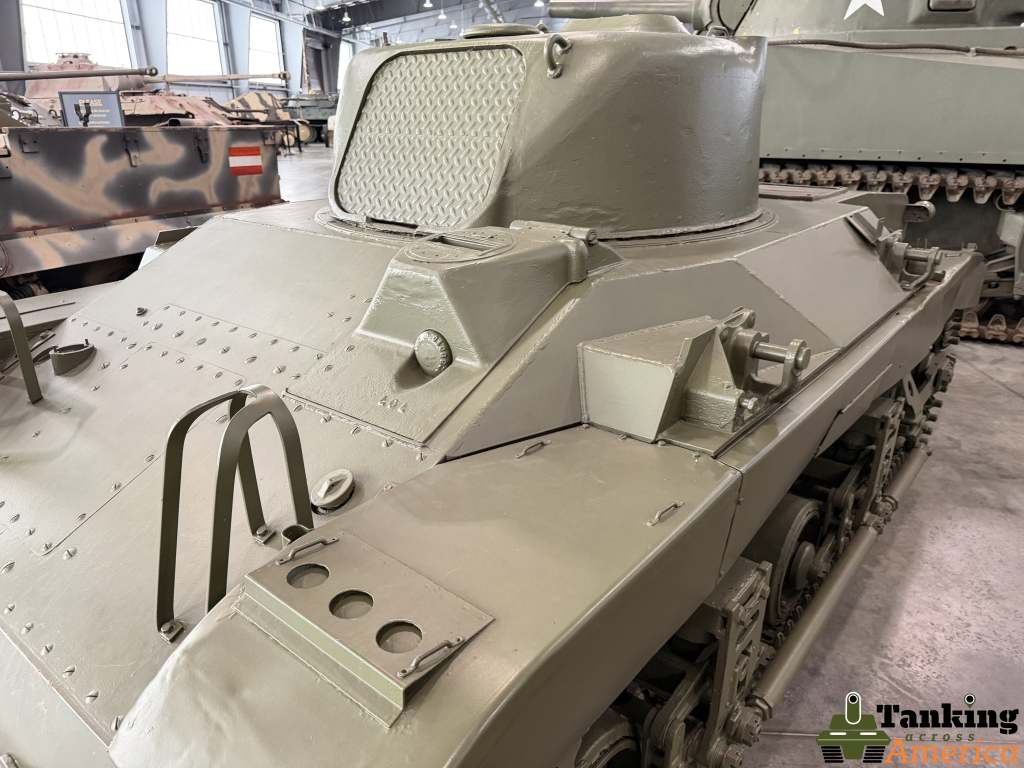
Small, lightly armored, and weighing only around eight tons, the M22 was designed around an ambitious idea: give airborne troops a tank that could travel with them into battle.
It was an intriguing concept. In practice, however, the Locust became one of World War II’s more unusual armored experiments.
A Tank Built for Airborne Warfare
The rapid development of airborne forces during the early years of World War II created a new problem for military planners. Paratroopers and glider troops could land behind enemy lines, but they generally lacked the heavy weapons and armored support available to conventional ground forces.
The solution seemed straightforward: build a tank light enough to be transported by aircraft.
In 1941, the U.S. Army began pursuing what would eventually become the M22 Light Tank. The design was developed by Marmon-Herrington, a company already experienced with light armored vehicles.
Keeping the tank small enough for air transport dictated nearly every aspect of its design.
The M22 was roughly 13 feet long and stood only about six feet tall. Its combat weight was approximately 7.4 metric tons, making it dramatically lighter than the M4 Sherman.
Its crew consisted of just three men: a commander, driver, and gunner.
For its main weapon, the Locust carried a 37 mm M6 cannon, supplemented by a coaxial .30-caliber machine gun. This was respectable armament for a light tank conceived in 1941, but battlefield technology was advancing quickly.
By the time the M22 was ready for combat, the 37 mm gun was already struggling against newer German tanks.
The Air-Transport Problem
Designing a tiny tank was only half the challenge. The other half was figuring out how to get it into battle.
The United States originally intended the M22 to work with the Douglas C-54 Skymaster transport aircraft. Unfortunately, the tank could not simply be driven intact into the aircraft.
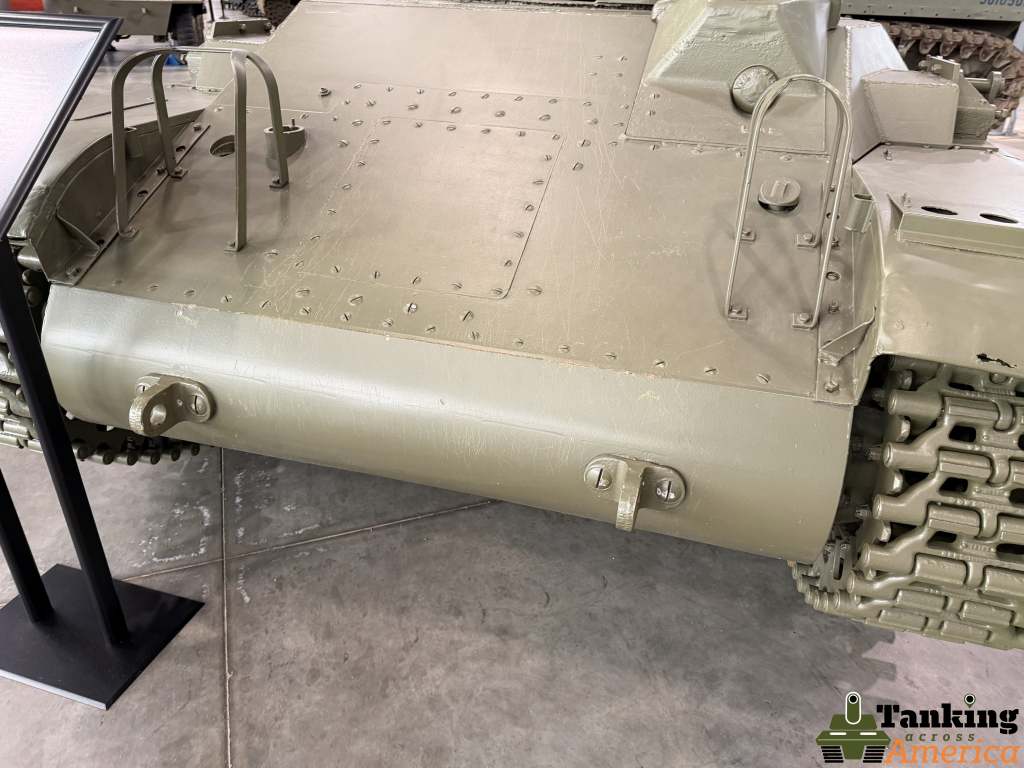
Instead, the turret could be removed and carried inside the C-54 while the tank’s hull was transported beneath the aircraft.
That arrangement was technically possible, but hardly ideal for an airborne unit expected to land and immediately begin fighting.
The British had another solution.
Their large General Aircraft Hamilcar cargo glider had been designed specifically to carry heavy equipment for airborne forces. Unlike the American arrangement, the Hamilcar could carry a light tank intact.
This made the Locust considerably more practical in British service.
The British Take an Interest
Although the M22 was an American design, it was the British Army that ultimately gave the tank its most famous combat role.
Britain had already experimented extensively with airborne armored vehicles, including the Tetrarch light tank. Under Lend-Lease, the British received M22s and gave the vehicle the name by which it is best remembered today:
Locust.
The tank eventually equipped elements of the British 6th Airborne Armoured Reconnaissance Regiment.
Its big moment came during Operation Varsity on March 24, 1945.
Varsity was the massive Allied airborne operation supporting the crossing of the Rhine into Germany. British and American airborne forces were dropped or landed east of the river to capture important terrain and disrupt German defenses.
Among the aircraft approaching the landing zones were Hamilcar gliders carrying Locust tanks.
The Locust Goes to War
The Locust’s combat debut demonstrated both the possibilities and the limitations of airborne armor.
Eight Locusts were committed to Operation Varsity.
Simply reaching the battlefield was dangerous. Airborne operations exposed slow-moving transport aircraft and gliders to intense anti-aircraft and small-arms fire, while landing heavy equipment in fields created additional hazards.
Some of the Locusts were lost or damaged during the landing phase.
Those that became operational provided useful support to the airborne troops, but the fighting also revealed the tank’s vulnerabilities.
The Locust’s armor was extremely thin. Protection varied depending on the location, but the vehicle was designed to prioritize low weight rather than survivability. Heavy machine guns, anti-tank rifles, artillery fragments, and virtually any dedicated anti-tank weapon could pose a serious threat.
Its 37 mm cannon was also badly outclassed by 1945.
Against infantry positions, machine-gun nests, soft-skinned vehicles, and other lightly protected targets, the Locust could still be useful. Against late-war German tanks and anti-tank guns, however, its chances were considerably worse.
Too Specialized for Its Own Good
The M22 Locust illustrates one of the fundamental problems with airborne armored vehicles.
A tank normally benefits from three things: firepower, armor, and mobility.
Making a tank light enough to fly forces designers to compromise the first two.
More armor means more weight. A larger cannon means more weight. More ammunition means more weight. A bigger turret means more weight.
The aircraft transporting the tank imposes an unforgiving limit on all of them.
The Locust therefore became a tank optimized not primarily for fighting, but for being transported to the fight.
That distinction mattered.
By 1944 and 1945, even ordinary medium tanks carried guns and armor far beyond what designers had anticipated when development of the M22 began. The Locust entered service in a battlefield environment that had evolved faster than the vehicle itself.
An American Tank That America Never Used in Combat
One of the strangest aspects of the M22’s story is that although the United States developed and produced it, American forces never used the Locust in combat.
More than 800 were manufactured before production ended in 1945, but the U.S. Army ultimately concluded that the vehicle’s limitations—and the difficulties involved in transporting it—reduced its usefulness.
The British proved that an airborne tank could actually be delivered into battle by glider, but Operation Varsity also demonstrated just how vulnerable such a vehicle could be once it arrived.
After World War II, the Locust quickly became obsolete.
Some vehicles nevertheless continued their careers abroad. A number eventually served with foreign militaries, including Egypt, extending the life of a tank originally conceived for a very specific wartime mission.
A Fascinating Dead End in Tank Development
It would be easy to dismiss the M22 Locust as a failed tank.
That interpretation misses what makes the vehicle interesting.
The Locust represented an attempt to solve a genuinely difficult tactical problem. Airborne forces needed mobile firepower, but the aircraft of the early 1940s placed severe restrictions on what could accompany them.
Engineers responded by creating one of the smallest operational tanks of World War II.
The result wasn’t powerful enough to compete with conventional tanks, and the technology required to transport it remained cumbersome. But the underlying idea—giving rapidly deployed troops their own armored fire support—didn’t disappear.
Later generations would approach the problem using larger transport aircraft, air-droppable armored vehicles, helicopters, anti-tank missiles, and increasingly mobile infantry weapons.
In that sense, the M22 Locust belongs to an important period of experimentation in airborne warfare.
It may have been tiny. It may have arrived too late. And it certainly wasn’t going to win a duel with a Panther.
But few tanks can claim they were designed with the expectation that flying to the battlefield was simply part of the job.
A strong next step would be adding a specifications box, Operation Varsity sidebar, and SEO title/meta description to turn this into a more polished history-site article.
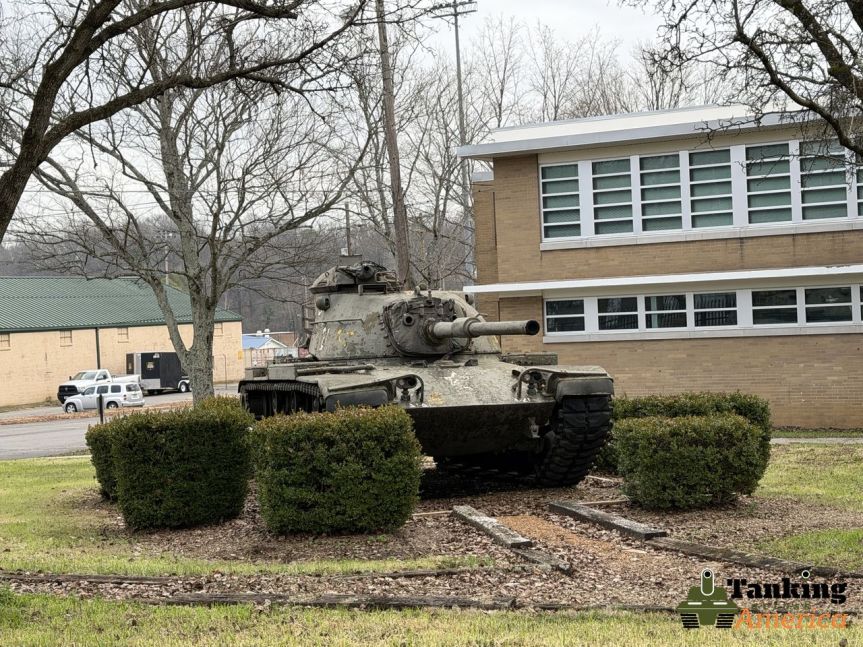
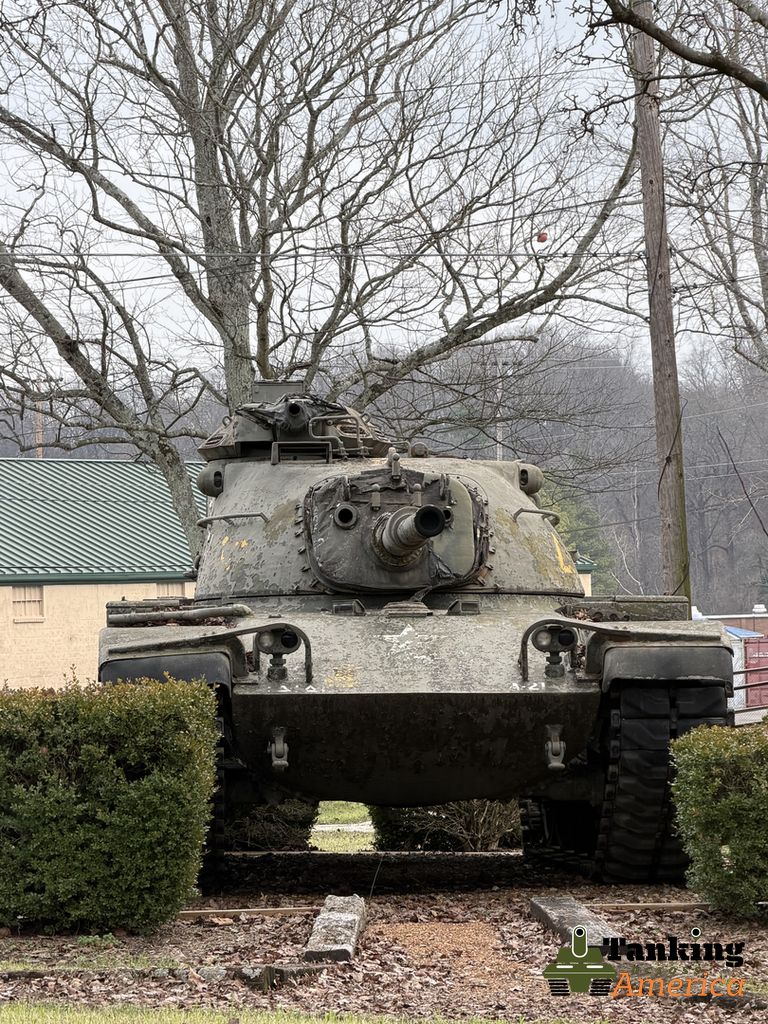
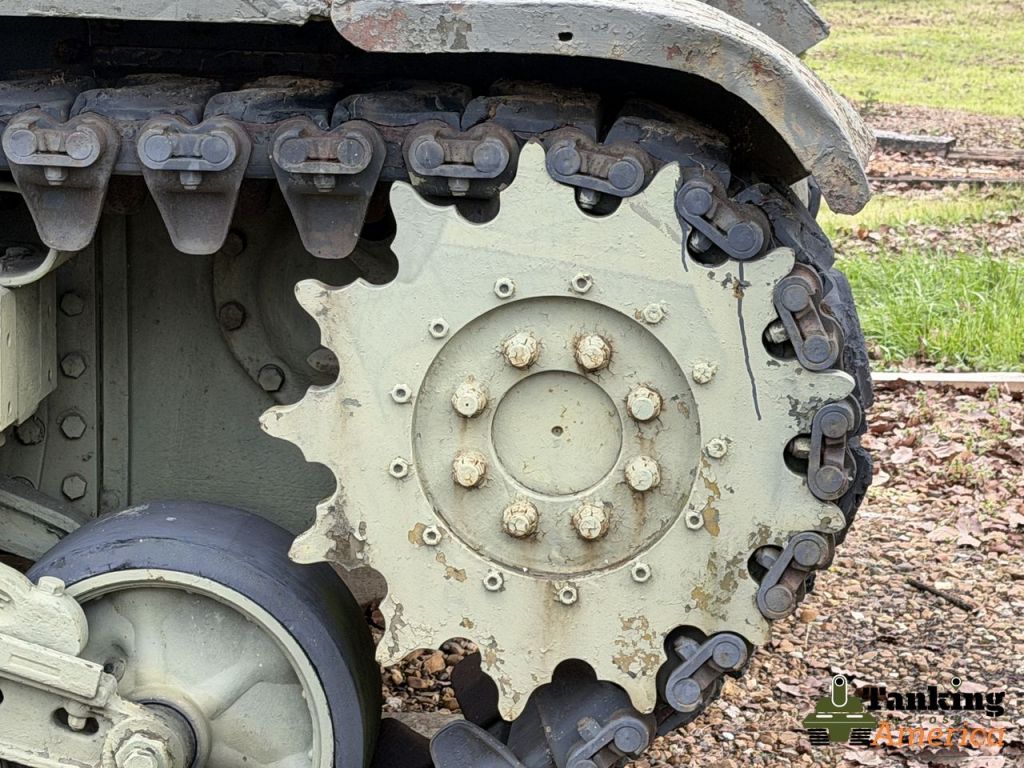
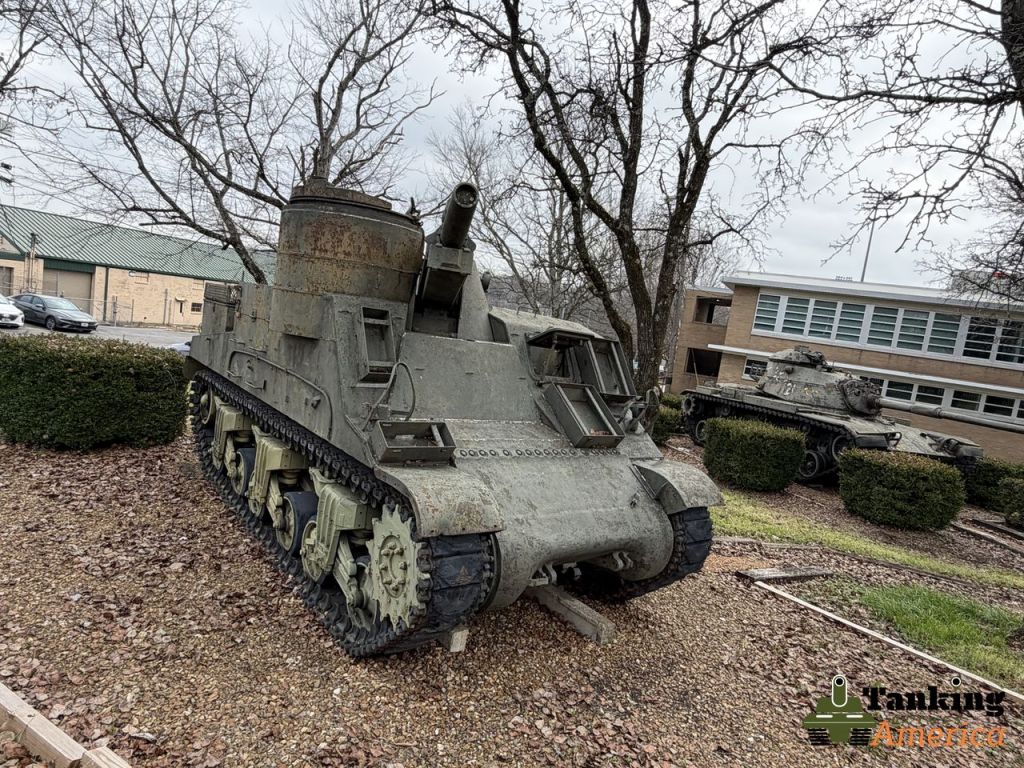
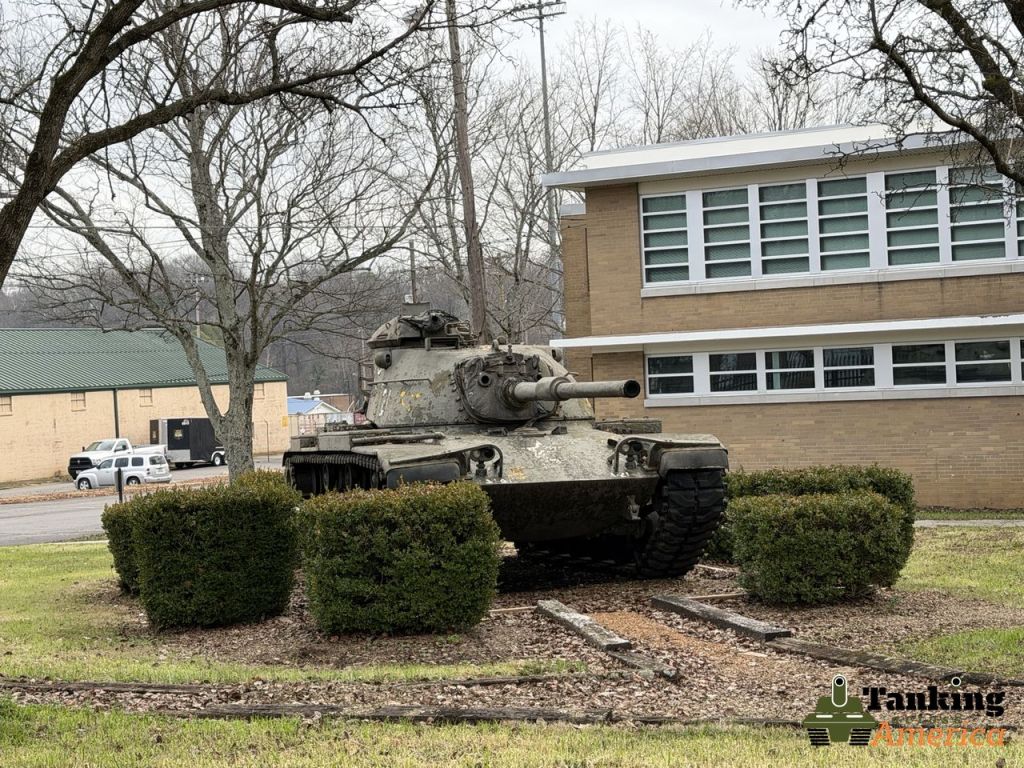
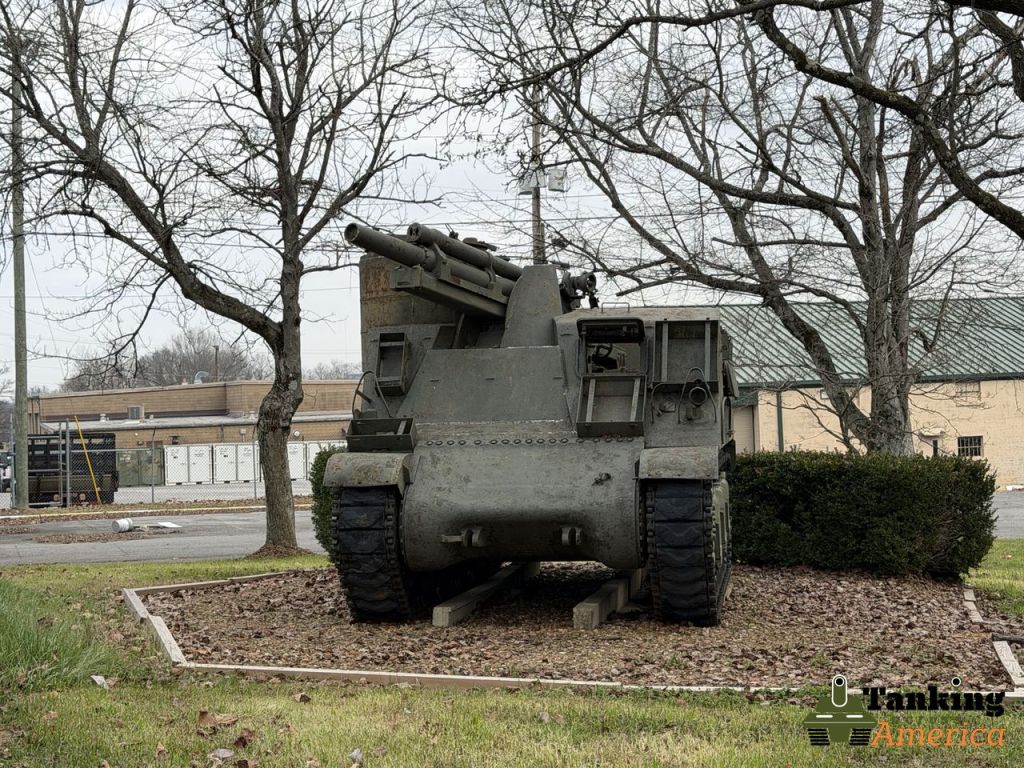
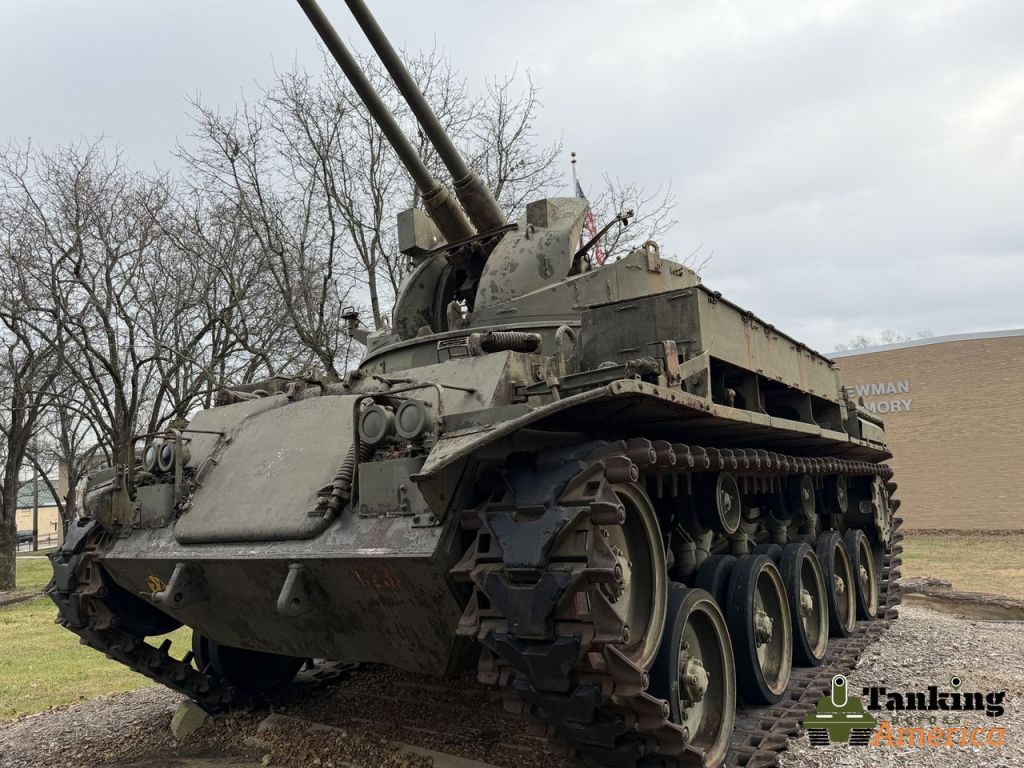
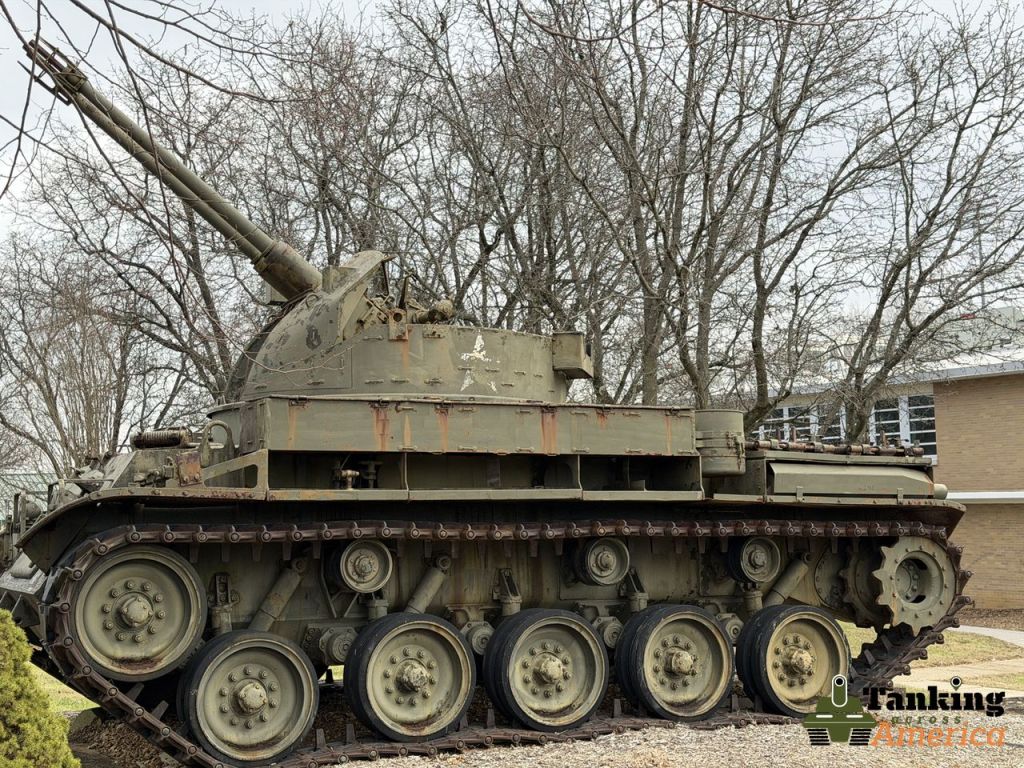
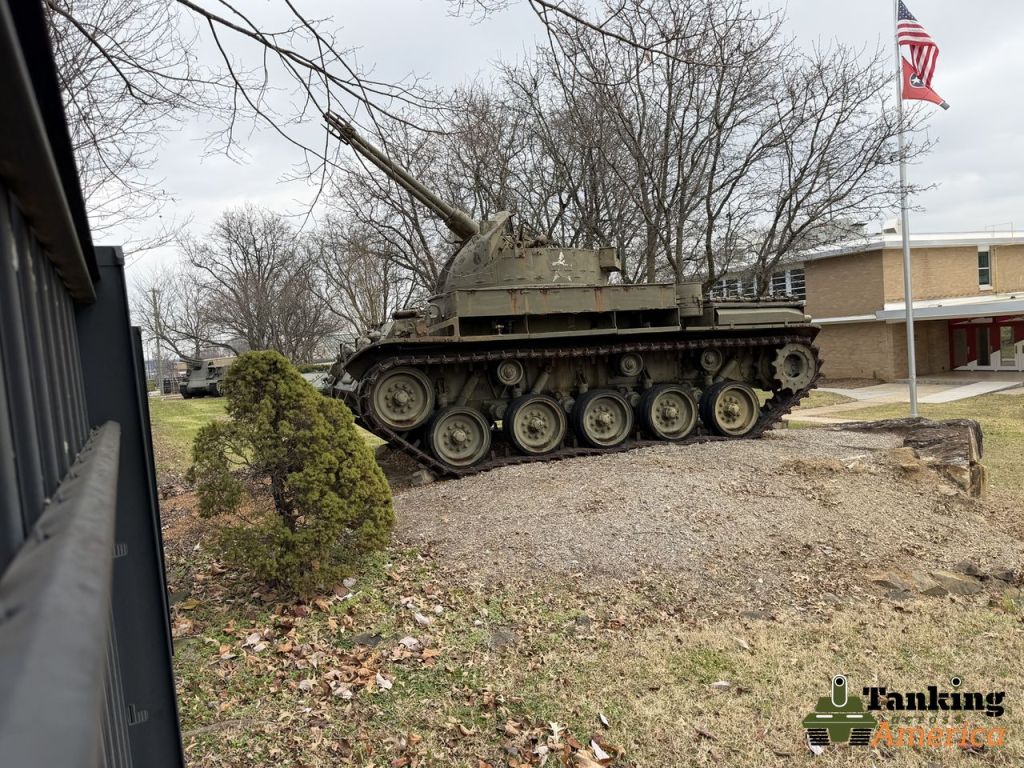
A small, gated off, display in Knoxville, TN at the local Armory. The M60 is one of the original batch of tanks made by Chrysler at the Newark, Delaware Tank Plant.
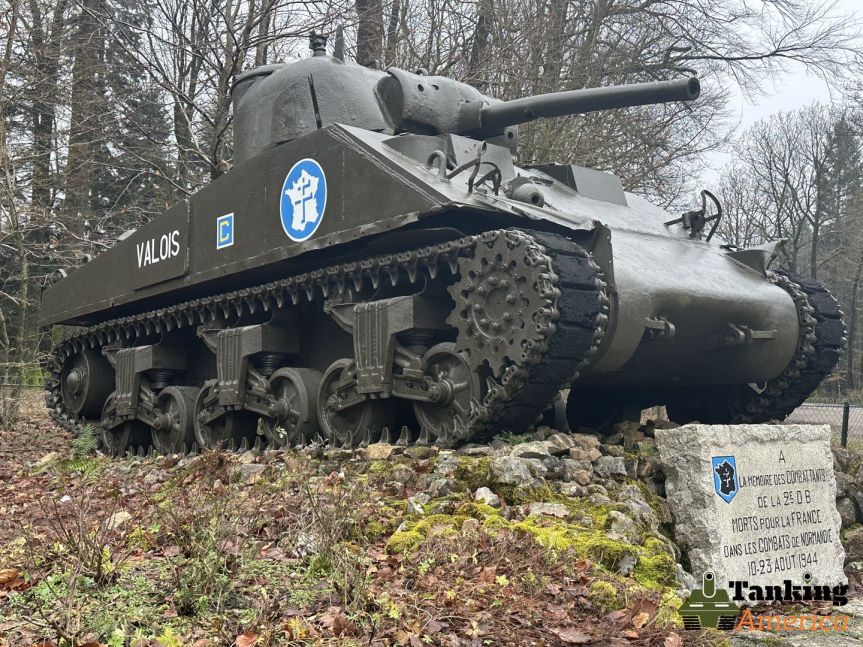
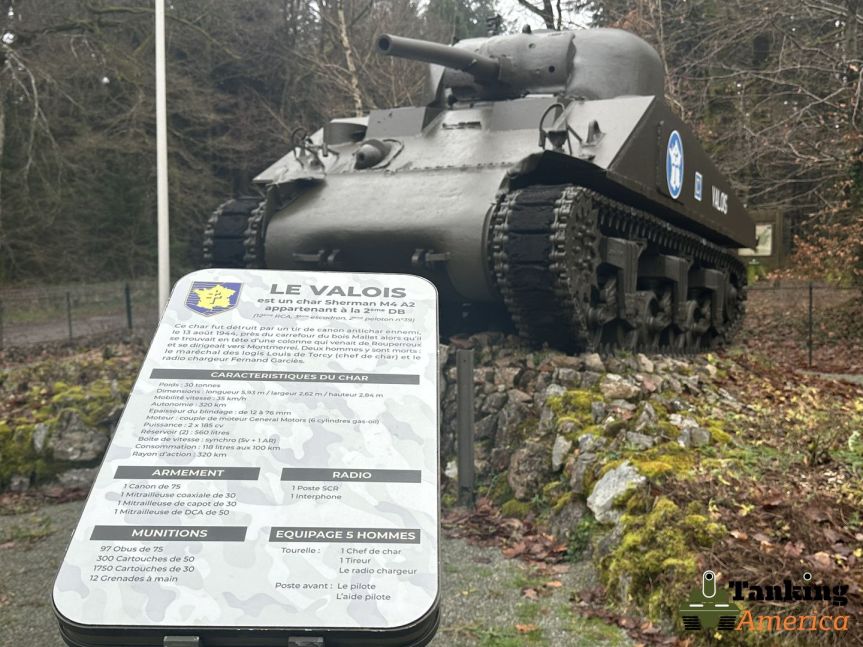
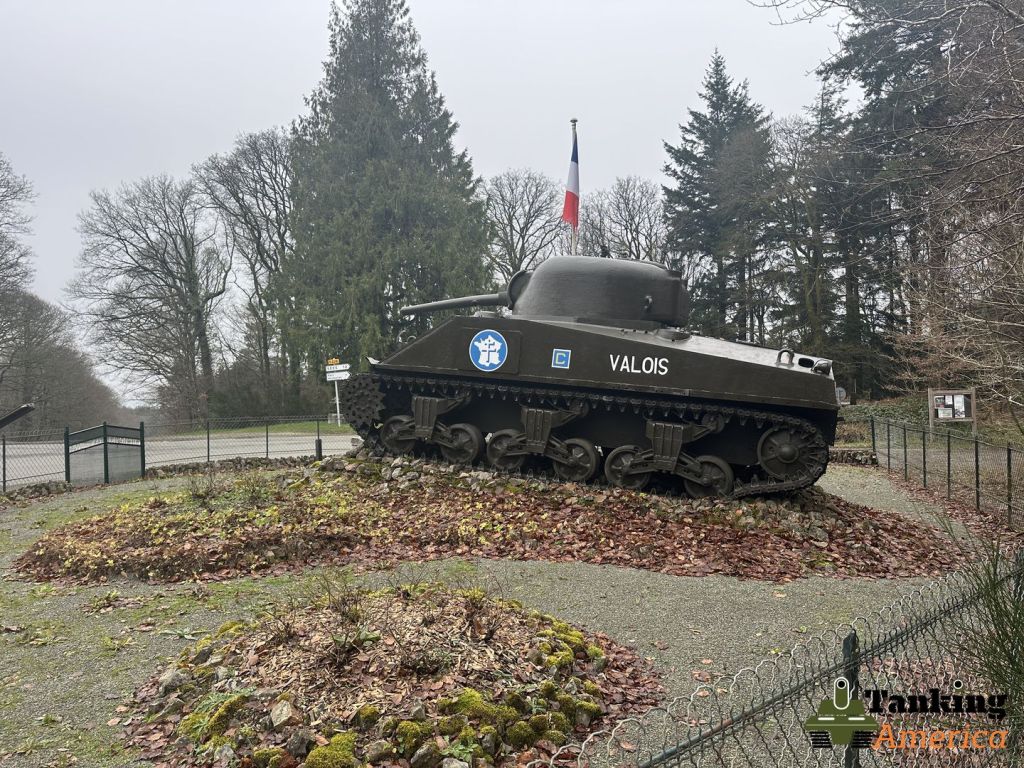
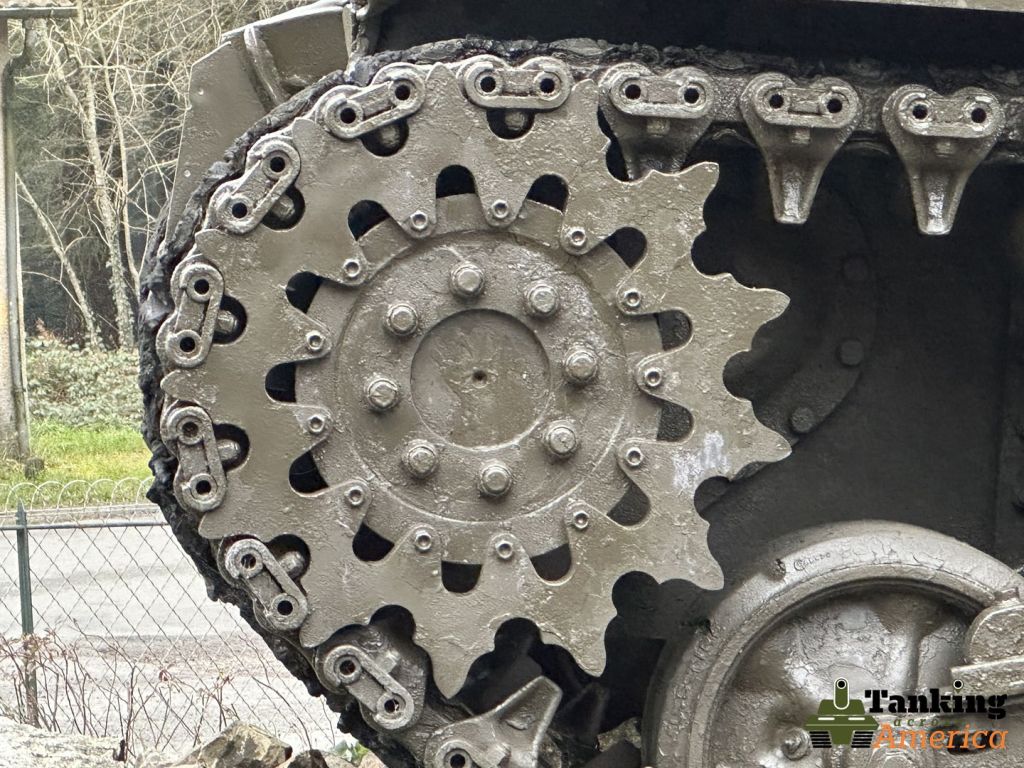
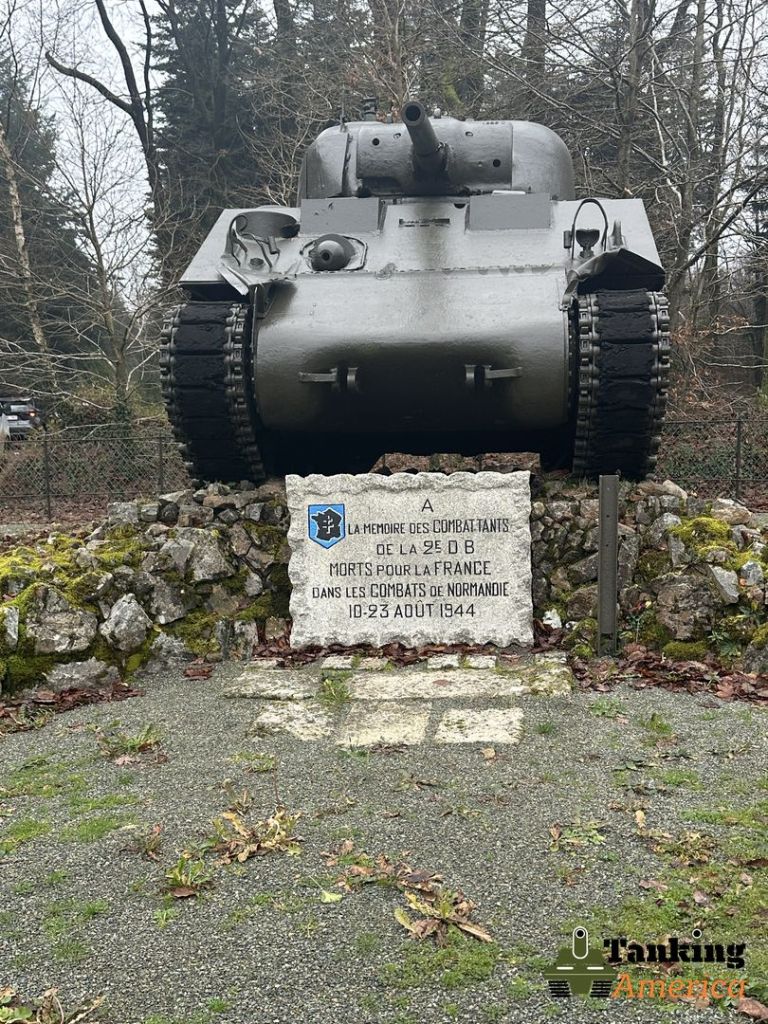
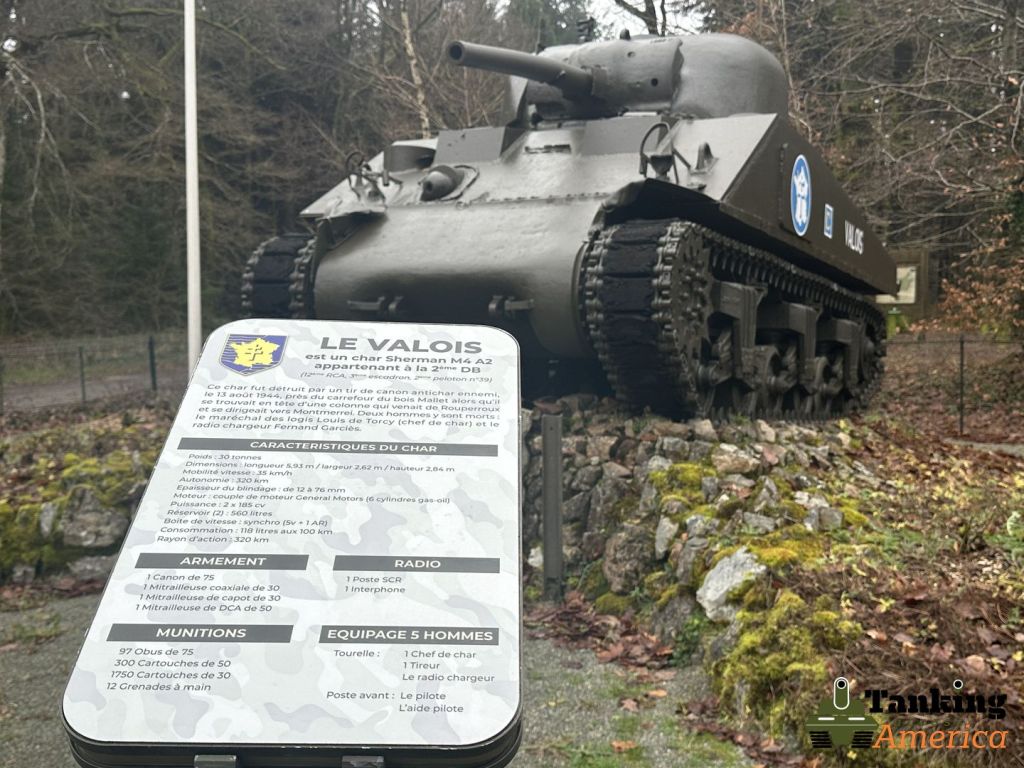
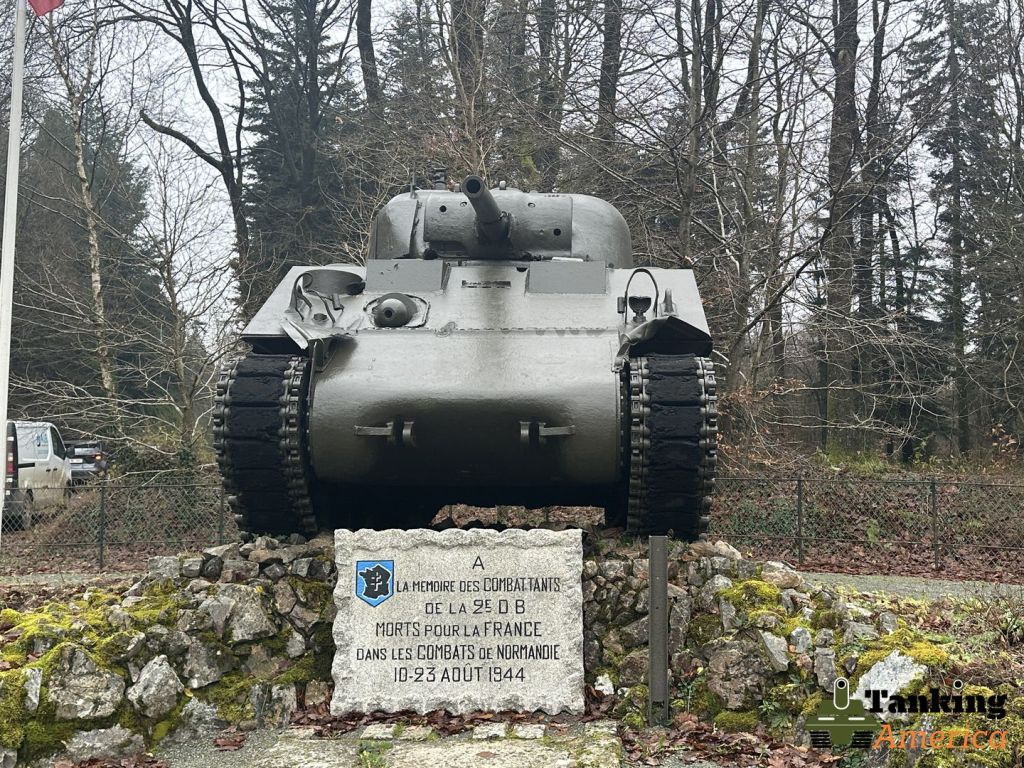
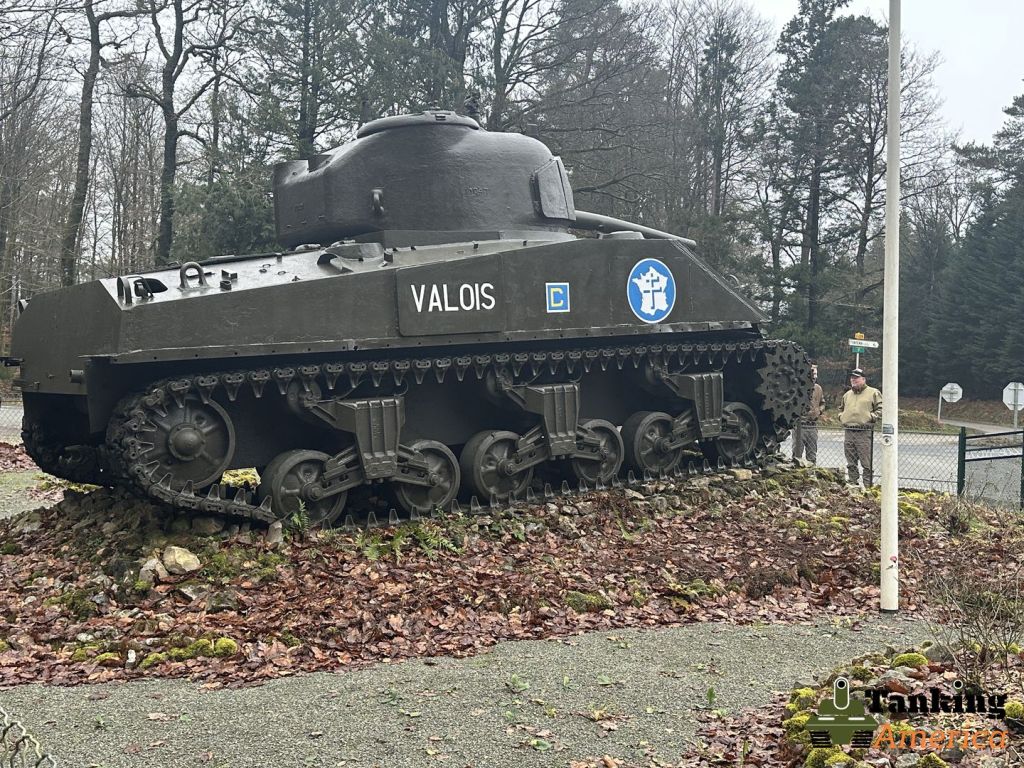
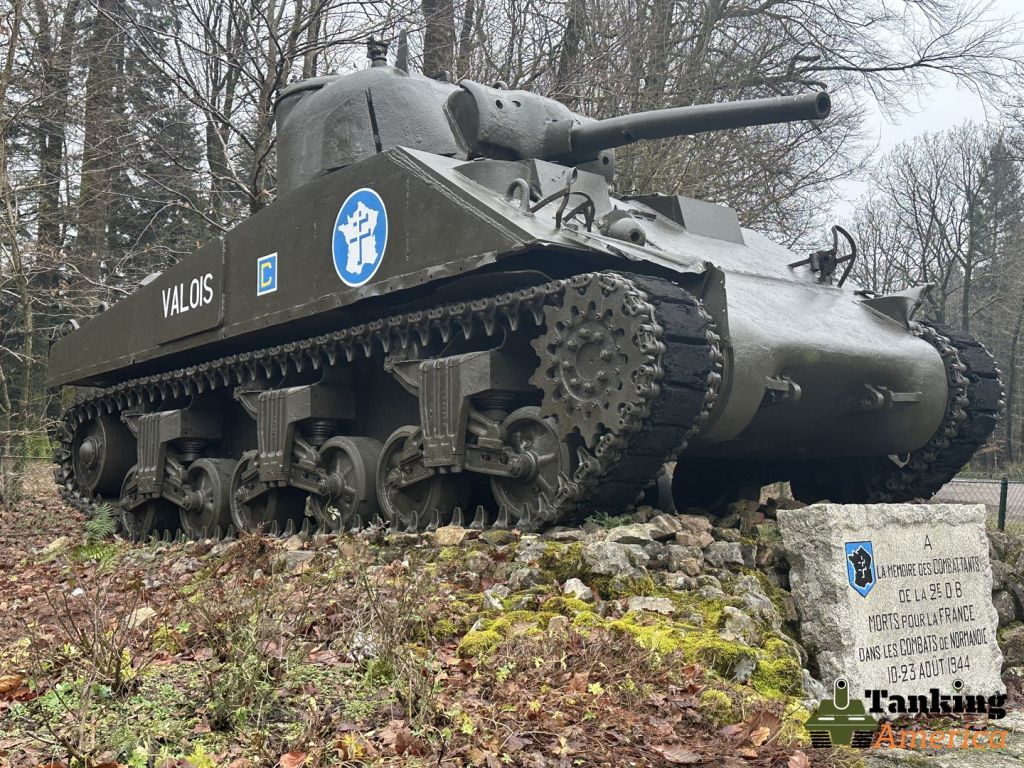
An M4A2 Sherman tank, named “Valois,” was knocked out during a World War II battle near the Cross of Médavy (Carrefour de la Croix Médavy) in the Écouves forest of Normandy, France. It belonged to the 2nd French Armored Division, commanded by General Leclerc.
History of the “Valois” Sherman tank
Service: The “Valois” was part of the 12th Régiment de Chasseurs d’Afrique of Leclerc’s 2nd French Armored Division (2e DB). The division landed in Normandy in August 1944 and participated in the fighting that liberated much of France.
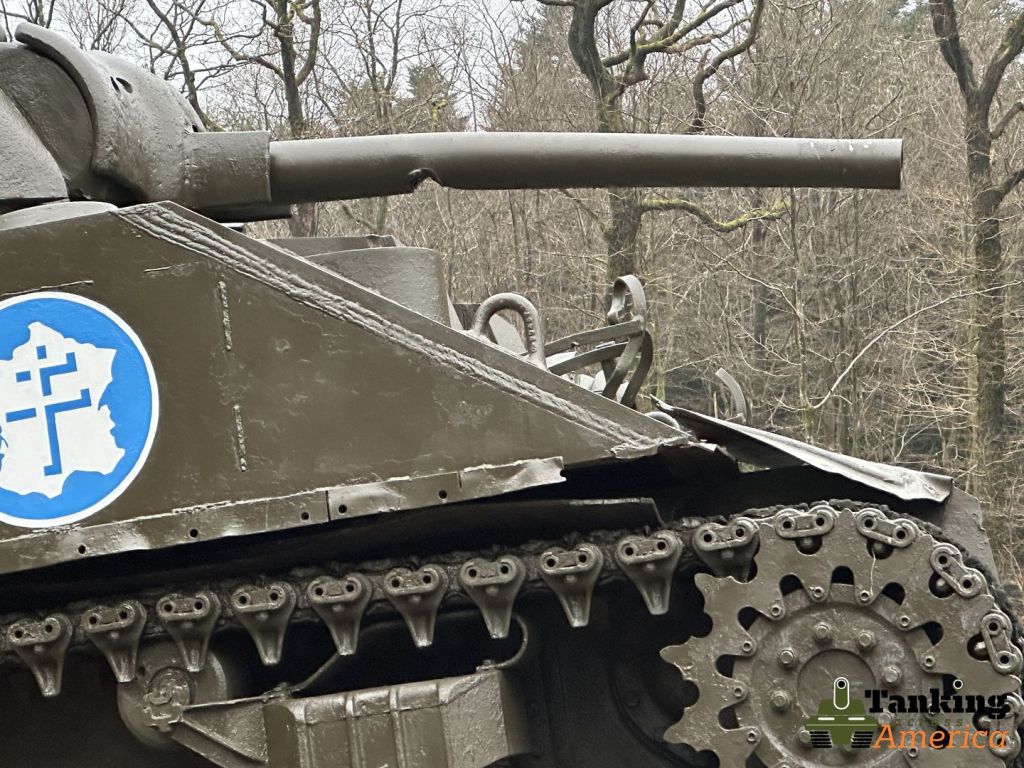
Final Battle: On August 13, 1944, following the liberation of the nearby town of Alençon, the “Valois” was advancing through the Écouves forest toward Sées. The area was held by the German 9th Panzer Division, and fierce resistance ensued.
Destruction: The tank was ambushed by a German Panzer and hit by three armor-piercing rounds just 200 meters from the Cross of Médavy crossroads. The tank was knocked out, ending its combat service.
Memorial at the Cross of Médavy Today, the “Valois” is a preserved memorial at the location where it was destroyed.
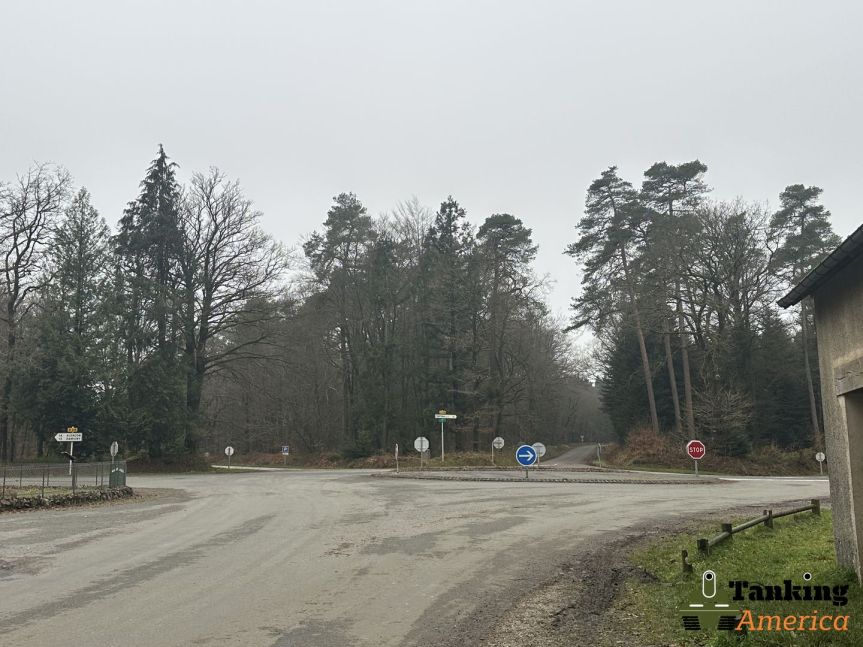
Location: It sits on a stone ramp inside a fenced enclosure at the crossroads in the Écouves forest, about 14 kilometers north of Alençon.
Memorial Significance: The monument stands as a tribute to the liberation of the region and commemorates the French forces who fought during the Normandy campaign.
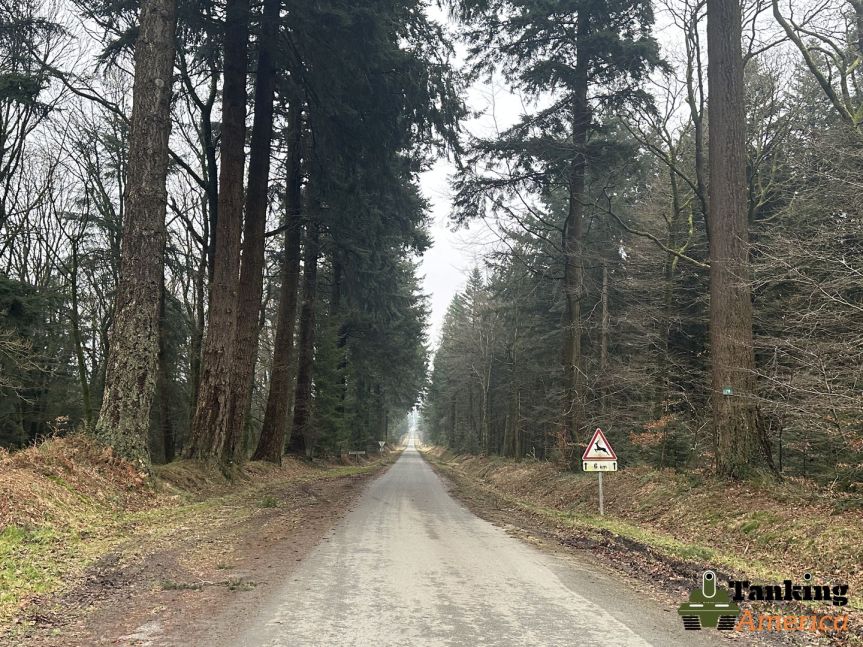
Personal note: On our drive across France, we went were we thought it was but we were wrong. We drove into this small village and asked an older couple for help. Through mime, pictures and my wife’s broken French, they provided directions to the track. The area is a beautiful logging forest and the location is a major cross road.
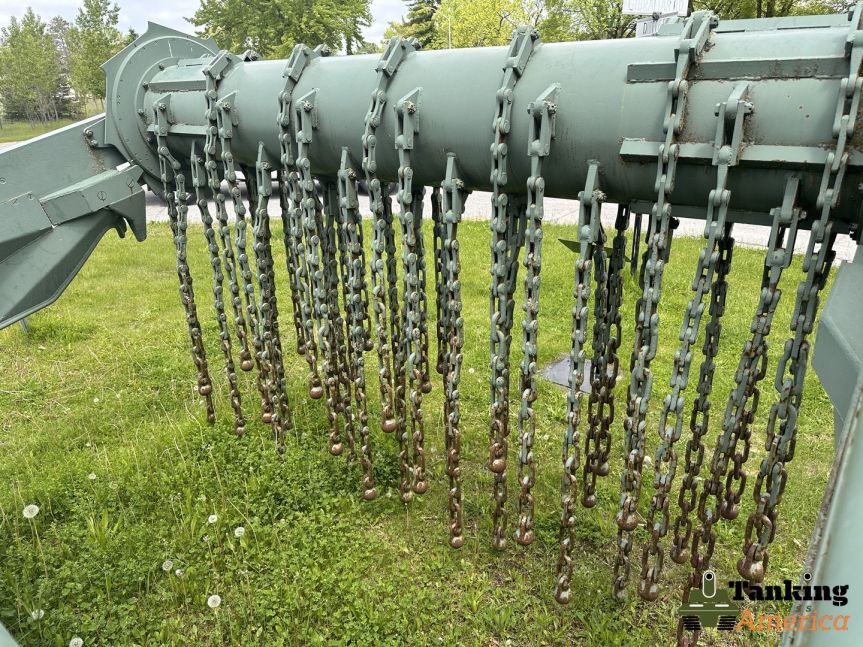
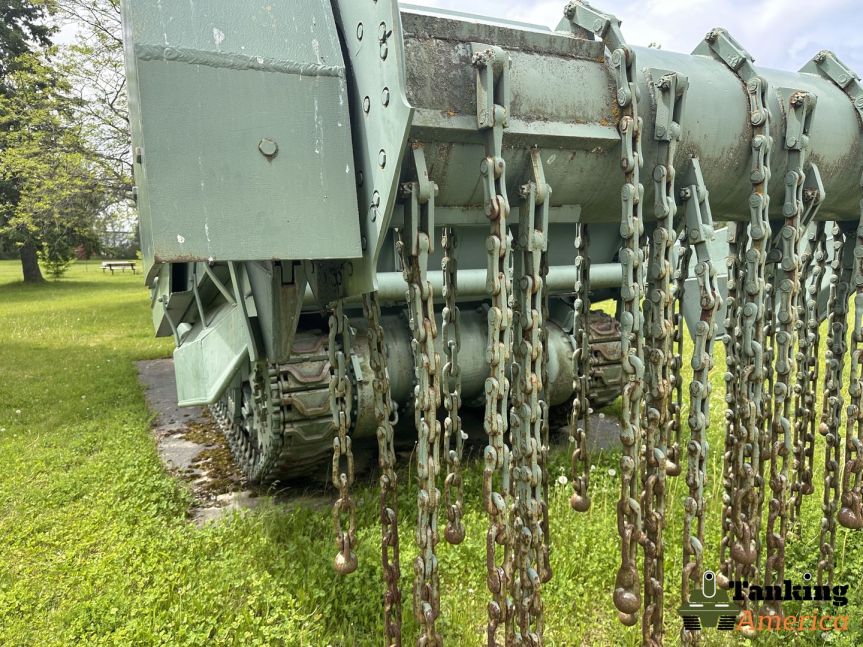
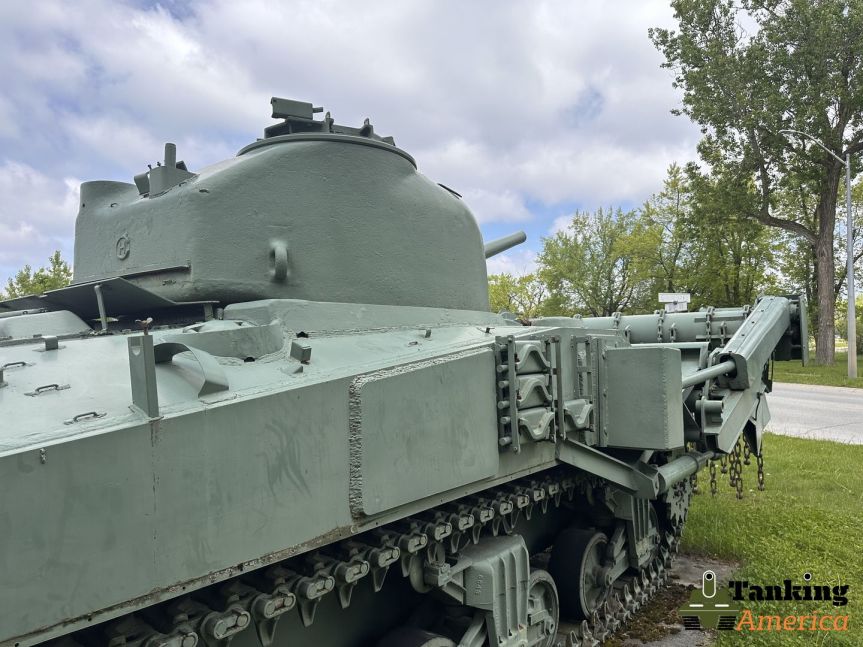
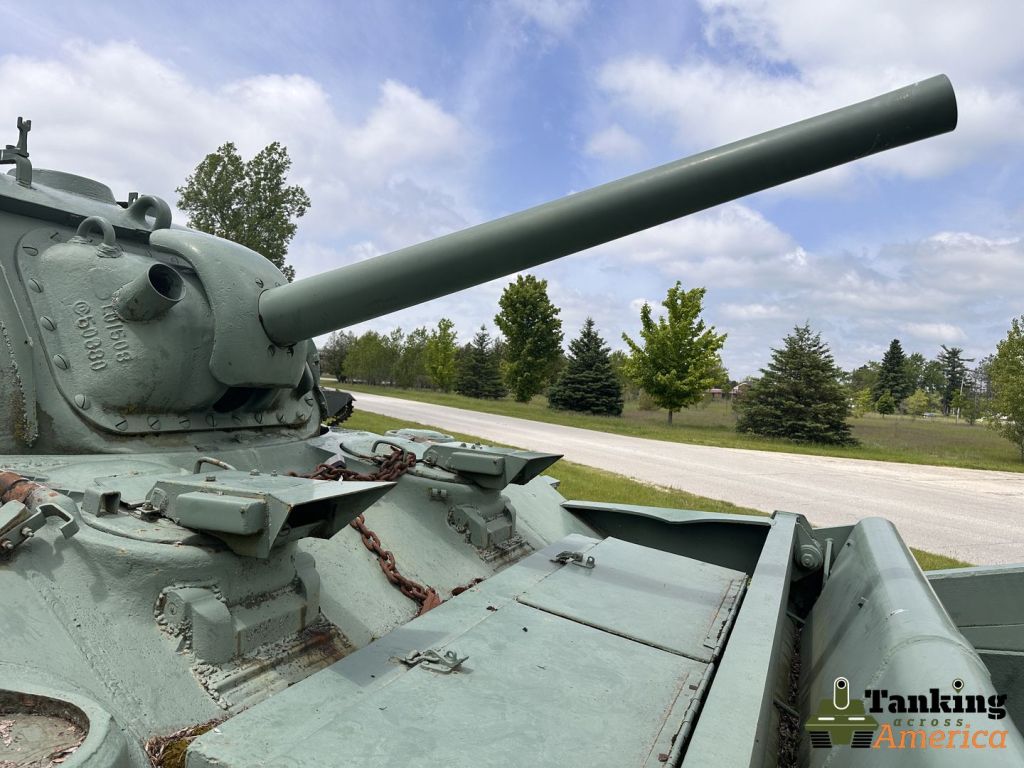
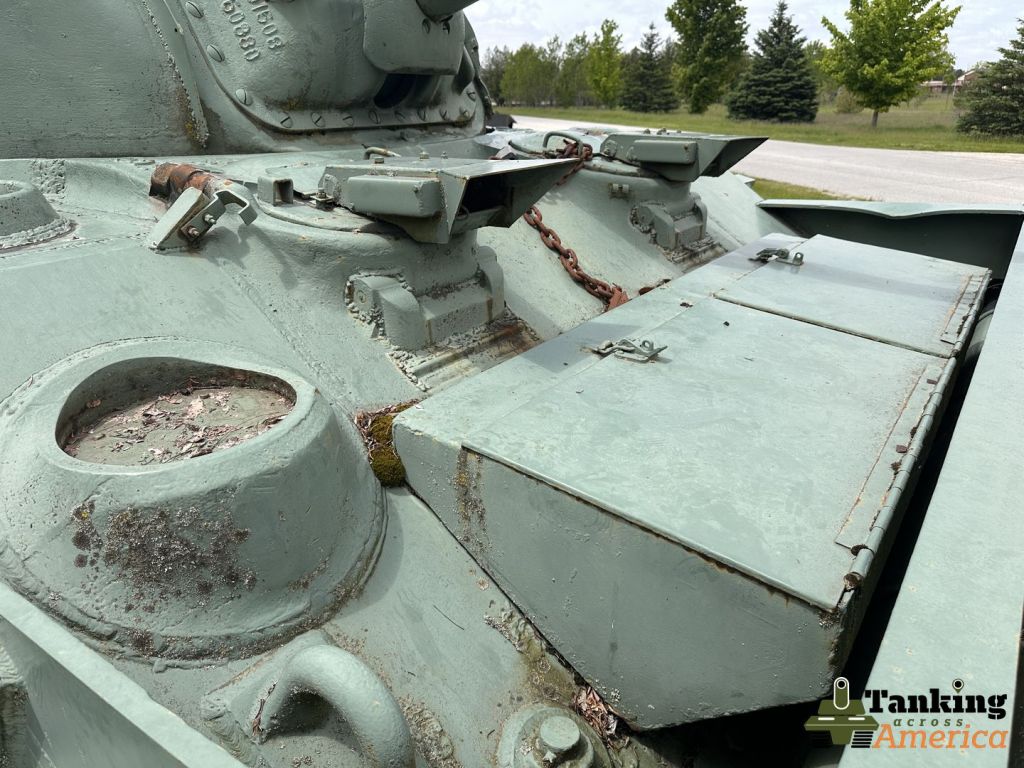
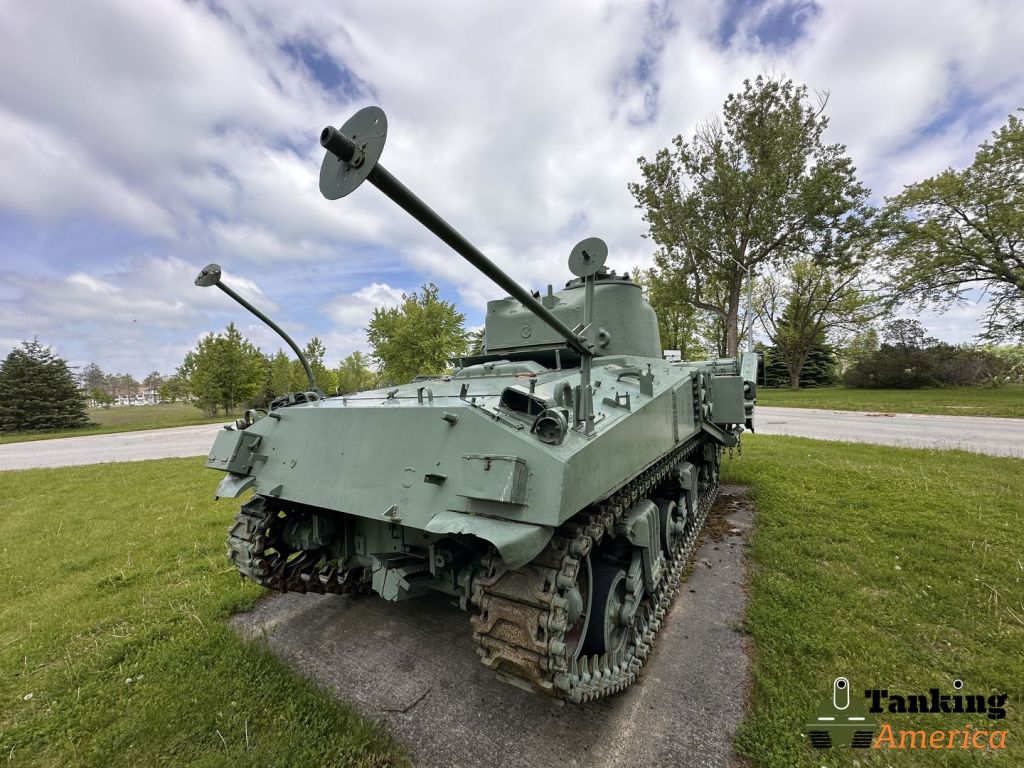
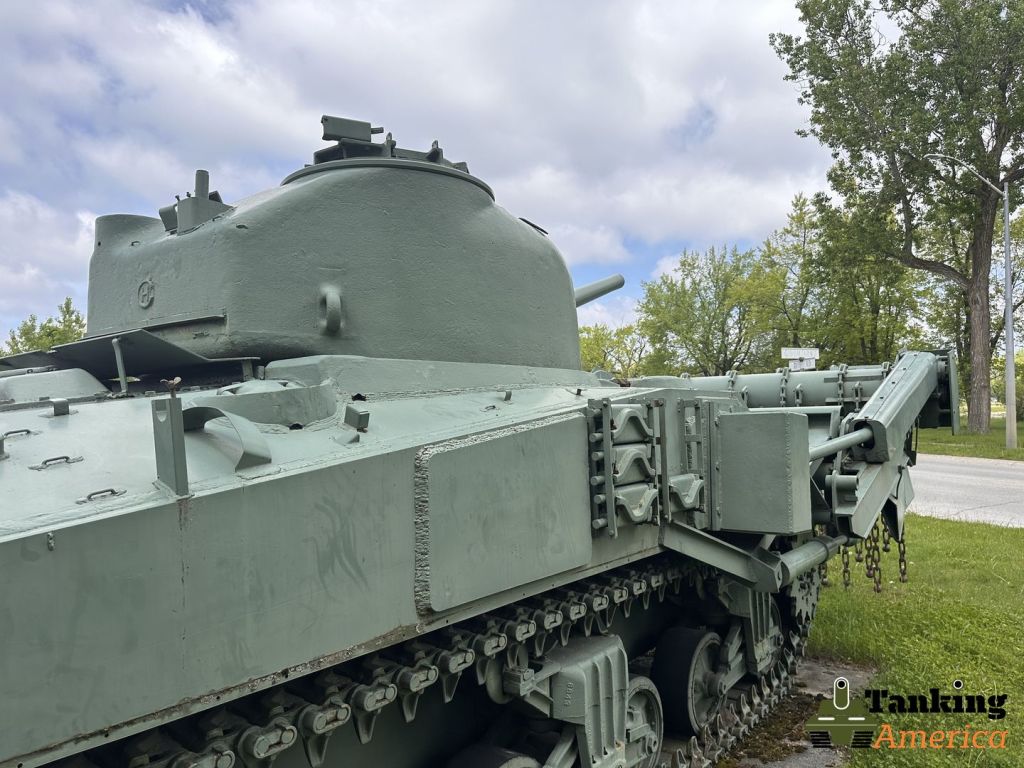
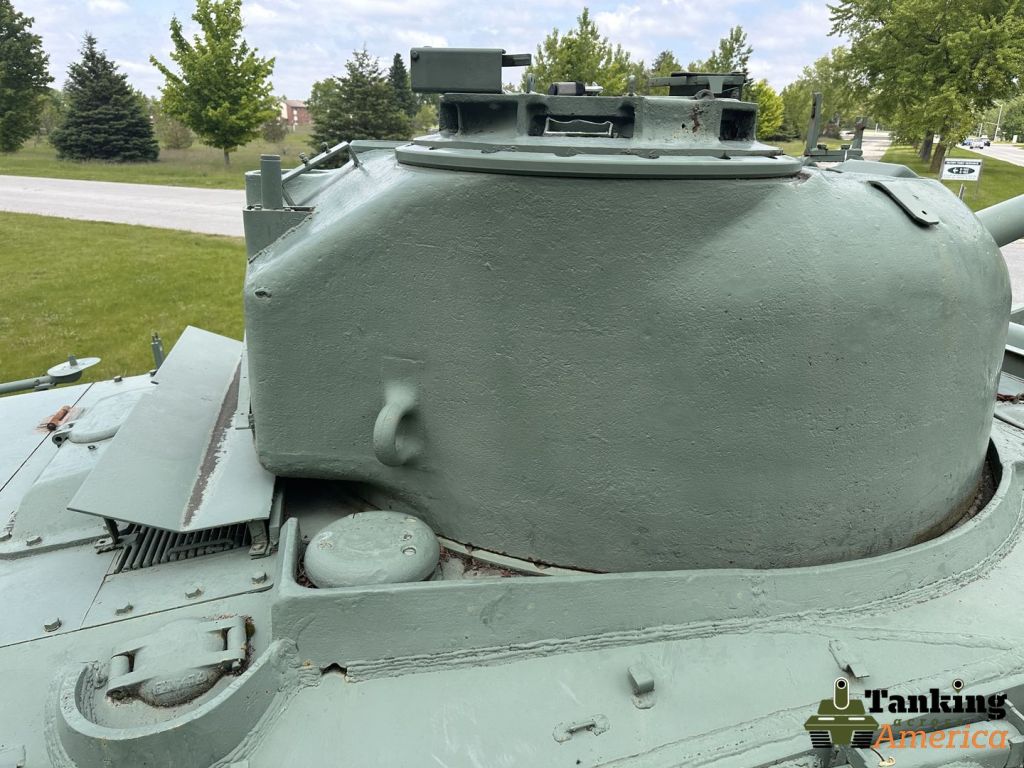
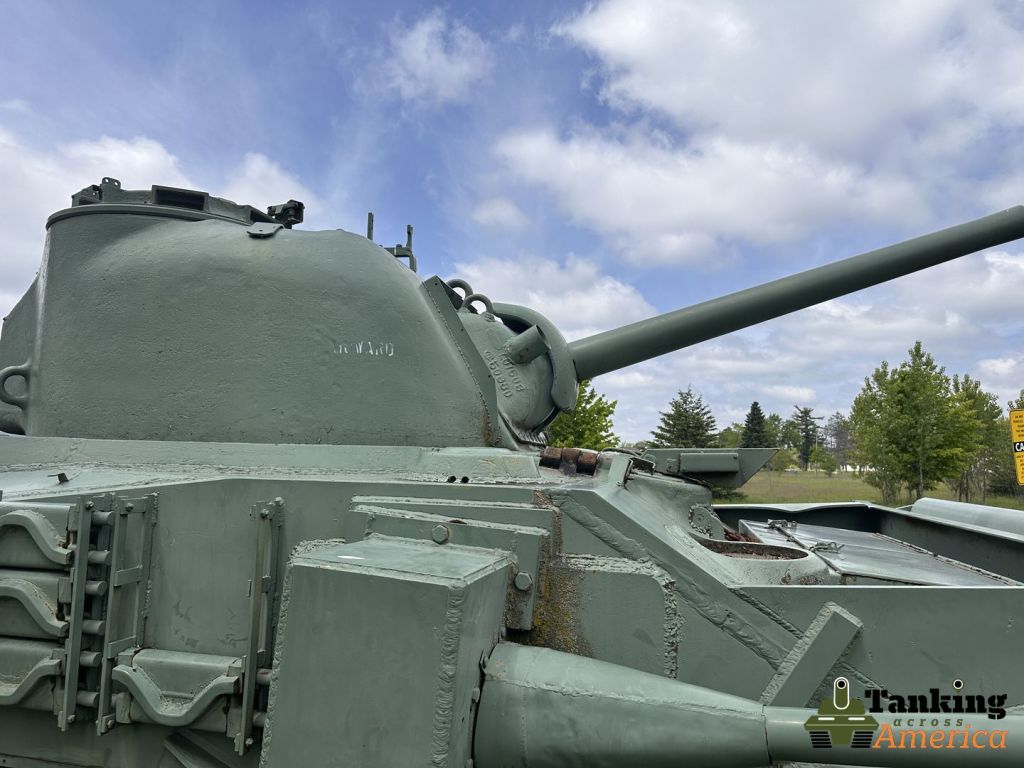
If you’ve ever visited Canadian Forces Base (CFB) Borden, you’ve probably noticed more than just the rows of modern military vehicles and training facilities. Among its historical displays sits a fascinating piece of wartime engineering — a Sherman mine flailing tank, a relic that tells the story of ingenuity, danger, and survival during the Second World War.
What is a Mine Flailing Tank?
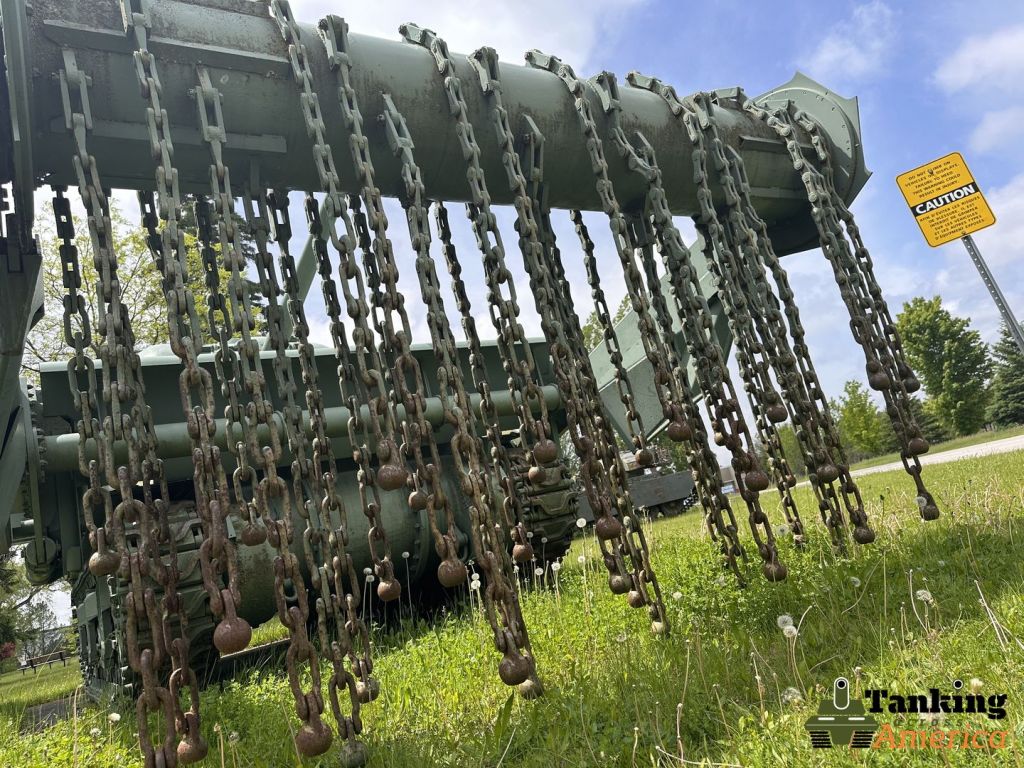
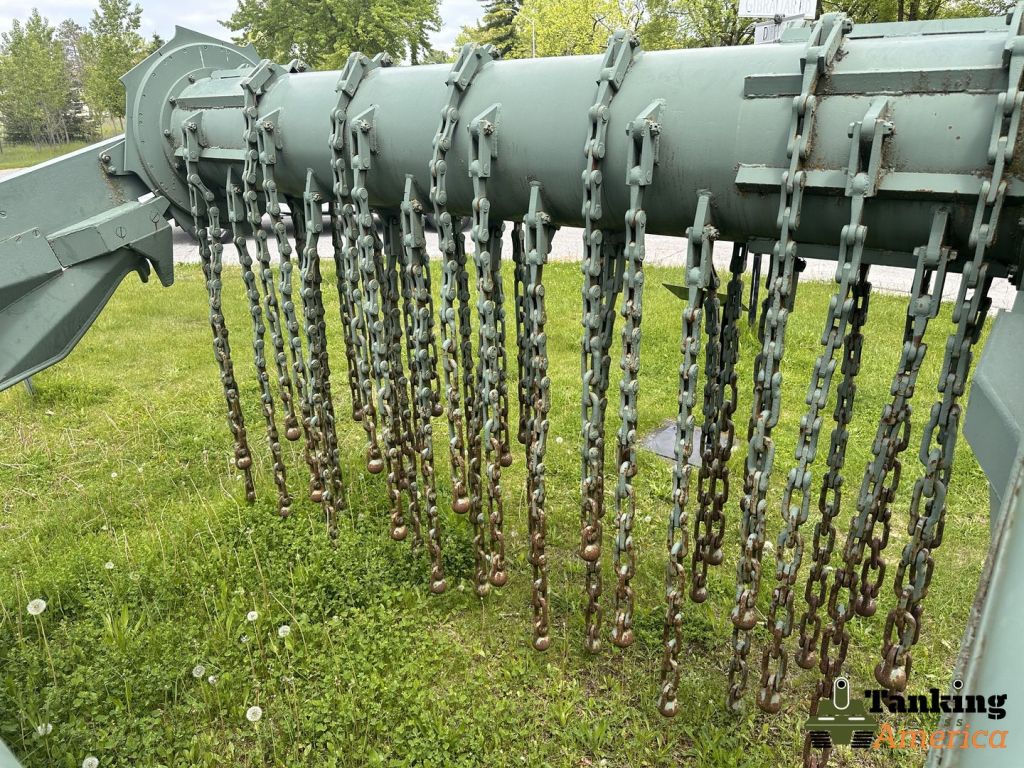
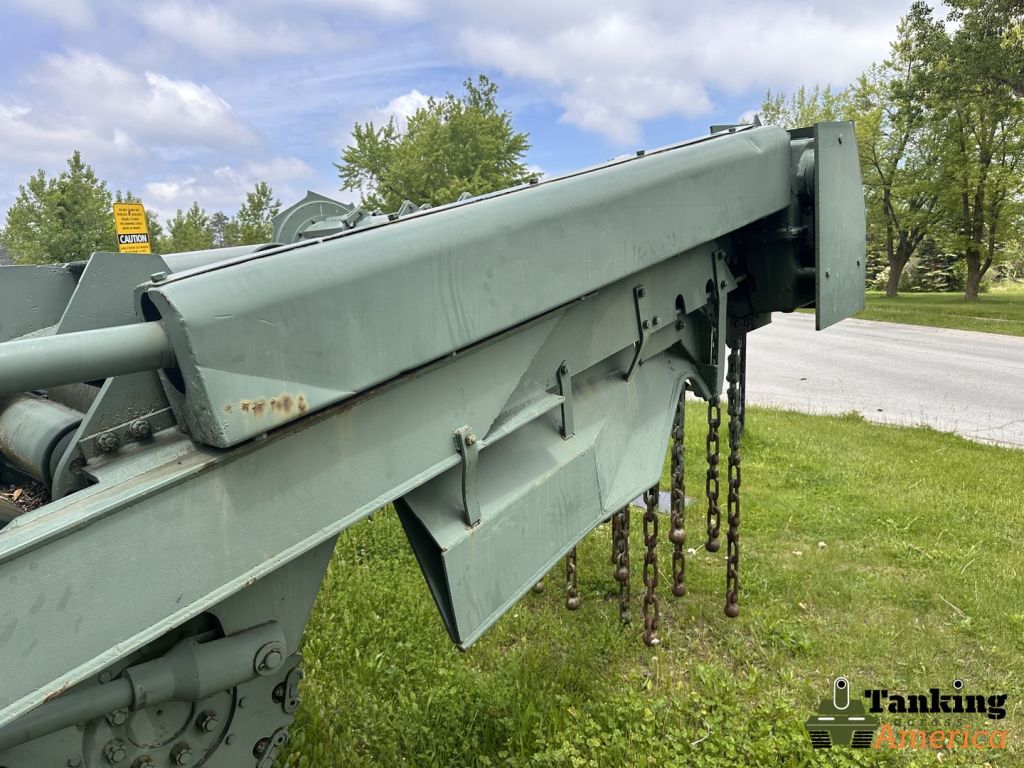
During WWII, one of the most dangerous obstacles soldiers faced was not always enemy fire — but hidden explosives buried in the ground. Landmines slowed advances, destroyed vehicles, and cost countless lives. To solve this, Allied engineers developed the mine flail tank: a heavily armored vehicle with a rotating drum and chains attached to its front.
As the drum spun, the chains pounded the ground ahead of the tank, detonating buried mines before troops or vehicles could roll over them. The most famous version, the Sherman Crab, was used to clear paths during the Normandy landings and beyond, saving thousands of soldiers by opening safe lanes through minefields.
The Tank at CFB Borden
CFB Borden — known as the birthplace of the Royal Canadian Air Force and a hub of Canadian military training — preserves this vital piece of history. The mine flailing tank displayed on the grounds is a stark reminder of Canada’s role in technological innovation during wartime and the dangers soldiers faced in every step forward.
Visitors can see firsthand the massive rotating flail mounted on the tank, an intimidating device built for the brutal necessity of war. Standing in front of it, you can imagine the noise, dust, and explosions it created as it cleared minefields under fire.